





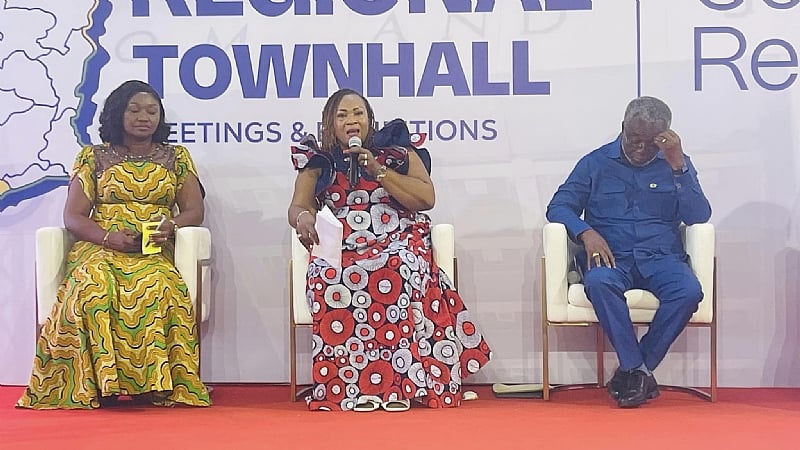
The Minister for Fisheries and Aquaculture Development, Mrs. Hawa Koomson, has announced significant strides made under the Aquaculture for Food and Jobs initiative, particularly in its second phase, which has already positively impacted 9,500 youth by distributing 5 million catfish fingerlings and 3,150 metric tons of fish feed. This initiative is a cornerstone of Ghana’s strategy to enhance its aquaculture sector, with the dual objectives of generating employment opportunities and increasing domestic fish production. The Minister highlighted these developments during the Central Regional Townhall Meeting and Exhibition, underscoring the government’s commitment to transforming the country’s aquaculture landscape into a more productive and job-rich environment.
The fisheries industry in Ghana plays a crucial role in the economy, employing over three million individuals and contributing approximately 1.01% to the nation’s Gross Domestic Product (GDP). Mrs. Koomson remarked on the importance of this sector for ensuring food security and driving rural development. The current national fish production figures show that Ghana surpassed 680,000 metric tons in the previous year, with a per capita fish consumption rate of 20 kilograms. This consumption level is notable as it surpasses the West African regional average of 13 kilograms, demonstrating that Ghana is making significant strides in enhancing its fish supply relative to regional counterparts.
Central to the improvements observed in fish production was the successful implementation of the Closed Season initiative, which has been pivotal in rebuilding fish stocks. During her remarks, the Minister noted advancements in the landings of small pelagic species, vital for artisanal fishers who rely on these resources for their livelihoods. This initiative not only supports the sustainability of fish populations but also aims to secure the economic stability of communities engaged in fishing, recognizing the multifaceted impact of sustainable practices on both environmental and human outcomes.
In addition to promoting aquaculture and sustainable fishing methods, the Minister reaffirmed the government’s ongoing commitment to addressing Illegal, Unreported, and Unregulated (IUU) fishing, a critical challenge faced by the sector. To enhance transparency and ensure regulatory compliance, the government has introduced advancements such as 24/7 vessel monitoring systems and Electronic Monitoring Systems on trawlers. These measures are designed to improve oversight and accountability within the fisheries sector, thereby promoting a more sustainable fishing environment.
The initiatives outlined by Mrs. Koomson reflect a holistic approach to enhancing Ghana’s aquaculture and fisheries industries. By providing resources to youth and implementing strategic policies aimed at sustainability and transparency, the government is not only addressing immediate economic concerns but also laying the groundwork for long-term resilience and growth in the sector. Such efforts are critical as they foster strategic partnerships within the industry and encourage a culture of responsible fishing and aquaculture practices.
In conclusion, the fisheries sector in Ghana is poised for significant transformation as a result of government initiatives focused on boosting production, employment, and sustainability. With successful programs like Aquaculture for Food and Jobs and effective measures against illegal fishing practices, stakeholders in the fisheries industry can look forward to a future marked by increased productivity and enhanced food security for the Ghanaian populace. Through these concerted efforts, Ghana aims to solidify its position as a leader in aquaculture in the West African region while ensuring that the livelihoods of its citizens remain protected and prosperous.








