









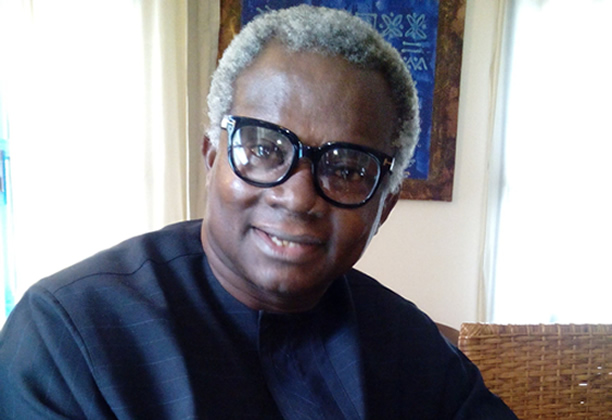
Osita Okechukwu, a prominent figure in Nigerian politics and a founding member of the ruling All Progressives Congress (APC), has voiced grave concerns regarding Nigeria’s spiraling debt burden. He implored President Bola Tinubu to prioritize addressing this issue as a crucial step towards fulfilling the promises of his “Renewed Hope Agenda” and alleviating the economic hardships faced by Nigerians. Okechukwu’s apprehension stems from a careful review of the 2025 national budget presented to the National Assembly, which revealed a disconcerting escalation in the nation’s debt obligations. He expressed bewilderment at how the administration plans to deliver on its promises of renewed hope while grappling with a mountain of debt, comprising both local and foreign liabilities, coupled with prohibitive interest rates on treasury bills, precarious dollar-denominated loans, and short-term Eurobonds.
Okechukwu underscores the urgent need for a comprehensive fiscal restructuring to tackle the burgeoning cost of debt servicing, which is consuming a significant portion of the national budget. Invoking Benjamin Franklin’s timeless wisdom, “He who goes a borrowing goes a sorrowing,” Okechukwu advocates for the establishment of a high-powered panel of inquiry to meticulously scrutinize Nigeria’s debt portfolio, leaving no stone unturned in identifying any potentially non-transparent transactions. He warns that the current debt trajectory poses a severe threat to the very fabric of Nigeria’s democracy, diverting vital resources away from crucial sectors such as healthcare, education, and poverty alleviation programs, effectively hindering the nation’s development and progress.
The stark figures from the 2025 budget paint a worrisome picture. Okechukwu highlights that the combined allocations for critical sectors like Defense (N4.91tn), Infrastructure (N4.06tn), Education (N3.52tn), and Health (N2.48tn), totaling N14.97tn, are dwarfed by the staggering N15.8tn earmarked for debt servicing. This implies that more resources are being channeled towards servicing existing debts than investing in the future of the nation through essential services and infrastructure development. While acknowledging President Tinubu’s commendable decision to eliminate the fuel subsidy, Okechukwu cautions that the enormous cost of debt servicing has now emerged as a new and equally formidable obstacle to economic productivity. He draws a parallel to the previous fuel subsidy regime, which was riddled with corruption, emphasizing the need to address the root causes of fiscal challenges.
Recalling a past investigation into the fuel subsidy regime led by Dr. Ngozi Okonjo-Iweala, then of the World Trade Organization, which unearthed widespread corruption, Okechukwu urges President Tinubu to revisit those findings and other potentially questionable loan transactions. He believes that recovering stolen funds and ensuring accountability are essential steps towards building a more robust and productive economy. The incident involving the attempted intimidation of Dr. Okonjo-Iweala, including the kidnapping of her mother, underscores the serious challenges faced in tackling corruption and the need for unwavering commitment to transparency and accountability in government dealings.
Okechukwu provides historical context to Nigeria’s debt situation, referencing the country’s first loan of $13.1m from the Paris Club in 1964 for the Niger Dam project and the significant debt relief secured under President Olusegun Obasanjo’s administration in 2005, which resulted in the cancellation of $35.9bn in debt. This comparison serves to highlight the dramatic increase in Nigeria’s debt burden, which now stands at a staggering N121.6tn, equivalent to $91.4bn. Okechukwu argues that the only viable path to escaping this debt trap, as demonstrated by the success of the 2005 debt relief, is through decisive fiscal restructuring. He strongly advocates for the creation of a multilateral high-powered panel of inquiry, comprising both local and international statesmen of high repute, to conduct a comprehensive reassessment of Nigeria’s debts and explore potential avenues for further debt cancellation.
Okechukwu proposes a multi-pronged approach to tackling the debt crisis. He calls for robust measures to curb corruption, restricting borrowing to only indispensable infrastructure projects, and exploring innovative financing mechanisms such as SUKUK bonds and partnerships with humanitarian organizations and Nigeria-friendly groups. Crucially, he cautions against resorting to excessive taxation or high tariffs as solutions, emphasizing that these measures would further burden the already struggling populace. Instead, he stresses the importance of proactive steps to scrutinize, re-evaluate, and ultimately restructure Nigeria’s debt portfolio. This, he believes, is the key to unlocking the nation’s economic potential and delivering on the promise of a brighter future for all Nigerians.









