









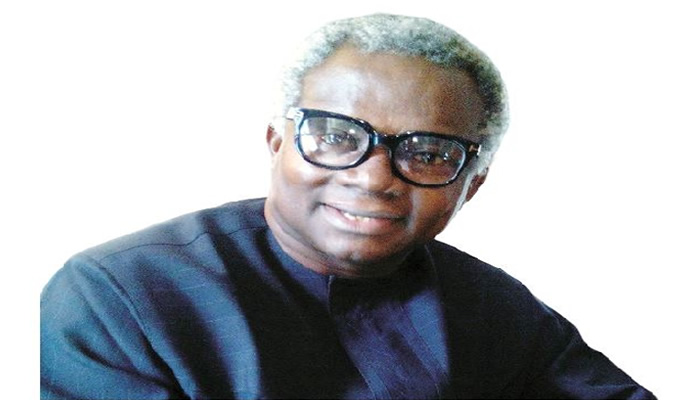
The debate surrounding Nigeria’s political trajectory towards a one-party system has ignited a contentious exchange between political figures, particularly regarding the role of the ruling All Progressives Congress (APC) and the opposition Peoples Democratic Party (PDP). Mr. Osita Okechukwu, a former Director-General of Voice of Nigeria and a founding member of the APC, has vehemently refuted allegations that the APC, and specifically President Bola Tinubu, are orchestrating the country’s drift into a one-party state. Instead, he points fingers at the PDP, accusing the party of being the architect of this political phenomenon. Okechukwu contends that the PDP’s 16-year rule instilled a “humongous culture of impunity” within the nation’s political landscape, a culture that now ironically plagues the PDP itself.
Okechukwu’s argument hinges on the notion that the PDP, despite being the major opposition party with a significant number of governorships, has succumbed to a “stomach infrastructure syndrome.” This refers to a political strategy where politicians prioritize personal gain and patronage over ideological principles and genuine opposition. He cites instances of alleged political maneuvering during past elections, such as the alleged harassment and inducement offered to Alhaji Buba Galadima, then National Secretary of the Congress for Progressive Change (CPC), to abandon the party on the eve of the 2007 general elections. This, Okechukwu claims, exemplifies the PDP’s historical pattern of undermining opposition voices and manipulating the political landscape for their own benefit.
Furthermore, Okechukwu argues that since the merger of political parties that formed the APC in 2013, PDP members have treated the APC more as a “rehabilitation center” than a legitimate political rival. He criticizes the PDP for lacking the essential qualities of a robust opposition, namely resilience, grit, and patience. Instead, he suggests, PDP members have opted for political expediency and personal enrichment, further weakening their ability to effectively challenge the ruling party. This, in turn, contributes to the perceived slide towards a one-party system.
Okechukwu specifically highlights the PDP’s decision to jettison its rotation convention, which mandated alternating the presidency between the north and south, as a key example of the party’s self-inflicted wounds. He argues that this disregard for internal party rules, driven by the “erroneous thought” that Atiku Abubakar’s candidacy would secure the northern vote in the 2023 presidential election, ultimately backfired and further contributed to the current political landscape. He also dismisses the PDP’s arguments about the historical balance of power between the north and south since 1999, labeling them as “fake arithmetic.” This, he contends, is another example of the PDP’s flawed political calculations and their contribution to the prevailing political climate.
Addressing concerns about the current economic hardships faced by Nigerians, Okechukwu expressed optimism, assuring the public that there is “light at the end of the tunnel.” He highlighted ongoing efforts to reduce fuel pump prices, citing his engagement with the Independent Petroleum Marketers Association of Nigeria (IPMAN), the Trade Union Congress (TUC), and other stakeholders. He also pointed to the NNPC’s recent initiation of a price reduction process as a positive sign. Furthermore, Okechukwu referenced a meeting with Dr. Umar Ganduje, the APC National Chairman, who assured him of the Livestock Ministry’s efforts to find a “ranch solution” to the persistent herders/farmers crisis, which would enable farmers to regain access to their lands.
Finally, Okechukwu expressed confidence in President Tinubu’s ongoing negotiations with investors in various sectors, including the electricity value chain, Eastern Corridor Standard Gauge Railways, and deep seaports. He also highlighted the new mandate given to development commissions across the country to attract foreign investment, believing these initiatives will significantly alleviate the current economic hardships. In essence, Okechukwu paints a picture of a government actively working to address the nation’s economic challenges, while simultaneously laying the blame for the perceived slide towards a one-party state squarely at the feet of the PDP.









