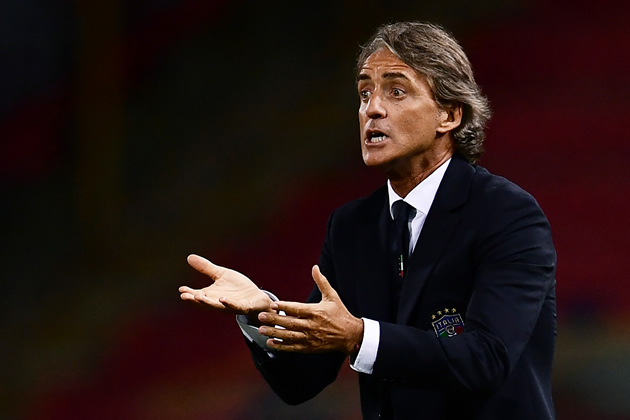
Roberto Mancini’s managerial journey has taken a winding path, marked by triumphs, unexpected departures, and ultimately, a sense of regret. His resignation from the Italian national team, a position he held with distinction and success, culminating in the Euro 2020 victory, was a decision that he later admitted to rueing. The allure of coaching Saudi Arabia, a role promising substantial financial rewards, proved to be a detour that ultimately led to disappointment and a premature exit. Mancini’s reflections on this period reveal a complex interplay of factors, including a perceived breakdown in communication with the Italian FA president, Gabriele Gravina, and a sense that perhaps the timing was simply not right for a departure. The narrative underscores the emotional attachment Mancini felt towards the Azzurri and the realization that the pinnacle of his career may have already been reached in leading Italy to European glory.
Mancini’s tenure with the Italian national team was a period of revitalization and success. He took over a squad reeling from the disappointment of failing to qualify for the 2018 World Cup and instilled a renewed sense of purpose and tactical identity. Under his guidance, Italy embarked on an impressive unbeaten run, culminating in their triumphant Euro 2020 campaign. This victory cemented Mancini’s status as a national hero and solidified his legacy as one of Italy’s most successful coaches. The subsequent decision to leave this position of adulation and influence for the relative unknown of Saudi Arabian football was therefore met with considerable surprise and speculation.
The move to Saudi Arabia, with its reported annual salary of $25 million, inevitably fueled speculation that financial motivations played a significant role in Mancini’s decision. However, Mancini vehemently denied these claims, insisting that his career choices were driven by professional ambition and the desire for new challenges. The Saudi project, with its potential to develop football in a rapidly evolving sporting landscape, may have presented an enticing opportunity for Mancini to further expand his coaching repertoire and leave a lasting impact on a different footballing culture. However, the reality of the situation proved far less idyllic.
Mancini’s time in charge of the Saudi national team was marked by inconsistent results and a failure to meet the expectations that accompanied his appointment. Despite securing seven victories in 18 matches, the overall performance of the team under his stewardship was deemed unsatisfactory by the Saudi Arabian Football Federation. The decision to terminate Mancini’s contract just 14 months into his four-year deal underscored the pressure and scrutiny that comes with managing a national team, especially one with ambitious aspirations on the international stage.
The abrupt end to Mancini’s Saudi Arabian adventure left him contemplating his next move in the world of football management. Speculation immediately arose linking him to various club positions, notably the vacant managerial role at AS Roma. The allure of returning to Serie A, the league where he had achieved considerable success as a player and manager, seemed a natural progression for Mancini. However, he remained tight-lipped about his future plans, maintaining that he was not actively engaged in discussions with any club. Despite this public stance, the underlying implication was that a return to the dugout was imminent, a matter of “when” rather than “if.”
Mancini’s story is one of contrasting fortunes. From the heights of European triumph with Italy to the relative anticlimax of his Saudi Arabian sojourn, his career trajectory has been marked by both success and setbacks. The experience serves as a reminder of the unpredictable nature of football management and the complex considerations that influence a coach’s decision-making. While the financial allure of certain opportunities can be tempting, the intangible rewards of national pride and the emotional connection with a team often outweigh monetary considerations. For Mancini, the decision to leave the Italian national team ultimately proved to be a source of regret, a reminder of the unique bond he shared with the Azzurri and the enduring legacy he had forged during his time at the helm. As he looks towards the future, the lessons learned from this experience will undoubtedly shape his next chapter in the world of football management.