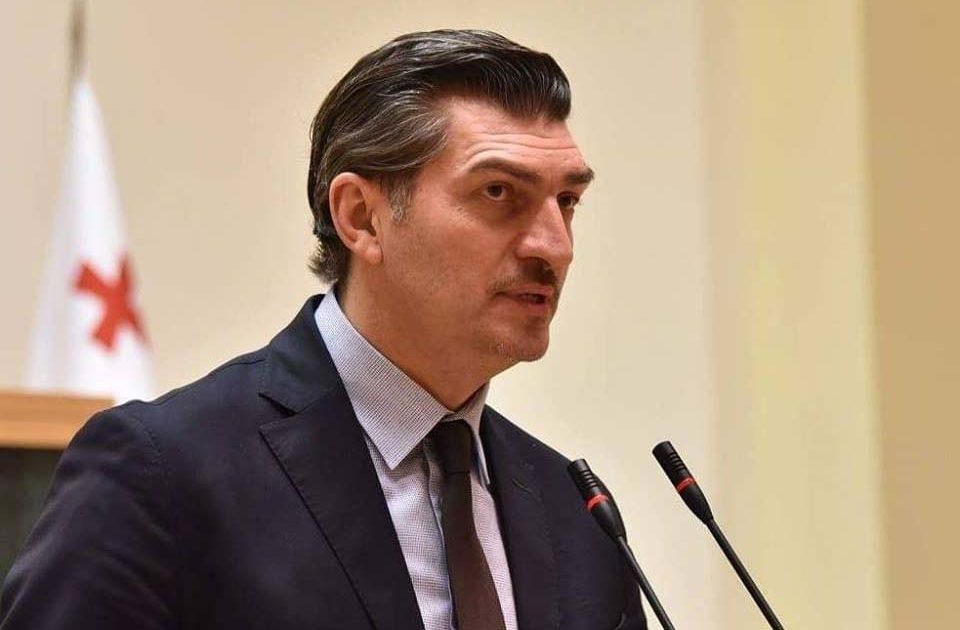
Mikheil Kavelashvili, a former Georgian football star who transitioned into the realm of far-right politics, is poised to assume the largely ceremonial role of president in an indirect election marred by controversy. Nominated by the ruling Georgian Dream party, Kavelashvili’s selection has been met with widespread disapproval and accusations of illegitimacy, particularly from the pro-EU incumbent president, Salome Zurabishvili, and a populace engaged in ongoing anti-government protests. His notoriety stems from his inflammatory rhetoric, frequently targeting LGBTQ+ individuals and critics of the government, often delivered in expletive-laden parliamentary speeches. This nomination underscores the deepening political divisions within Georgia and raises concerns about the country’s democratic trajectory.
Kavelashvili’s ascent to the presidency is the culmination of a series of controversial political maneuvers by the Georgian Dream party. The party, founded by billionaire Bidzina Ivanishvili, orchestrated changes to the constitution in 2017, abolishing the direct popular vote for the president and replacing it with an electoral college system. This shift effectively grants the ruling party complete control over the selection process, rendering the election a mere formality. Critics argue that this manipulation of the electoral system undermines democratic principles and solidifies the Georgian Dream’s grip on power. Furthermore, the timing of Kavelashvili’s nomination coincides with escalating anti-government protests, sparked by the Georgian Dream’s decision to shelve EU accession talks, further fueling public discontent and adding to the perception of Kavelashvili as a symbol of the ruling party’s disregard for public opinion.
Kavelashvili’s background, both as a footballer and a politician, has contributed to the controversy surrounding his candidacy. He enjoyed a moderately successful football career, including a stint with Manchester City in the English Premier League, before returning to Georgia and entering politics. His political trajectory has been marked by a steady shift towards the far-right, exemplified by his association with the anti-Western parliamentary faction, People’s Power, and his inflammatory rhetoric. He has openly criticized Western values and accused Western leaders of attempting to draw Georgia into the conflict between Russia and Ukraine. His homophobic statements, coupled with Georgian Dream’s adoption of Kremlin-style laws restricting LGBTQ+ rights, have further alarmed human rights advocates and international observers. These actions paint a concerning picture of the potential direction of Georgia under Kavelashvili’s presidency and raise questions about the country’s commitment to democratic principles and human rights.
The protests that have gripped Tbilisi for weeks underscore the deep dissatisfaction with the Georgian Dream government and the widespread rejection of Kavelashvili as a legitimate presidential candidate. Protestors view him as a puppet of Bidzina Ivanishvili, the founder of Georgian Dream, alleging that Ivanishvili exerts undue influence over the government and is using Kavelashvili to further consolidate his power. This perception of Kavelashvili as a mere figurehead, lacking independent authority, further undermines his legitimacy in the eyes of many Georgians. The protests, fueled by the broken promise of EU integration and the increasingly authoritarian tendencies of the ruling party, demonstrate a growing popular demand for greater democratic accountability and a rejection of the current political trajectory.
The current political climate in Georgia is characterized by a constitutional crisis, further complicating Kavelashvili’s impending presidency. Incumbent President Salome Zurabishvili has challenged the legitimacy of the October parliamentary elections, alleging irregularities and demanding a rerun. She has declared the newly formed parliament and government “illegitimate” and has refused to step down at the end of her term if a fresh vote is not held. This standoff exacerbates the political instability and highlights the deep divisions within the country. Adding to the complexity, constitutional law experts have also questioned the legitimacy of Kavelashvili’s election, further undermining his authority even before he assumes office. This constitutional crisis underscores the fragility of Georgia’s democratic institutions and raises concerns about the potential for further political turmoil.
The upcoming presidency of Mikheil Kavelashvili appears destined to be fraught with controversy and challenges. His nomination, driven by the machinations of the ruling Georgian Dream party and occurring amidst widespread protests and a constitutional crisis, has been met with widespread condemnation. His far-right political leanings, inflammatory rhetoric, and perceived lack of independence further contribute to the concerns surrounding his leadership. The coming months will be crucial for Georgia as it grapples with these internal political divisions and navigates the complex geopolitical landscape in the region. The situation carries significant implications for the country’s democratic future and its relationship with the European Union, raising questions about its ability to uphold democratic values and pursue its stated goal of closer integration with the West.