





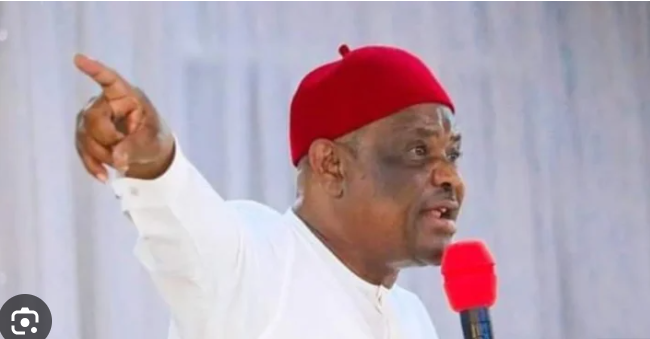
The political landscape of Rivers State, Nigeria, has been embroiled in a contentious feud, sparked by the audacious remarks of the Federal Capital Territory Minister, Nyesom Wike, targeting former Governor Peter Odili. Wike’s claim of having “revived” Odili politically has ignited a firestorm of criticism, particularly from those who served alongside Odili and witnessed his significant contributions to the state. Chief David Briggs, a former Commissioner under Odili’s administration, has emerged as a vocal critic, accusing Wike of not only insulting Odili but also the entire populace of Rivers State. Briggs, highlighting his close personal and political relationship with Odili, paints a picture of a respected statesman whose influence and legacy are being unjustly undermined by Wike’s revisionist narrative. This clash of political titans exposes deeper fissures within the state’s political fabric and raises questions about the motives behind Wike’s provocative statements.
Central to this escalating conflict is Wike’s strained relationship with his former political godson, Governor Siminalayi Fubara. Odili’s support for Fubara against Wike has further exacerbated tensions, leading to a frosty standoff between the two political heavyweights. Briggs argues that Wike’s attempt to diminish Odili’s political stature is a direct consequence of this fractured relationship, a desperate attempt to rewrite history and assert dominance. The claim that Odili needed political resuscitation is not only seen as a personal affront but also an insult to the collective memory of the people of Rivers State, who recognize Odili’s enduring influence and contributions. Briggs underscores this point by recalling Odili’s instrumental role in supporting Dame Patience Jonathan, further solidifying the former governor’s political relevance and casting doubt on Wike’s narrative of political resurrection.
Briggs’ criticism extends beyond mere personal offense; he paints a picture of Wike as a disruptive force who thrives on chaos and actively works to destabilize the state for personal gain. He alleges that Wike deliberately stirs up conflict to maintain his political relevance, pointing to the recent period of calm following a court ruling on federal allocations as evidence of Wike’s penchant for discord. Briggs portrays Wike as a figure who cannot tolerate a peaceful political environment, suggesting that his actions are driven by a need to be at the center of political turmoil. This characterization raises serious concerns about Wike’s leadership style and its potential impact on the stability and progress of Rivers State.
The former Commissioner also raises concerns about President Bola Tinubu’s silence on the matter, accusing the President of tacitly endorsing Wike’s political opportunism. This silence, Briggs argues, further emboldens Wike and contributes to the escalating political tension within the state. The absence of intervention from the highest office suggests a potential power vacuum, allowing personal rivalries and political maneuvering to overshadow the needs and well-being of the people of Rivers State. Briggs’ call for presidential intervention highlights the urgency of the situation and the potential for further escalation if left unchecked.
Briggs doesn’t shy away from issuing a stern warning to Wike, demanding an apology to the people of Rivers State and threatening to expose further details about Wike’s alleged past actions. He alludes to instances of deception and financial impropriety, claiming that Wike used Odili’s own funds to fuel political unrest within the state. These allegations, if substantiated, would further damage Wike’s credibility and paint a picture of a politician willing to exploit and betray even his closest allies for personal gain.
The escalating tension between Wike and Odili, amplified by Wike’s inflammatory remarks, represents a significant political development in Rivers State. This conflict is not just a personal feud but a battle for political control and influence, with the potential to reshape the state’s political landscape. Briggs’ impassioned defense of Odili and his sharp criticism of Wike reveal the deep-seated divisions within the state’s political elite, raising fundamental questions about leadership, integrity, and the future of Rivers State. His call for an apology and his threat to expose further details suggest that this conflict is far from over and may lead to further revelations and political reckoning.








