Boateng Samuel Clinton, a prominent former Student Representative Council (SRC) President at the University of Education, Winneba’s Kumasi Campus, has made headlines with his recent commitment to challenge the existing administration in Ghana. He has publicly criticized the government, led by President Nana Addo Dankwa Akufo-Addo and Vice President Dr. Mahamudu Bawumia, accusing them of economic mismanagement and corruption. Serving as SRC President from July 2019 to March 2021, Clinton has developed a significant reputation among youth and academic circles. His prominence places him in a unique position as an influential figure in the political landscape leading up to the 2024 elections, emphasizing the potential impact of student leaders and young voices in shaping the nation’s future.
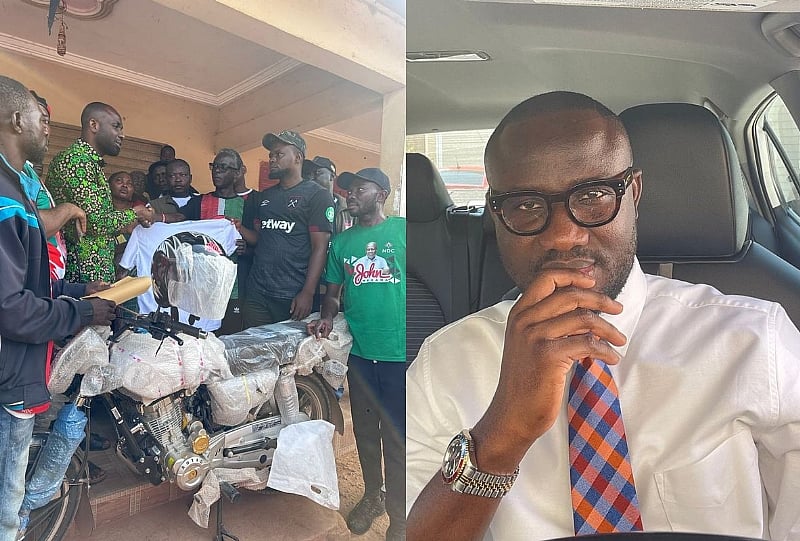
Now residing in the United States, Clinton has intensified his support for the National Democratic Congress (NDC), actively participating in campaign initiatives aimed at regaining political power. His contributions to the party have included both financial donations and material support defined by significant gestures, such as his recent donation during a campaign health walk in the Biakoye Constituency of the Oti Region. The event, conducted on November 30, 2024, allowed Clinton to showcase his commitment through the donation of over 500 NDC-branded T-shirts, a motorcycle, and an undisclosed cash sum. This display of support aims to strengthen the NDC’s presence in key demographics and galvanize momentum ahead of the upcoming elections.
The donation was facilitated by Apostle Daniel Osei Bonsu, the Head Pastor of Victor’s Crown Tabernacle, who emphasized Clinton’s eagerness to contribute to what he termed the NDC’s “rescue mission.” The items were received by Sulemana Abdul-Mumuni, the Oti Regional Organizer of the NDC, who expressed deep appreciation for the generosity displayed on Clinton’s behalf. His assurance that the donations would be strategically utilized underscores the importance of such contributions in financing grassroots campaigning efforts and engaging with the electorate.
Clinton’s contributions are not limited to the aforementioned event; earlier in the year, he notably donated a Toyota Tundra truck along with financial support to the Ashanti Regional branch of the NDC. This pattern of philanthropic engagement illustrates his ongoing role and commitment to bolstering the party’s campaign mechanisms. By fostering a solid relationship with the NDC, Clinton is positioning himself as a key player in mobilizing supporters and increasing the party’s visibility among critical voter bases, particularly the youth, who are increasingly disillusioned with the current government’s performance.
The increasing engagement of figures like Clinton in Ghanaian politics highlights a significant trend towards youth involvement and activism. With the approaching 2024 elections, the destabilization of traditional voting patterns is anticipated, and the infusion of fresh voices can potentially shift the political dynamics. Clinton’s activism aligns with the perceptions of many young Ghanaians who seek alternatives to the current leadership, emphasizing the need for a transformative approach to governance that prioritizes accountability and equitable development.
As Clinton becomes more entrenched in political campaigning, his strategic alignment with the NDC not only enhances his visibility but also reflects a broader movement among young, educated individuals advocating for change in Ghana. The impact of his contributions may resonate beyond tangible donations, reflecting a willingness to challenge the status quo and advocate for governance that responds effectively to the aspirations of the youth. The political landscape in Ghana is evolving, and figures like Clinton stand at the forefront of this transformation, seeking to redefine the relationship between politics, governance, and the youth.