









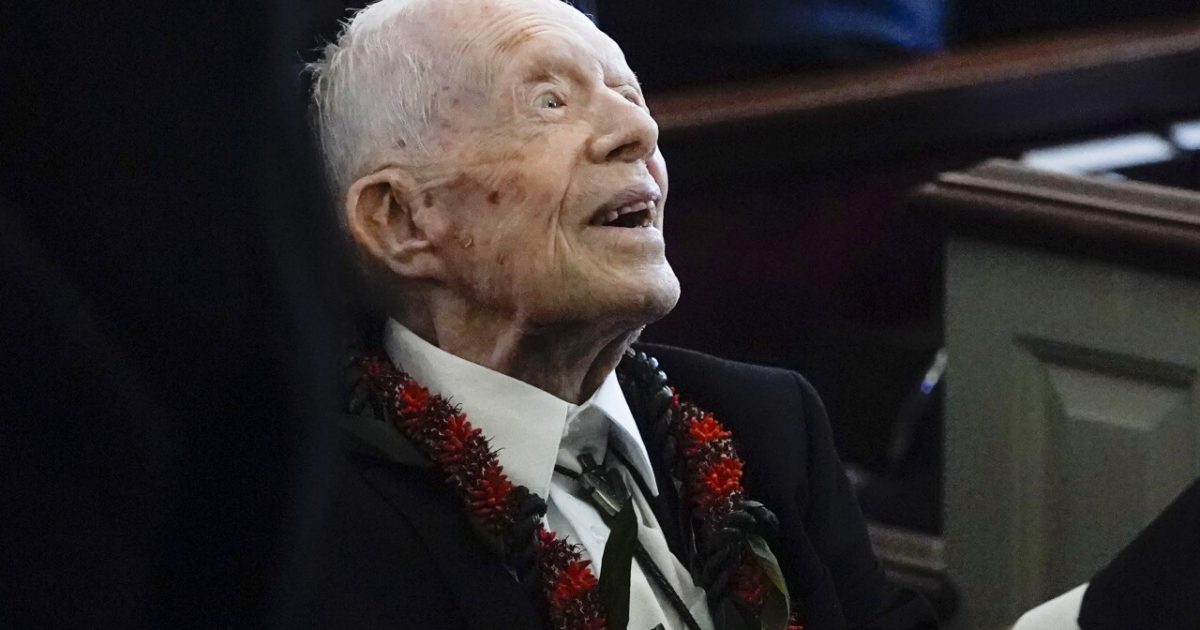
James Earl “Jimmy” Carter, Jr., a figure synonymous with both the presidency and humanitarianism, passed away peacefully at his home in Plains, Georgia, on February 18th, 2024, at the age of 100. His life journey, from humble beginnings on a peanut farm to the highest office in the land and beyond, stands as a testament to resilience, faith, and a deep commitment to serving humanity. Carter’s century of life encompassed diverse roles: farmer, naval officer, Georgia governor, US President, and globally recognized peace advocate. His legacy, though complex and multifaceted, is indelibly etched in the annals of both American and world history. His passing marks the end of an era, prompting reflection on his time in office and the remarkable life he led thereafter.
Carter’s single term as the 39th President of the United States, from 1977 to 1981, was marked by both significant achievements and undeniable challenges. He championed human rights, brokering the historic Camp David Accords, a peace treaty between Israel and Egypt, a feat that solidified his commitment to peaceful conflict resolution. However, his administration also wrestled with economic woes, an energy crisis, and the Iran hostage crisis, which cast a long shadow over his presidency. The failed rescue attempt to free the American hostages held in Iran became a symbol of the difficulties faced by his administration, contributing to his electoral defeat against Ronald Reagan in 1980. Though his presidency was often viewed as a period of political and economic turbulence, it also laid the groundwork for his subsequent decades of work in global diplomacy and humanitarian efforts.
While his time in the Oval Office was limited to a single term, Carter’s post-presidency became defined by his tireless work as a peacemaker and advocate for human rights. He founded The Carter Center, a non-profit organization dedicated to advancing human rights and alleviating suffering around the world. Through the Carter Center, he monitored elections, mediated conflicts, and worked to eradicate diseases in developing countries. His commitment to peace and justice earned him the Nobel Peace Prize in 2002, a testament to his enduring impact on the global stage. His post-presidential endeavors arguably redefined his image, transforming perceptions from a one-term president to a globally revered statesman and humanitarian.
Carter’s unwavering Christian faith played an integral role throughout his life, shaping his values and informing his actions. He remained actively involved in his church community, teaching Sunday school at Maranatha Baptist Church in Plains, Georgia, well into his 90s. His faith underpinned his commitment to social justice, human rights, and peaceful conflict resolution. It was a constant source of strength and guidance, particularly during challenging times, including his battle with brain cancer, which he publicly disclosed in 2015. Despite facing health challenges, Carter remained actively engaged in his humanitarian work, demonstrating remarkable resilience and a steadfast dedication to his beliefs.
The final chapter of Carter’s life was marked by both personal loss and continued recognition of his contributions. He mourned the passing of his beloved wife, Rosalynn, in November 2023 after 77 years of marriage. Their partnership was a cornerstone of his personal and professional life. Despite his own declining health, he poignantly attended her memorial service, a testament to their enduring bond. His deep connection to his family and community was evident throughout his life, especially during his final years, as he received care at his home in Plains, surrounded by loved ones.
Jimmy Carter’s life was a tapestry woven with threads of service, faith, and resilience. From his roots in rural Georgia to his role on the world stage, he embodied a commitment to peace, justice, and human dignity. While his presidency faced significant hurdles, his unwavering dedication to humanitarian causes in his post-presidency solidified his legacy as a global peacemaker and advocate for the marginalized. His unwavering faith, commitment to his family, and tireless pursuit of a more just and peaceful world serve as an inspiration for generations to come. Though his journey has ended, his story remains a powerful example of the enduring impact one individual can have on the world.









