





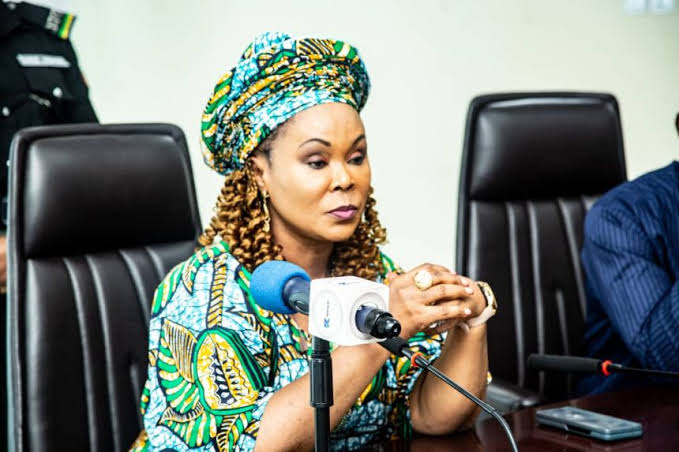
The Economic and Financial Crimes Commission (EFCC) is currently investigating Uju Ohanenye, the former Minister of Women Affairs, for alleged misappropriation of public funds totaling ₦138,413,253.89. The investigation centers around the disbursement of the ministry’s 2023 budget allocation, with allegations of violation of procurement processes and diversion of funds for personal enrichment. Ohanenye arrived at the EFCC headquarters around 11 a.m. on Thursday and is currently undergoing interrogation by operatives. The EFCC source revealed that investigations suggest funds designated for the P-Bat Cares for Women Initiative were diverted for the former minister’s personal gain. Attempts to reach the EFCC’s Head of Media and Publicity for confirmation were unsuccessful at the time of reporting. This investigation follows Ohanenye’s removal from her ministerial position in October 2024 during a Federal Executive Council meeting. Her replacement, Imaan Suleiman-Ibrahim, previously served as the Minister of State for Police Affairs.
The ongoing investigation into Ohanenye’s alleged financial misconduct underscores the Nigerian government’s efforts to combat corruption within its ranks. The EFCC’s focus on the alleged misappropriation of funds meant for the P-Bat Cares for Women Initiative raises concerns about the potential impact on vulnerable women who were intended beneficiaries of the program. The initiative, presumably designed to support women’s empowerment and welfare, may have been compromised by the alleged fraudulent activities. This case highlights the importance of transparent and accountable governance in managing public funds and ensuring that they reach their intended recipients. The outcome of the EFCC’s investigation will be crucial in determining the extent of the alleged misappropriation and holding those responsible to account.
The alleged diversion of funds designated for the P-Bat Cares for Women Initiative represents a significant breach of public trust. If proven, Ohanenye’s actions not only deprived vulnerable women of crucial support but also undermined the credibility of government programs aimed at improving their lives. The potential consequences of this alleged corruption extend beyond financial losses, impacting the overall effectiveness of social welfare initiatives and eroding public confidence in government institutions. The EFCC’s diligent investigation and pursuit of justice in this case are vital for restoring faith in the government’s commitment to fighting corruption and ensuring accountability for the misuse of public resources.
The removal of Uju Ohanenye from her ministerial position and the subsequent appointment of Imaan Suleiman-Ibrahim signal a potential shift in the Ministry of Women Affairs. Suleiman-Ibrahim’s prior experience as Minister of State for Police Affairs suggests a background in security and law enforcement, which could bring a different perspective to the ministry’s operations. This change in leadership may reflect the government’s intent to address issues of corruption and mismanagement within the ministry and to prioritize the effective implementation of programs aimed at supporting women’s development and empowerment. The new minister’s approach and priorities will be closely observed as she takes on the responsibilities of this critical role.
The allegations against Ohanenye highlight the persistent challenges of corruption within government structures and the need for robust oversight mechanisms to prevent the misuse of public funds. Strengthening transparency and accountability in government operations is crucial to ensuring that resources are allocated effectively and reach their intended beneficiaries. This case underscores the importance of independent institutions like the EFCC in investigating allegations of corruption and holding individuals accountable for their actions, regardless of their position or political affiliations. The outcome of this investigation will serve as an important precedent in the fight against corruption and will contribute to shaping the future of public accountability in Nigeria.
The focus on the P-Bat Cares for Women Initiative in this investigation underscores the vulnerability of social welfare programs to corruption. Effective mechanisms for monitoring and evaluating the implementation of such programs are essential to prevent the diversion of funds and ensure that resources are used efficiently and ethically. This case highlights the need for greater scrutiny of government spending and the importance of whistleblowing mechanisms that allow individuals to report suspected fraud and misconduct without fear of reprisal. Ultimately, the success of social welfare programs depends on the integrity and accountability of those entrusted with their management and the vigilance of citizens in holding them responsible.








