









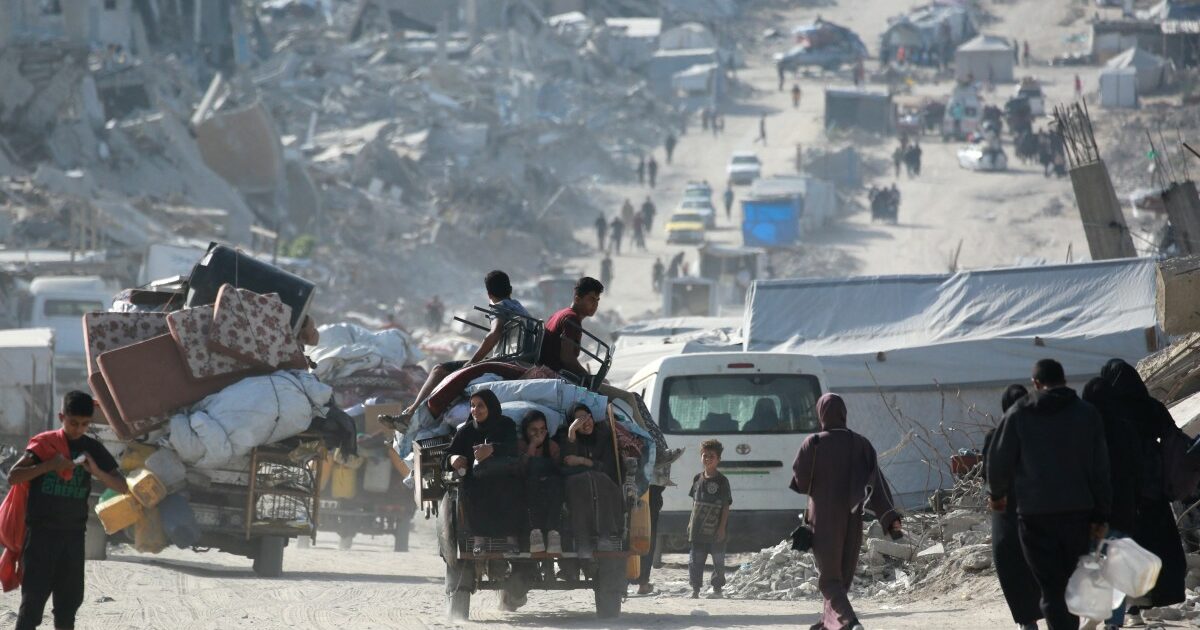
The escalating conflict between Israel and Hamas in the Gaza Strip continues to claim a devastating toll on human lives, with the latest reports from Gaza’s civil defense agency indicating at least 44 fatalities in Israeli airstrikes on Tuesday. This grim statistic adds to the already staggering number of casualties, predominantly women and children, who have perished amidst the relentless bombardment. The specific incidents include an attack on a school sheltering displaced persons in Gaza City, resulting in eight deaths, and another strike on a house in Deir el-Balah, central Gaza, claiming the lives of 12 individuals. Further casualties were reported near the Nuseirat refugee camp and the Jabalia refugee camp, where strikes on a gas station and a house, respectively, led to the deaths of 15 and nine people.
The Israeli military has yet to issue a statement regarding these latest strikes, which come as part of an intensified offensive launched on Saturday, aimed at dismantling Hamas’s control over the Palestinian territory. The conflict, ignited by Hamas’s October 7 attack on southern Israel, has witnessed a dramatic escalation, with Israel initiating “extensive ground operations” across Gaza. The initial attack by Hamas resulted in the deaths of 1,218 people in Israel, mostly civilians, and the capture of 251 hostages. While some hostages have been released or accounted for, the fate of 57 remains uncertain, with the Israeli military confirming the deaths of 34.
The ongoing conflict has plunged the Gaza Strip into a humanitarian crisis of immense proportions. The already fragile infrastructure, strained by years of blockade and conflict, has been further decimated by the relentless airstrikes and ground operations. Hospitals are overwhelmed with casualties, struggling to cope with the sheer volume of wounded and deceased. The scarcity of essential supplies, including medical equipment, food, and clean water, exacerbates the suffering of the civilian population. The continuous bombardment and ground incursions have displaced countless families, forcing them to seek refuge in overcrowded shelters or with relatives, often in equally precarious conditions.
The war’s devastating impact is reflected in the grim tally provided by Gaza’s health ministry, which reports at least 3,340 deaths since the resumption of Israeli strikes on March 18. This figure, combined with the earlier casualties, brings the overall death toll to a staggering 53,486, a testament to the immense human cost of this protracted conflict. The relentless cycle of violence continues to trap civilians in a nightmare of fear and uncertainty, with little respite from the constant threat of airstrikes and ground fighting.
The international community has expressed grave concern over the escalating violence and the mounting civilian casualties. Calls for a ceasefire and a return to negotiations have intensified, but a tangible breakthrough remains elusive. The complex political landscape and the deeply entrenched mistrust between the warring parties pose significant obstacles to achieving a lasting peace. The urgent need for humanitarian aid and the protection of civilians remains paramount as the conflict continues to inflict untold suffering on the people of Gaza.
The situation in Gaza demands immediate international attention and concerted efforts to de-escalate the conflict and address the urgent humanitarian needs of the affected population. The devastating loss of life, particularly among women and children, underscores the critical importance of finding a peaceful resolution to this long-standing conflict. The ongoing violence not only perpetuates human suffering but also jeopardizes the prospects for a stable and secure future for both Israelis and Palestinians. The international community must redouble its efforts to facilitate dialogue, provide humanitarian assistance, and work towards a just and lasting peace that respects the rights and dignity of all.









