









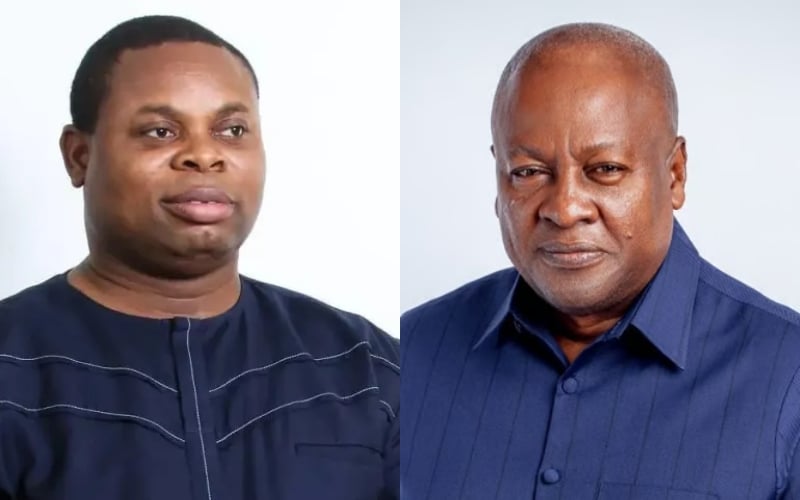
Franklin Cudjoe, President of the Imani Africa policy think tank, has expressed a strong interest in leading the proposed “Operation Recover All Loot” (ORAL) initiative should former President John Dramani Mahama win the 2024 Ghanaian presidential election. Cudjoe’s public declaration of interest underscores the significance of this anti-corruption initiative and its potential impact on Ghana’s political landscape. He has emphasized his commitment to retrieving stolen public funds and expressed confidence in the comprehensiveness of the list of individuals and entities targeted by ORAL. This public endorsement from a prominent figure in policy analysis adds weight to Mahama’s campaign promise and highlights the growing public concern over corruption within the country.
ORAL, a cornerstone of Mahama’s campaign, represents a comprehensive effort to combat corruption and retrieve misappropriated public funds and assets. This initiative aims to address the pervasive corruption that has eroded public trust in government institutions and officials. By promising a transparent and accountable process, Mahama seeks to restore faith in governance and promote a more equitable distribution of resources. The initiative’s focus on recovering stolen assets highlights the significant financial losses the country has suffered due to corruption and the potential for these recovered funds to be reinvested in critical sectors such as education, healthcare, and infrastructure.
Mahama’s promise to establish ORAL comes at a time of increased public demand for ethical leadership and transparent governance. Citizens are increasingly holding their elected officials accountable for their actions and demanding concrete measures to address corruption. ORAL, therefore, resonates with a growing segment of the population that is weary of corrupt practices and seeks a more just and equitable society. The proposed initiative positions Mahama as a champion of anti-corruption efforts and aims to differentiate him from other candidates in the upcoming election.
The operational details of ORAL, while not fully disclosed, suggest a comprehensive approach to identifying, tracking, and recovering misappropriated assets. This likely involves thorough investigations, legal proceedings, and international cooperation to ensure that stolen funds are returned to the state. The initiative’s success hinges on the effectiveness of its implementation and the political will to pursue cases against influential individuals who may be implicated in corrupt practices. The comprehensiveness of the target list, as alluded to by Cudjoe, suggests a wide-ranging investigation that aims to address corruption across various sectors and levels of government.
The potential impact of ORAL extends beyond the recovery of stolen assets. By holding corrupt officials accountable, the initiative aims to deter future acts of corruption and foster a culture of integrity within government institutions. This, in turn, can contribute to a more stable and predictable investment climate, attracting both domestic and foreign investment. Moreover, the recovered funds can be utilized to finance essential public services and development projects, thereby improving the lives of ordinary citizens and fostering economic growth. The successful implementation of ORAL could significantly enhance Ghana’s reputation on the global stage and reinforce its commitment to good governance.
The public discourse surrounding ORAL and Cudjoe’s endorsement highlight the growing importance of anti-corruption efforts in Ghana’s political landscape. The initiative’s potential to recover substantial amounts of public funds, coupled with its focus on accountability and transparency, has generated significant public interest. The upcoming election will likely be heavily influenced by the public’s perception of the candidates’ commitment to combating corruption and their ability to implement effective anti-corruption measures. The success or failure of ORAL, should Mahama be elected, will likely have a lasting impact on Ghana’s political and economic trajectory.









