









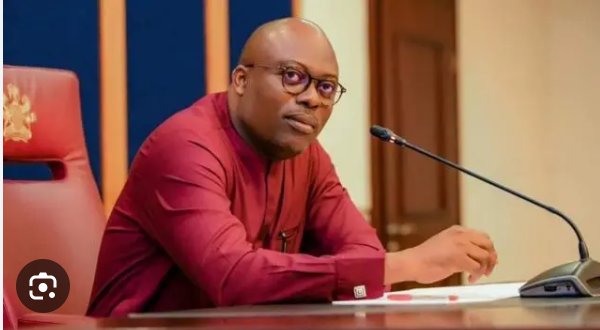
Rivers State Governor, Siminalayi Fubara, reaffirmed his commitment to driving strategic and impactful development projects aimed at sustainably uplifting the lives of Rivers State residents. This commitment was underscored during the inauguration of the remodeled Government Girls’ Secondary School in Ahoada Town, a project inherited from the previous administration and prioritized for its potential to empower young women through quality education. The Governor’s dedication to education and community development was further highlighted by the conferral of the traditional title “Eze Yawe Ugo of Ekpeye land,” signifying “The King who brings happiness and joy to Ekpeye land,” a testament to his growing influence and the community’s recognition of his efforts.
The Governor’s decision to continue the school project, despite inheriting it from his predecessor, speaks volumes about his prioritization of education. He recognized the value of investing in the future of the girl-child, acknowledging that quality education is the cornerstone of developing resourceful, responsible, and empowered citizens. The completion of the school demonstrates the Governor’s dedication to building a brighter future for the community and ensuring that the next generation has access to the tools they need to thrive. The Governor’s focus extends beyond merely completing existing projects; he is committed to ensuring that these projects are executed effectively and efficiently, translating investment into tangible improvements in the lives of the people.
Governor Fubara openly acknowledged and condemned the alleged harassment and intimidation faced by those who supported him during his campaign and early tenure. He specifically cited the arrests and detainment of prominent traditional rulers who had backed his candidacy, including the Eze Ekpeye Logbo, His Imperial Majesty, Eze Kelvin Anugwo, and Eze Cassidy Ikegbidi. He also revealed that his Chief of Staff, Dr. Edison Ehie, was declared wanted by the Nigeria Police Force on what he described as fabricated charges. These incidents, according to the Governor, were direct consequences of their political affiliations and support for his administration. This public acknowledgment not only demonstrates solidarity with his supporters but also highlights the political complexities and challenges he faces in governing the state.
In a gesture of reciprocal support and in response to requests from traditional leaders, Governor Fubara pledged to officially recognize certain designated traditional stools. This commitment signifies not only respect for traditional authority but also an understanding of the importance of collaboration with local power structures in achieving his developmental goals for the state. This act further strengthens the bond between the government and the people, fostering an environment of mutual respect and understanding. By recognizing these traditional stools, the Governor acknowledges their historical significance and integrates them into the broader governance structure, promoting inclusivity and recognizing the vital role they play in community life.
Beyond the symbolic gesture of recognizing traditional stools, Governor Fubara also addressed practical infrastructural concerns. During an inspection tour, he noted the poor condition of the access road leading to the newly inaugurated school and immediately ordered its reconstruction. He further committed to extending the road reconstruction and constructing a necessary bridge, contingent upon the availability of funds. This proactive approach to infrastructure development emphasizes the Governor’s commitment to not only delivering key projects but also ensuring accessibility and connectivity for the communities they serve.
In addition to the access road improvements, Governor Fubara addressed the internal roads within the school compound. Dissatisfied with the current contractor’s performance, he announced the contract’s revocation and pledged to re-award it to a more competent firm aligned with his administration’s focus on quality and timely delivery. This decision underscores the Governor’s insistence on accountability and adherence to the high standards he has set for his administration. He emphasizes not just completing projects, but completing them to the highest possible standard, ensuring that they serve the community effectively and stand the test of time. This commitment to quality and accountability is a recurring theme in Governor Fubara’s approach to governance.









