





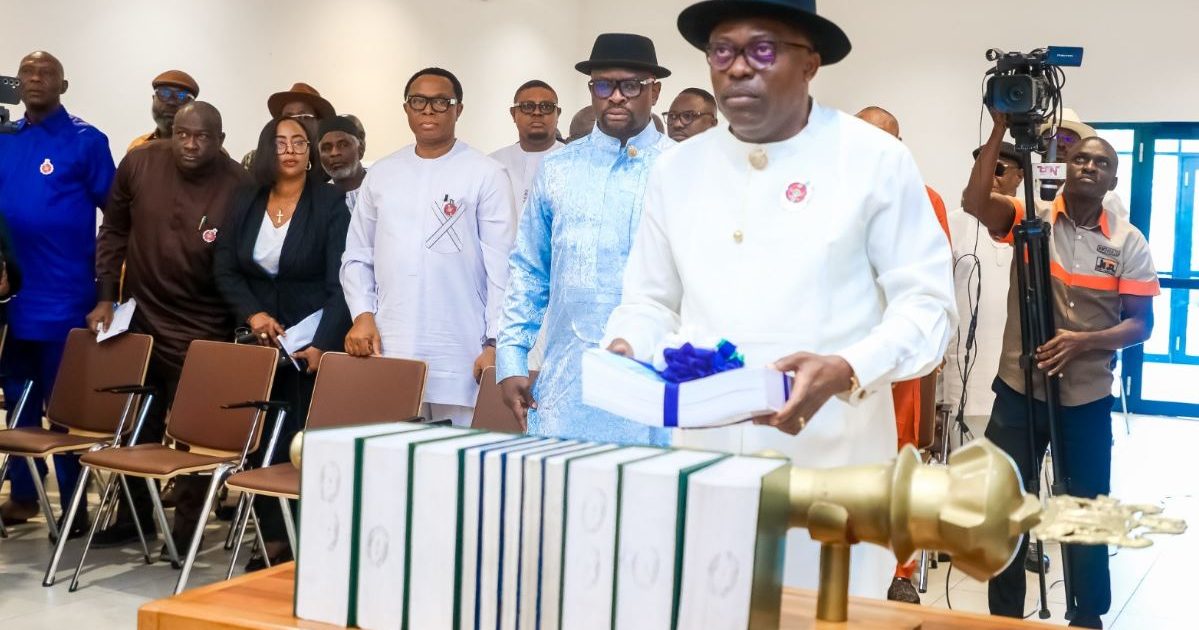
The political landscape of Rivers State continues to be marred by internal conflict, culminating in a controversial budget presentation for the 2025 fiscal year. Governor Siminalayi Fubara presented a N1.18 trillion budget proposal, dubbed the “Budget of Inclusive Growth and Development,” not to the recognized 27-member House of Assembly, but to a splinter group of only three lawmakers. This action mirrors a similar event from the previous year, highlighting the ongoing rift between Governor Fubara and his predecessor, Nyesom Wike, who now leads the majority faction within the Assembly. The opposition All Progressives Congress (APC) has condemned Fubara’s move, labeling it an illegal act and a blatant disregard for established legal processes.
The root of this political drama lies in the fractured relationship between Fubara and Wike. The relationship deteriorated significantly in October 2023, leading to a power struggle within the Rivers State House of Assembly. Fubara survived an impeachment attempt orchestrated by the Wike-aligned lawmakers, who subsequently defected to the APC. Since then, Fubara has refused to recognize the 27-member faction led by Speaker Martin Amaewhule, instead aligning himself with the three-member group led by Speaker Victor Oko-Jumbo. This factionalism has effectively paralyzed the legislative process in the state, casting a long shadow over the legitimacy of governmental actions.
Governor Fubara’s presentation of the budget to the minority faction further exacerbates the political crisis. The budget, totaling N1.18 trillion, outlines significant allocations for various sectors, including N31 billion for agricultural development and youth employment programs, N63 billion for education, N97.75 billion for healthcare, and over N195 billion for road and transport infrastructure. While these allocations appear promising on paper, their actual implementation remains uncertain given the ongoing political impasse. The lack of a functional and unified legislative body raises serious questions about the budget’s approval process and subsequent oversight.
The APC’s strong condemnation of Fubara’s actions underscores the gravity of the situation. The party accuses the Governor of not only flouting established legal procedures but also undermining the democratic principles of governance. The APC argues that Fubara’s continued recognition of the minority faction, despite ongoing court proceedings challenging its legitimacy, is a dangerous precedent that could further destabilize the state’s political environment. They have called for adherence to judicial pronouncements and a return to a unified legislative process to foster peace and facilitate development in the state.
The budget itself, while substantial in size, reflects the administration’s stated priorities. The substantial allocation to infrastructure projects, particularly roads and transport, signifies a focus on physical development. Similarly, the investments in education and healthcare underscore a commitment to human capital development. The earmarked funds for agricultural development and youth employment initiatives aim to address critical socioeconomic challenges, potentially boosting local economies and reducing unemployment. However, the feasibility of these ambitious plans hinges on the resolution of the political crisis and the restoration of a functional and legitimate legislative process.
The political standoff in Rivers State has created a complex and volatile situation. The division within the House of Assembly, coupled with the Governor’s decision to bypass the majority faction, casts a significant doubt over the legitimacy of governmental actions, including the budget presentation. The APC’s vocal opposition and accusations of illegality further complicate the situation, highlighting the urgent need for a resolution. The future of Rivers State hinges on the ability of its political leaders to overcome their differences, restore a functioning legislature, and work together to implement policies that benefit the citizens. Without a unified and legitimate governance structure, the “Budget of Inclusive Growth and Development” risks becoming a symbol of political dysfunction rather than a roadmap for progress.








