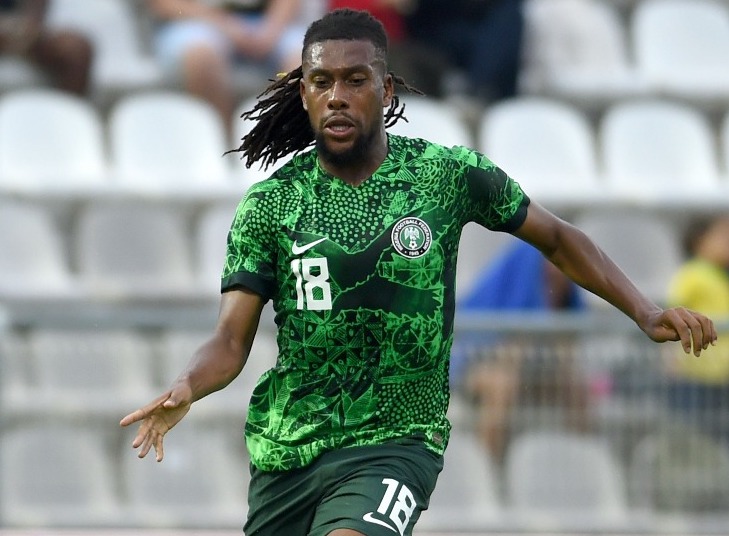
Nigeria’s football landscape has been significantly influenced by the impressive career of midfielder Alex Iwobi, who recently made his mark as the most capped active player for the national team, the Super Eagles. Iwobi achieved this milestone during Nigeria’s recent Africa Cup of Nations (AFCON) qualifying match against Libya, held at the Godswill Akpabio Stadium. His 81st international appearance played a crucial role in securing a narrow 1-0 victory against a resilient Libyan side. This victory, however, came following complicated circumstances for the team, including a cancelled reverse fixture due to a challenging situation at Al-Abraq airport, which embroiled the players in a 20-hour ordeal over fears of hostility in Libya. At just 27 years old, Iwobi’s performance continues to embody a significant commitment to his national duties.
Iwobi’s rise to prominence within the national team began when he debuted at just 19 years old, in an international friendly match against the Democratic Republic of Congo on October 8, 2015. Under the coaching direction of Sunday Oliseh at that time, he quickly established himself as a vital player for Nigeria. Since his entry into the national squad, Iwobi’s contribution has been noteworthy, totaling ten goals and six assists across various competitions. His inaugural goal for Nigeria came in a pivotal 2-1 win over Zambia during the 2018 FIFA World Cup qualifying campaign, which underlined his growing influence in central positions and set the stage for his extensive impact on the squad going forward.
Within the context of Nigerian football history, Iwobi stands in elite company, currently holding the seventh position on the all-time cap list, trailing behind legendary figures such as Ahmed Musa, Vincent Enyeama, and Joseph Yobo, among others. With 81 caps to his name, he leads active players, overtaking peers such as Moses Simon and William Troost-Ekong. Although Musa holds the record for the most caps at 109, his absence from the national team following the 2023 AFCON tournament has allowed Iwobi to take the forefront in terms of experience and presence in the current squad.
This journey tells a tale of growth and resilience, as Iwobi has consistently balanced club commitments with his national duties, currently playing for Fulham in the English Premier League. Throughout his international career, he has demonstrated adaptability and consistency, integral in major tournaments such as the 2018 FIFA World Cup and various AFCON editions, where his performances have been vital to Nigeria’s ambitions. Iwobi’s technical skills coupled with his versatility in midfield positions further solidify his status as an asset to the Super Eagles, as he can effectively adjust his playstyle to meet the needs of different tactical setups.
Memorable moments in Iwobi’s career are substantial, with his goal against Zambia epitomizing a highlight that not only secured Nigeria a place in the World Cup but also underscored his development as a significant player. As he approaches 100 international appearances, Iwobi represents not only a current key player but a source of inspiration for younger talents emerging in Nigerian football. His steadfast dedication and performance continue to resonate as he serves as a link between the legacy of past greats in Nigerian football and the future aspirations of the national team.
Looking ahead, as the Super Eagles prepare for the upcoming 2025 Africa Cup of Nations, Iwobi’s wealth of experience will undoubtedly be pivotal. The team’s ambition to capture their fourth continental title hinges partly on the leadership and performance of players like Iwobi, who has not only achieved a historic milestone but stands as a beacon of hard work, skill, and resilience on the global football stage. His trajectory from a youthful debut to becoming a core figure within the squad demonstrates the faith successive coaches have placed in him, setting a high standard for current and future generations of Nigerian footballers.