









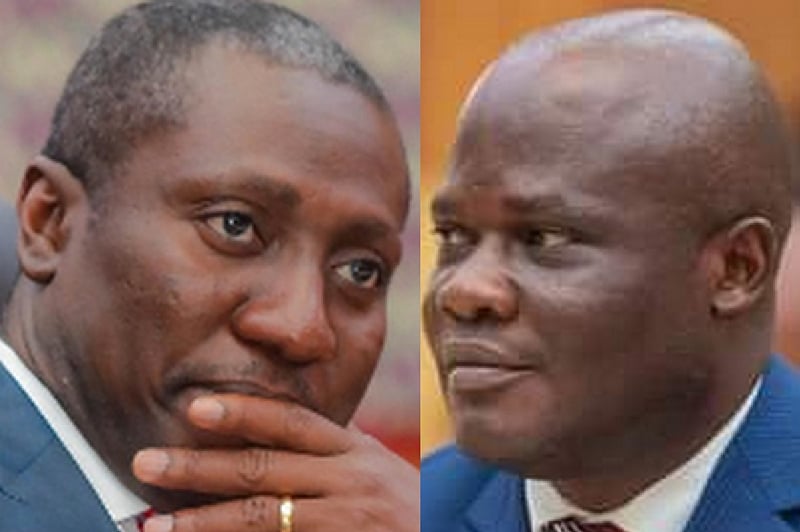
First Deputy Minority Whip, Ahmed Ibrahim, has publicly urged Majority Leader Alexander Afenyo-Markin to acknowledge his newly assumed role as Minority Leader and return to Parliament to facilitate the continuity of government business. This appeal follows a significant declaration by Speaker Alban Bagbin, who announced the vacancy of four parliamentary seats. This change shifted the power dynamics within the House, as the affected Members of Parliament—Cynthia Morrison from Agona West, Kojo Asante of Suhum, Andrew Asiamah from Fomena, and Peter Kwakye Ackah of Amenfi Central—transition to independent candidates. The shift has consequently left the National Democratic Congress (NDC) with 136 seats, elevating them to the status of the ruling party, while the New Patriotic Party (NPP) has dropped to 135 seats, thus altering the parliamentary landscape.
During an appearance on Channel One TV, Ibrahim highlighted the critical need for expedited legislative work as the general elections approach in just 50 days. The sense of urgency was palpable in his insistence that Afenyo-Markin must move past waiting for a ruling from the Supreme Court and fully embrace his responsibilities in his new capacity. He emphasized the pressing need for legislative activity, particularly in light of significant tasks that need to be addressed within a limited timeframe. Ibrahim articulated that the incumbent political climate necessitates swift action, especially with the financial vote on account required from the new finance minister.
Ibrahim’s remarks underscore the sense of urgency in Ghana’s political environment, especially as the general elections draw near. He called out Afenyo-Markin for what he perceives as indecision and urged him to focus on his duties as the Minority Leader. The implication of Ibrahim’s message is that political stability and legislative continuity are paramount, and any delay caused by waiting on high court decisions could jeopardize essential governmental functions. He warned that Ghana’s legislative agenda cannot be put on hold whilst politicians await external decisions, highlighting the direct impact on governance and public service delivery.
With only three weeks of parliamentary sessions remaining, Ibrahim reiterated the necessity for Afenyo-Markin to fully accept and embrace his new role. He articulated that time is of the essence, underscoring the importance of prompt action in the legislative chamber to prepare for ensuing governmental processes, including budgetary considerations and electoral preparations. His call to action was clear: minority leadership must not delay, as there are pressing matters that require immediate attention to ensure the government’s functionality during this transitional period.
The shift in power dynamics following the departure of seasoned MPs also presents challenges and opportunities for both the NDC and the NPP. The urgent need for effective governance and strategic planning lies with the new minority leadership, which must navigate the complexities of their new status while ensuring legislative efficiency. Ibrahim’s assertions reflect an understanding of the weighty responsibility now resting on Afenyo-Markin’s shoulders and the imperative for leadership during this politically charged time.
In summary, Ahmed Ibrahim’s appeal to Afenyo-Markin centers on the critical need for proactive governance as the nation heads toward elections. His remarks encapsulate the heightened urgency for legislative action amidst altering political landscapes. With the clock ticking on parliamentary sessions, and substantial governmental matters at stake, Ibrahim’s message resonates with the essence of leadership responsibility in times of change, underpinning the importance of collaboration and decisive action within Ghana’s Parliament for both immediate tasks and future electoral dynamics.









