





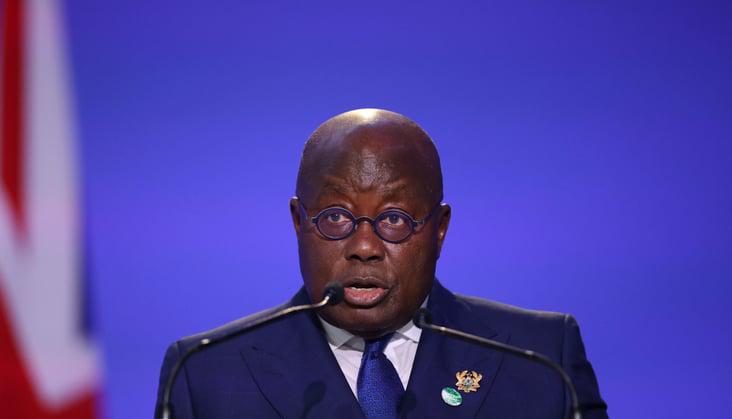
Ghana’s economic journey in the wake of the COVID-19 pandemic has been marked by resilience and a concerted effort to navigate the turbulent waters of global economic uncertainty. President Nana Addo Dankwa Akufo-Addo, in his final State of the Nation Address in January 2025, painted a picture of recovery and progress, largely attributed to the successful implementation of the Post-COVID-19 Program for Economic Growth (PC-PEG) supported by the International Monetary Fund (IMF). The president announced the receipt of a substantial US$1.92 billion from the IMF, a testament to Ghana’s commitment to fulfilling the program’s requirements and achieving positive economic outcomes. This financial injection served as a lifeline, bolstering Ghana’s efforts to stabilize its fiscal position, restore investor confidence, and pave the way for sustainable growth.
The president’s address highlighted the strategic decision to seek assistance from the IMF as a pivotal moment in Ghana’s economic recovery. Acknowledging the challenges posed by the pandemic, he described the government’s approach as one of composure and calculated action. The application for the IMF-supported program represented a proactive step towards addressing the economic downturn and mitigating its long-term impact. The subsequent successful completion of three consecutive reviews by the IMF Board underscored Ghana’s commitment to the program’s objectives and paved the way for the disbursement of the much-needed funds. The IMF’s positive assessment of Ghana’s progress served as a validation of the government’s economic policies and provided further impetus for continued reform and growth.
President Akufo-Addo expressed confidence in Ghana’s economic rebound, emphasizing the strength and speed of the recovery, which he attributed in part to the implementation of the IMF program. He declared the economic crisis to be over, highlighting the significant progress made in stabilizing the economy and restoring investor confidence. The president’s optimistic assessment reflected the positive impact of the IMF program, which not only provided crucial financial support but also instilled a sense of stability and predictability, encouraging both domestic and foreign investment. The program’s success served as a powerful signal that Ghana was on the path to economic recovery and presented a promising environment for future growth.
The positive trajectory of Ghana’s economic recovery was further underscored by the president’s observation that the pace of recovery had exceeded initial expectations. This positive outcome was attributed to a combination of factors, including the effective implementation of the IMF program, sound economic policies, and the resilience of the Ghanaian economy. The faster-than-anticipated recovery signaled a renewed sense of optimism and provided a strong foundation for future economic growth. It also demonstrated the effectiveness of the government’s strategic approach to addressing the challenges posed by the pandemic and its commitment to creating a sustainable and prosperous future for Ghana.
While acknowledging the achievements made under the IMF program, President Akufo-Addo emphasized the importance of maintaining the momentum of economic reform. He urged the incoming administration to continue implementing the necessary reforms to ensure sustained growth and stability. This call for continuity underscored the president’s belief that long-term economic success requires a consistent and sustained effort. It also highlighted the importance of building upon the progress achieved under the IMF program and ensuring that the gains made are not only preserved but further enhanced in the years to come.
In essence, President Akufo-Addo’s final State of the Nation Address presented a narrative of resilience, recovery, and renewed hope for Ghana’s economic future. The successful implementation of the IMF-supported program, coupled with sound economic policies, played a crucial role in navigating the challenges posed by the COVID-19 pandemic and setting the stage for sustained economic growth. The president’s emphasis on the importance of continued reform served as a reminder that economic progress is an ongoing journey that requires consistent effort and a long-term vision. His optimistic assessment of Ghana’s economic outlook, coupled with the call for continued commitment to reform, left a legacy of hope and a roadmap for future prosperity.








