





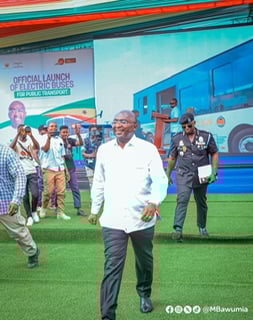
Vice President Dr. Mahamudu Bawumia has announced a significant advancement in Ghana’s immigration protocols, introducing electronic gates (E-Gates) for travelers utilizing their Ghana Cards. This initiative, set to commence next week, emphasizes the government’s dedication to digital transformation and aims to streamline travel for Ghanaians. During the launch event for Ghana’s first electric bus fleet on November 27, 2024, Dr. Bawumia remarked on the importance of this development, asserting that it reflects a broader strategy to modernize governmental systems and services. By allowing citizens to bypass traditional immigration processes, the government is taking substantial steps towards a more efficient and user-friendly immigration experience.
The Vice President expressed confidence in the benefits of this new system, pointing out that previous skepticism from opposition parties regarding the use of Ghana Cards for international travel has been overcome. He emphasized that the government has fulfilled its pledge to enhance the travel experience, which is indicative of the progress being made in various sectors. Bawumia’s remarks highlighted the successful launch of the Mobile Money Interoperability system, a revolutionary step in Ghana’s financial landscape. This system has enabled seamless money transfers across various banks and mobile platforms, positioning Ghana as a leader in financial technology within Africa.
In addition to advancements in travel and finance, the introduction of electric buses represents a crucial element of the government’s sustainability strategy. Dr. Bawumia articulated that these buses will not only contribute to environmental protection but will also offer economic advantages to citizens. The electric fleet is seen as a vital transition towards more sustainable and cost-effective public transportation options in Ghana, addressing both ecological and fiscal concerns. As the buses enter test operations, they symbolize Ghana’s commitment to innovation in public transport and its adaptation to global trends in energy use.
The government under Dr. Bawumia is clearly committed to harnessing technology to promote efficiency in both travel and public services. With initiatives like the E-Gates and the electric bus fleet, Ghana aims to set a precedent for other nations in Africa. These developments reflect a broader trend of digitization and green energy solutions, reinforcing the country’s position as a forward-thinking leader on the continent. The Vice President’s emphasis on these projects illustrates how they are interconnected within the government’s overarching goals of enhancing citizen convenience, sustainability, and economic growth.
Moreover, this focus on innovation aligns with widespread international trends towards digital governance and environmentally friendly transportation solutions. Dr. Bawumia’s administration is keen on adapting to the changing global landscape, where technology and sustainability play pivotal roles in shaping national policies. By promoting digital tools like the Ghana Card for travel and investing in electric transportation, the government is demonstrating its responsiveness to the needs of its people and the environment.
In conclusion, Dr. Bawumia’s announcements regarding the E-Gates and electric buses mark pivotal developments in Ghana’s journey towards modernization and sustainability. These initiatives not only aim to ease travel and enhance public transport but also serve as a testament to the government’s commitment to innovation and leadership within Africa. As Ghana continues to evolve its systems through technology and green initiatives, it positions itself to thrive in an increasingly interconnected world while providing tangible benefits to its citizens.








