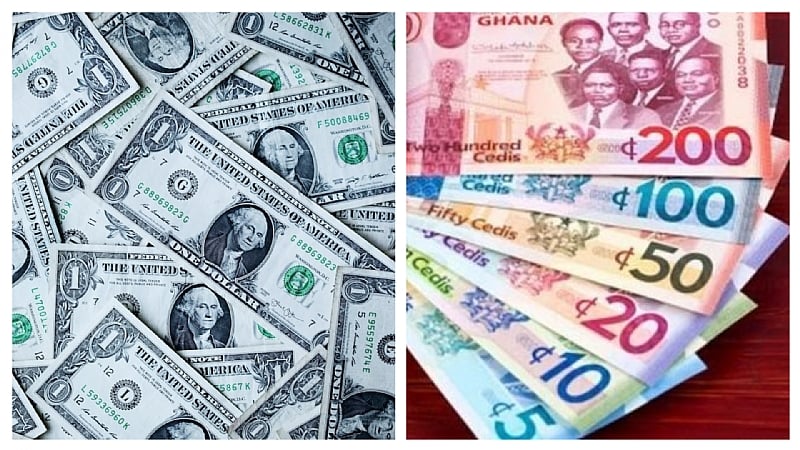
The Ghanaian Cedi has continued its positive trajectory against the US dollar, demonstrating a robust performance in the foreign exchange market. As of May 15, 2025, the Cedi’s buying rate stood at GHS12.38 per dollar, while the selling rate reached GHS13.17. This sustained appreciation signifies a strengthening of the Cedi, offering a more favorable exchange rate for individuals and businesses acquiring dollars. Forex bureaus, which cater to a significant portion of the currency exchange market, displayed slightly higher rates. Those exchanging dollars for cedis could obtain GHS13.30 per dollar, while those converting cedis to dollars faced a rate of GHS13.75. These variations reflect the dynamics of supply and demand within the retail forex market. Cedirates.com, a recognized platform for currency and fuel information in Ghana, served as the source for these figures, adding credibility to the reported exchange rates.
The interbank market, where financial institutions trade currencies among themselves, presented even more competitive rates. The buying rate for the US dollar stood at GHS12.44, while the selling rate was marginally higher at GHS12.45. This minimal spread between buying and selling rates signifies a highly liquid and efficient interbank market, facilitating smooth currency transactions for larger financial players. Comparing the interbank and forex bureau rates reveals a noticeable difference, highlighting the potential cost savings for those with access to the interbank market. The Cedi’s performance against other major currencies, such as the British Pound and the Euro, also showed positive trends.
The Ghanaian Cedi exhibited strength against the British Pound and the Euro, mirroring its performance against the US dollar. The average exchange rate for converting pounds to cedis was GHS16.37, while the reverse conversion from cedis to pounds stood at GHS17.46. Similarly, the Euro traded at GHS13.77 for those exchanging euros for cedis and GHS14.78 for those converting cedis to euros. These rates, obtained from forex bureaus, reflect the general market conditions for these currency pairs. On the Bank of Ghana interbank market, the Pound was selling at a slightly higher rate of GHS16.58, while the Euro traded at GHS13.96. This slight difference in rates underscores the benefits of accessing the interbank market for larger transactions.
Money transfer services, which play a crucial role in remittances and international payments, offered competitive exchange rates for transfers to Ghana. LemFi and Afriex, two prominent players in the money transfer space, provided attractive rates for dollar, pound, and euro transfers. For dollar transfers from the US or the UK to Ghana, LemFi offered a rate of GHS12.50 per dollar, while Afriex provided a slightly more competitive rate of GHS12.34. For British Pound transfers, LemFi’s rate was GHS16.65, and Afriex offered GHS16.46 per pound. Regarding Euro transfers, Afriex offered GHS13.88 per euro, while LemFi’s rate stood at GHS14.07. These rates demonstrate the competition within the money transfer market, ultimately benefiting consumers with more options and potentially lower costs.
Digital subscription payments, an increasingly common expense for many Ghanaians, also experienced favorable exchange rates. For those subscribing to services like Netflix, Spotify, or Apple Music using Visa and Mastercard, the exchange rates were GHS13.32 and GHS13.38, respectively. These rates, compared to the forex bureau rates, offer a relatively cost-effective way to pay for international digital services. The availability of these rates for digital transactions reflects the growing integration of Ghana into the global digital economy.
In conclusion, the Ghanaian Cedi’s robust performance against major international currencies like the US dollar, British Pound, and Euro signals positive economic indicators. The appreciation of the Cedi translates to increased purchasing power for Ghanaians acquiring foreign goods and services. The competitive exchange rates observed across different platforms, from forex bureaus to money transfer operators and digital payment gateways, signify a healthy and dynamic foreign exchange market. This favorable exchange rate environment can contribute to economic growth and stability by facilitating trade, investment, and remittances. The data presented paints a picture of a strengthening Cedi, offering promising prospects for the Ghanaian economy.