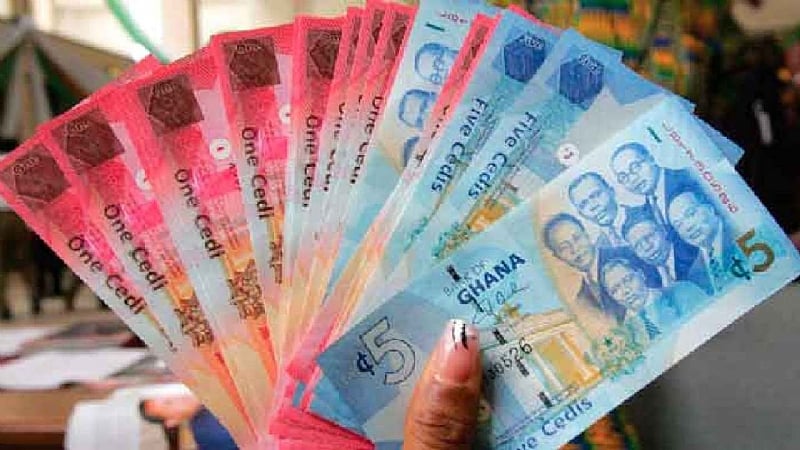
The Ghanaian Cedi experienced a slight depreciation against the United States dollar on Wednesday, December 18, 2024, continuing a trend of volatility in the currency market. According to Cedirates.com, a reliable source for currency information in Ghana, the Cedi’s buying rate weakened by 3 pesewas to GHS14.74, while the selling rate dipped by 1 pesewa to GHS15.20. This indicates a slightly higher cost for individuals and businesses looking to acquire US dollars, potentially impacting import prices and overall economic activity. The interbank rates, reflecting transactions between banks, showed a slightly stronger Cedi, trading at GHS14.71 for buying and GHS14.73 for selling. This difference between the retail rates provided by Cedirates.com and the interbank rates is common and reflects the markup applied by forex bureaus and commercial banks.
The Cedi’s performance against other major currencies, such as the British Pound Sterling and the Euro, also showed some depreciation. The average buying rate for the Pound Sterling stood at GHS18.36, while the selling rate reached GHS19.23. Similarly, the Euro traded at GHS15.30 for buying and GHS15.94 for selling. These rates, like the US dollar rates, reflect the overall supply and demand dynamics in the foreign exchange market. The Bank of Ghana’s interbank rates for these currencies were slightly lower, with the Pound selling at GHS18.72 and the Euro at GHS15.47. This again highlights the difference between interbank and retail rates.
Remittance services, a crucial source of foreign currency inflows for Ghana, offered competitive exchange rates for individuals sending money from the US and the UK. LemFi and Afriex, two prominent money transfer platforms, provided rates of GHS14.65 and GHS14.70 per US dollar, respectively. These rates are generally more favorable than those offered by traditional banks and forex bureaus, highlighting the increasing role of fintech companies in the remittance market. For those sending money from the UK, the platforms offered varying rates for the British Pound, with LemFi offering a buying rate of GHS18.58 and Afriex offering a selling rate of GHS15.27. The disparity in these rates warrants careful consideration by individuals seeking to maximize the value of their remittances.
The Euro exchange rates offered by these remittance platforms were also competitive. Afriex offered a selling rate of GHS15.31 per Euro, while LemFi provided a rate of GHS15.42. These rates, along with the dollar and pound rates, underscore the importance of comparing rates across different platforms to secure the most favorable exchange rate for remittances. The availability of multiple remittance options empowers individuals to make informed decisions and potentially save money on transfer fees and exchange rate margins.
For individuals looking to make international online payments for services like Netflix, Spotify, and Apple Music, Visa and Mastercard offered a unified rate of GHS15.78 per US dollar. This rate is slightly higher than the retail and interbank rates, reflecting the fees and charges associated with international transactions. Users of these services should be aware of these charges when budgeting for their subscriptions. The consistent rate across both Visa and Mastercard suggests a standardized approach to foreign exchange pricing for online transactions.
The fluctuation in the Ghanaian Cedi’s exchange rate underscores the complexities of the foreign exchange market and the various factors that influence currency valuations. These factors include global economic conditions, commodity prices, local monetary policy, and investor sentiment. The Cedi’s depreciation against major currencies has implications for import costs, inflation, and the overall Ghanaian economy. Monitoring exchange rate movements and understanding the factors driving these changes are crucial for individuals, businesses, and policymakers. The availability of various platforms offering competitive exchange rates, particularly in the remittance market, provides opportunities for individuals to optimize their transactions and potentially mitigate the impact of currency fluctuations. Staying informed about exchange rate trends and utilizing available resources can help individuals and businesses navigate the dynamic foreign exchange landscape effectively.