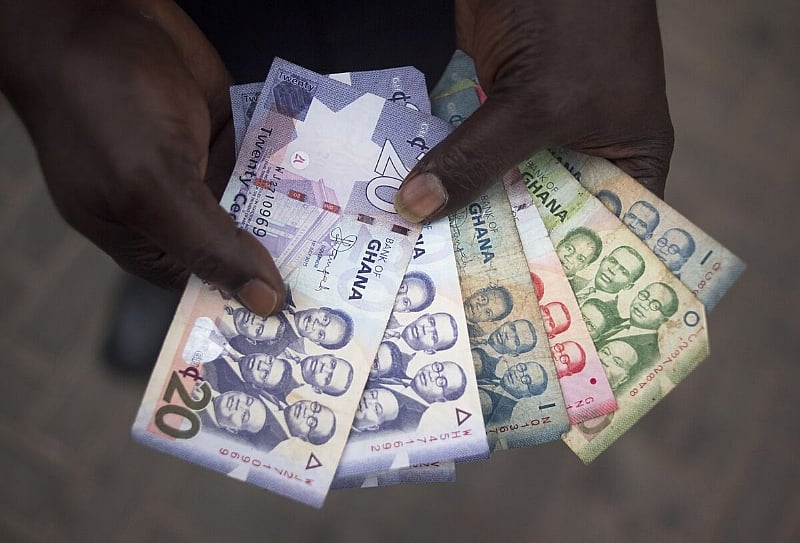
The Ghanaian Cedi experienced mixed fortunes against the US dollar on Tuesday, December 10, 2024, exhibiting appreciation in the selling rate and depreciation in the buying rate. According to Cedirates.com, a reliable source for currency and fuel updates in Ghana, the Cedi’s selling rate strengthened by 4 pesewas to reach GHS15.40 per US dollar, while the buying rate weakened by 9 pesewas, settling at GHS14.88. This divergence between buying and selling rates reflects the dynamics of the foreign exchange market, where factors such as supply and demand, market sentiment, and speculation can influence the price at which currencies are exchanged. The interbank rate, reflecting transactions between banks, saw the Cedi trading at GHS14.79 for buying and GHS14.81 for selling against the US dollar. This suggests a slightly stronger Cedi within the interbank market compared to the retail rates offered by forex bureaus and other exchange platforms.
Beyond the US dollar, the Cedi’s performance against other major currencies also presented a mixed picture. The British Pound Sterling saw its buying and selling rates averaging GHS18.56 and GHS19.57 respectively, indicating a relatively stable exchange rate. The Euro followed a similar trend, with buying and selling rates of GHS15.48 and GHS16.20 respectively. The Bank of Ghana’s interbank market offered slightly different rates, with the Pound Sterling selling at GHS18.93 and the Euro at GHS15.66. These variations between interbank and retail rates are common and reflect the different market segments and their specific dynamics.
Remittance services, a vital lifeline for many Ghanaians receiving funds from abroad, offered competitive exchange rates. LemFi and Afriex, two prominent money transfer platforms, provided attractive rates for sending money from the US and the UK to Ghana. LemFi offered a rate of GHS14.73 per US dollar, while Afriex offered a slightly higher rate of GHS15.02. For British Pound transfers, LemFi offered a buying rate of GHS18.80, while Afriex offered a selling rate of GHS15.58. These competitive rates underline the importance of remittances in the Ghanaian economy and the role of technology in facilitating efficient and cost-effective cross-border transfers.
The Euro exchange rates offered by these platforms also remained competitive. Afriex offered a selling rate of GHS15.65 per Euro, while LemFi offered a slightly lower rate of GHS15.56. These competitive rates provide options for Ghanaians receiving remittances in Euros, further highlighting the dynamic nature of the remittance market and the benefits of choice for consumers. The availability of multiple platforms with varying rates encourages competition and ensures that recipients benefit from optimal exchange rates.
For Ghanaians making international online payments, such as renewing subscriptions for services like Netflix, Spotify, or Apple Music, the US dollar exchange rate offered by Visa and Mastercard stood at GHS15.84. This rate reflects the cost of using these payment processors for international transactions. It’s important for consumers to be aware of these rates and factor them into their budgeting when subscribing to international services. The prevalence of online subscriptions highlights the increasing integration of the Ghanaian economy into the global digital marketplace.
In summary, the Ghanaian Cedi’s performance against major currencies on December 10, 2024, presented a nuanced picture. While the Cedi appreciated against the US dollar in terms of the selling rate, it depreciated in the buying rate. Exchange rates against the British Pound and Euro remained relatively stable. Remittance platforms offered competitive rates for transferring funds from the US, UK, and Eurozone to Ghana, highlighting the significance of remittances in the national economy. Finally, the exchange rate for international online payments through Visa and Mastercard remained at GHS15.84 per US dollar, reflecting the cost of accessing global digital services. These fluctuations and variations in exchange rates underscore the complex dynamics of the foreign exchange market and the importance of staying informed about currency movements for both businesses and individuals engaging in international transactions.