









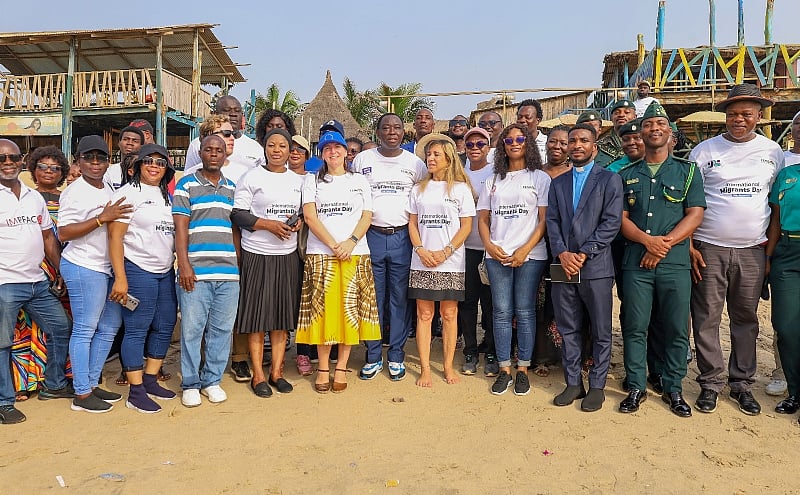
The International Migrants Day commemoration in Ghana, organized by the Coalition of CSOs on Migration, Ghana (CCMG), was a poignant reminder of the human cost of migration and a call for collective action to protect the rights and dignity of migrants. The day’s events, which included a solemn wreath-laying ceremony at La Tawala Beach and a spirited football competition at the McDan Astro Turf Sports Complex, served as a platform to both mourn those lost and celebrate the resilience and contributions of migrant communities. The central theme resonating throughout the day was the need for safe and legal migration pathways, a stark contrast to the perilous journeys undertaken by many, often leading to tragedy.
The wreath-laying ceremony, a deeply moving tribute to those who perished pursuing a better life, served as the emotional core of the commemoration. Mr. Eric Kwakye Fiasa, CEO of Right to Be Free and National Coordinator of CCMG, delivered a powerful message, humanizing the migrant narrative and reminding attendees that the lives lost were not mere statistics, but individuals with dreams and aspirations. He called upon the global community to prioritize safe and legal migration avenues, eliminate the criminalization of migrants and refugees, and create a world where everyone can live in safety and dignity. His appeal to the Ghanaian youth to seek opportunities within the country and contribute to building a hopeful future for Africa underscored the importance of fostering development and opportunity within their own nations.
The football competition, a vibrant demonstration of unity and resilience, brought together migrants from diverse nationalities, showcasing the power of sport to bridge cultural divides and foster understanding. The friendly match served as a celebration of the positive contributions migrants make to their host communities, highlighting their integration and active participation in society. This event demonstrated the positive side of migration, where individuals from different backgrounds can come together, share their experiences, and create a sense of belonging.
Representatives from international organizations, including the European Union, echoed the call for enhanced migrant protection. Silvia Tizzi, Programme Officer for the Government Section at the EU Delegation to Ghana, reiterated the EU’s commitment to supporting migrants and emphasized the collaborative efforts underway to address migration challenges. This included working with Ghanaian authorities and civil society organizations to establish regular migration pathways, emphasizing the importance of integrating migrants into the host society while respecting their rights and dignity. Ms. Tizzi’s presence highlighted the international dimension of migration and the need for global cooperation to manage its complexities effectively.
The commemoration also brought to light the specific challenges faced by migrants within the African context. Chief Calistus Elozieuwa, Chairman of the Nigerians in Diaspora Organization (NIDO) and founder of Rescue Life Foundation International, highlighted the bureaucratic hurdles encountered by Nigerian migrants in Ghana, particularly the complexities and costs associated with obtaining residence permits and registering businesses. He argued that these difficulties often force migrants into irregular situations, depriving both the migrants and the government of potential benefits. His appeal for simplified documentation processes, aligned with the ECOWAS treaty on free movement, underscored the need for regional cooperation and harmonized regulations to facilitate intra-African migration.
The event was a powerful convergence of voices advocating for the rights of migrants. Representatives from civil society organizations, migrant communities, and government agencies gathered in a shared commitment to promote the dignity and well-being of migrants. The discussions highlighted the multifaceted nature of migration, encompassing both the tragedies of irregular migration and the positive contributions of integrated migrant communities. The overarching message emphasized the need for a more humane and inclusive approach to migration, one that prioritizes safety, legality, and the recognition of migrants’ inherent human rights. This encompassed calls for global cooperation, regional harmonization of policies, and national efforts to streamline documentation processes and facilitate integration.
The commemoration provided a platform for diverse stakeholders to engage in constructive dialogue, sharing experiences and advocating for practical solutions. The event underscores the importance of moving beyond rhetoric and translating commitments into concrete actions. The challenges highlighted, from the perilous journeys undertaken by some to the bureaucratic hurdles faced by others, demand urgent attention. Ultimately, the commemoration served as a powerful reminder of the shared responsibility to create a world where migration is safe, orderly, and respectful of human dignity. It highlighted the interconnectedness of nations and the need for collaborative efforts to address the complex realities of migration in the 21st century.









