









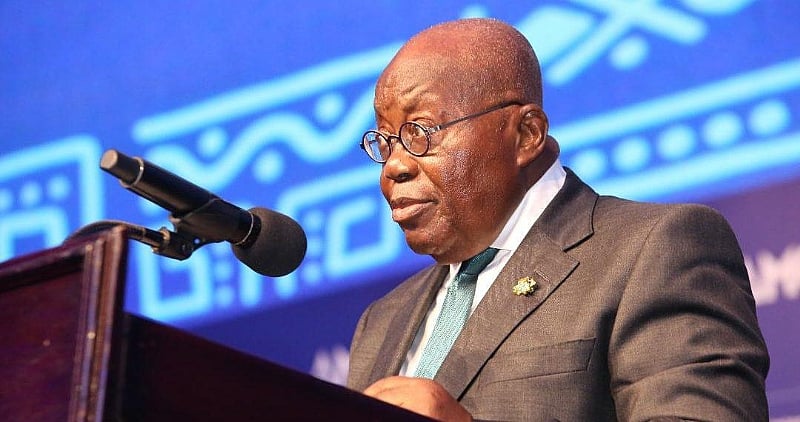
President Nana Addo Dankwa Akufo-Addo, in his final State of the Nation Address (SONA) delivered on January 3, 2025, presented a comprehensive overview of his administration’s achievements in the education sector. He emphasized the transformative impact of flagship programs like the Free Senior High School (SHS) and Free Technical and Vocational Education and Training (TVET) initiatives, portraying them as pivotal in expanding access and enhancing the quality of education in Ghana. Akufo-Addo underscored the significance of these policies in breaking down financial barriers that had historically hindered access to secondary education for a substantial segment of the population. He highlighted the remarkable achievement of providing secondary education to an estimated 5.7 million young Ghanaians who, without these programs, would likely have been denied the opportunity.
The President presented compelling evidence to support his claims of improved educational outcomes. He pointed to a significant rise in the West African Senior School Certificate Examination (WASSCE) pass rates since the implementation of the Free SHS program. Specifically, he noted that since 2020, when the first cohort of Free SHS beneficiaries sat for the WASSCE, over 50% of candidates consistently achieved grades A1 to C6 in all four core subjects. This, he argued, represented a dramatic improvement compared to the pre-reform era, demonstrating the positive impact of the policy on student performance.
Furthermore, Akufo-Addo highlighted specific subject-level improvements, particularly in Mathematics and Integrated Science. He cited a substantial increase in the Mathematics pass rate from 33.12% in 2016 to 66.86% in 2024, attributing this progress to the educational reforms implemented by his administration. Similarly, he noted an improvement in the Integrated Science pass rate from 48.35% to 58.77% during the same period. These statistical advancements, he argued, served as concrete evidence of the positive impact of the Free SHS and Free TVET programs not just on access, but also on the overall quality of education in the country.
The President firmly defended the substantial investment made in these educational initiatives, emphasizing that the financial resources allocated were a worthwhile expenditure. He argued that the reforms had yielded significant returns in terms of improved educational outcomes and expanded opportunities for Ghanaian youth. Beyond academic performance, Akufo-Addo also pointed to the significant improvements in educational infrastructure and the learning environment under his administration, further strengthening his argument that the investment in education had been both strategically sound and impactful. He effectively presented the Free SHS and Free TVET programs as legacy achievements, underscoring their transformative influence on Ghana’s educational landscape.
Akufo-Addo’s emphasis on the irreversible nature of the Free SHS and Free TVET programs signaled his administration’s commitment to these policies as a long-term strategy for national development. He portrayed these programs as crucial investments in human capital, contributing to the overall socio-economic progress of Ghana. The President’s concluding remarks underscored his belief that education is the cornerstone of national development and that his administration’s focus on expanding access and improving quality had laid a solid foundation for a brighter future for Ghana.
In essence, President Akufo-Addo’s final SONA presentation on education served as a platform to consolidate his administration’s narrative of successful educational transformation. He meticulously presented data and anecdotal evidence to support his claims, portraying the Free SHS and Free TVET programs as flagship achievements that have significantly altered the trajectory of education in Ghana. He positioned these policies as not merely an expansion of access, but a fundamental shift towards a more equitable and quality-driven educational system, thereby securing his administration’s legacy as a champion of educational advancement in the country.









