









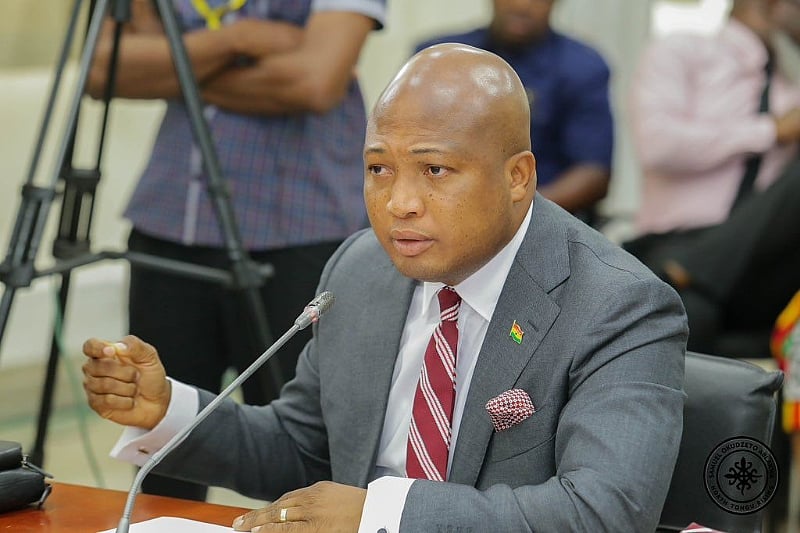
The Operation Recover All Loots (ORAL) Committee, established by President John Dramani Mahama, has unveiled its findings, revealing a potential recovery of $20.49 billion in misappropriated funds for Ghana. This significant sum stems from the committee’s thorough investigation of 36 cases involving alleged corruption and mismanagement of public resources. The committee, chaired by Samuel Okudzeto Ablakwa, presented its report at the Jubilee House, highlighting the potential for substantial financial recovery if these cases are diligently pursued and successfully prosecuted. The report underscores the importance of accountability and transparency in governance, offering a pathway to recoup significant funds that could be channeled towards national development.
Among the 36 cases scrutinized by the ORAL Committee are several high-profile instances of alleged impropriety, including the National Cathedral project and the Power Distribution Services (PDS) arrangement. The committee’s investigation also encompasses various government asset takeovers, where potential irregularities and financial losses have been identified. In addition to these specific cases, the ORAL Committee has uncovered potential revenue generation through the recovery of illegally acquired state lands. Preliminary assessments suggest that fair market valuations of these lands could yield an additional $702.8 million for the government. This highlights the need for stringent oversight of state land transactions to prevent exploitation and ensure optimal value for public assets.
Mr. Ablakwa, the committee’s chairman, highlighted discrepancies in land transactions, specifically citing instances where politically exposed persons acquired prime state lands at significantly undervalued prices. He pointed to examples in Cantonment, a prestigious area in Accra, where plots were reportedly sold for GHS42,000, a fraction of their actual market value, estimated at $500,000 or more. These discrepancies raise concerns about potential corruption and favoritism in the allocation of state lands, further emphasizing the need for robust investigations and reforms to prevent future occurrences. The ORAL Committee’s findings shed light on the scale of potential financial irregularities and underscore the importance of holding those responsible accountable.
The ORAL Committee’s work has been aided by significant public engagement, with over 2,417 complaints received through the committee’s toll-free line and email platform. This level of public participation demonstrates a strong interest in uncovering and addressing corruption and financial mismanagement within the government. The committee’s accessible communication channels have facilitated citizen involvement, ensuring that valuable information reaches investigators and strengthens the pursuit of accountability. This collaborative approach between the committee and the public underscores the importance of citizen engagement in fostering transparency and good governance.
The potential recovery of $20.49 billion, along with the additional $702.8 million from state lands, represents a substantial injection of funds that could significantly boost Ghana’s economy. These funds, if recovered, could be invested in critical sectors such as education, healthcare, infrastructure, and social welfare programs, leading to improved living standards and broader economic development. The ORAL Committee’s work highlights the potential for financial recovery through rigorous investigation and prosecution of corruption cases, offering a crucial step towards strengthening Ghana’s fiscal position and promoting sustainable development.
The findings of the ORAL Committee demonstrate the importance of establishing mechanisms for oversight and accountability in government operations. The potential recovery of significant funds underscores the need for continuous efforts to combat corruption and ensure that public resources are utilized effectively and transparently. The committee’s work serves as a model for future initiatives aimed at promoting good governance and safeguarding public finances. By diligently pursuing these cases and implementing robust preventive measures, Ghana can strengthen its institutions, enhance public trust, and pave the way for sustainable economic growth and development.









