





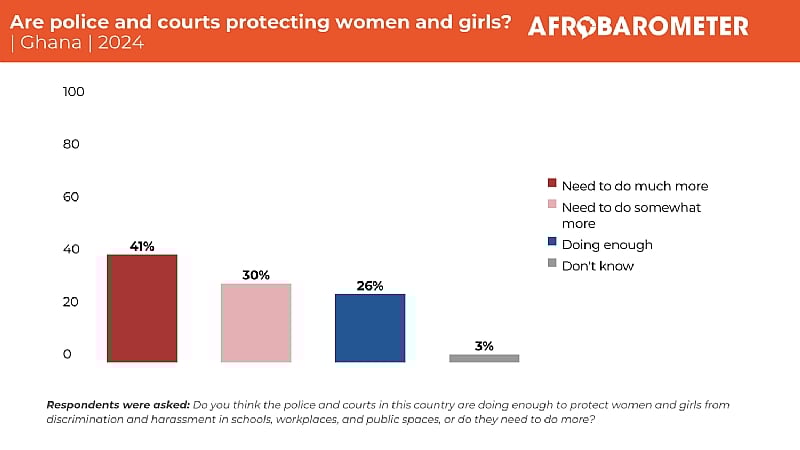
Recent findings from the Afrobarometer survey indicate that a significant portion of the Ghanaian population believes there is a pressing need for law enforcement and judicial authorities to enhance their efforts in safeguarding women and girls against discrimination and harassment. Despite the gravity of the situation, only 26% of respondents feel that the police and courts are currently doing enough to protect women and girls. The survey results underscore the challenging societal landscape that women and girls navigate, with substantial reports of discrimination and harassment in both educational and public contexts. Specifically, around 20% of participants indicated that schoolgirls often face harassment or discrimination from their teachers, while approximately 16% believe that women frequently endure harassment in public settings, such as markets and public transportation.
The Afrobarometer survey further reveals that certain systemic barriers continue to affect women and girls in Ghana. Approximately 13% of respondents reported that women are sometimes prevented from engaging in paid employment by family or spousal restrictions. Additionally, about 12% highlighted that families may prioritize the education of boys over girls, resulting in disparities in educational opportunities. The prevalence of such attitudes and behaviors reflects a broader cultural context that often sidelines women’s rights and gender equality initiatives. Despite these challenges, a notable majority of Ghanaians expressed a belief that women and girls would be likely to be believed if they came forward to report instances of discrimination or harassment, suggesting a degree of societal support for women advocating for their rights.
In terms of public perception of governmental efforts towards women’s rights, two-thirds of surveyed individuals perceive the government’s performance as fairly good, with 47% rating it as “fairly well” and 21% as “very well.” However, it is essential to note that around 29% of respondents voiced their disagreement with this positive assessment. This division in opinions highlights a critical discourse surrounding government action and efficacy in protecting vulnerable groups within society, particularly women and girls. The existing support from a majority of the public indicates significant recognition of the government’s role, even if many individuals think that further actions are vital and necessary.
The Afrobarometer survey’s data emerge at a pivotal time as Ghana participates in the international 16 Days of Activism against Gender-Based Violence, underscoring the need for continued activism and reform to ensure safe and equitable environments for women and girls. The large segment of the population advocating for greater police and judicial action reflects an acknowledgment that, despite some successes in addressing these issues, there remains a considerable amount of work to be done. Activism initiatives such as this bring essential attention to the need for increased protection and advocacy for women’s rights, aiming to raise awareness of the systemic inequalities that persist within the society.
Additionally, the survey highlights the disconcerting reality that harassment and discrimination towards women and girls are not just individual occurrences but part of a broader societal pattern that requires systemic change. The data calls for more comprehensive policies and reforms aimed at dismantling the barriers that prevent women from achieving equality in all spheres of life, including education and the workforce. By amplifying the voices of Ghanaians who recognize the need for greater intervention, it becomes increasingly apparent that advocacy efforts must focus on both government action and community-level change, fostering environments that empower women and support their rights.
In conclusion, the Afrobarometer survey presents a complex picture of gender inequality in Ghana, shedding light on various facets of discrimination faced by women and girls. While positive sentiments regarding the government and societal attitudes towards perceived support for women’s rights exist, the dissatisfaction with current protective measures emphasizes an urgent need for more extensive and effective efforts. The findings not only serve as a call to action for law enforcement and legal institutions to enhance measures aimed at protecting women but also highlight the critical role of community engagement and activism in addressing gender-based discrimination. As Ghana embarks on its 16 Days of Activism against Gender-Based Violence, the survey results remind all stakeholders of the continued work required to create a safer, more equitable society for women and girls.








