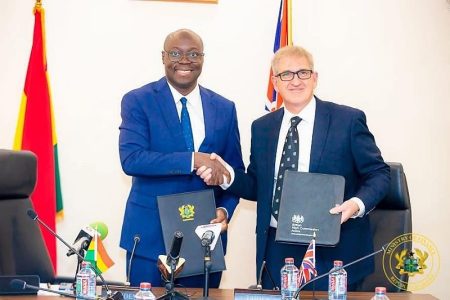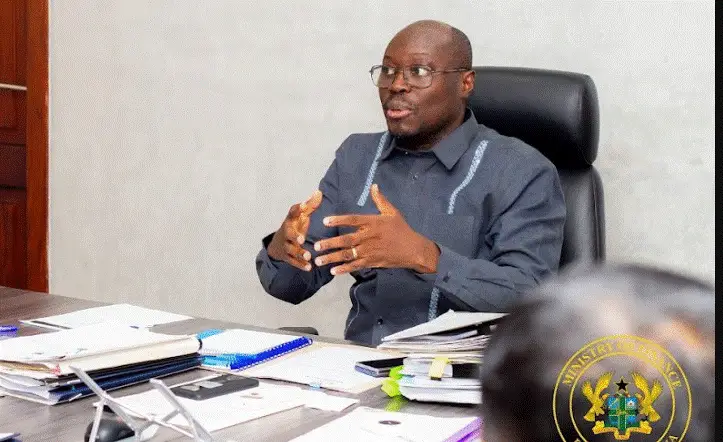
The Ghanaian government is poised to initiate payments to contractors in the near future, marking a significant step towards addressing a substantial backlog of outstanding claims. This development follows the imminent submission of an interim audit report by the Auditor-General, which will provide a clearer picture of the extent of these arrears. The impending payments were announced during a high-level meeting between Finance Minister Dr. Cassiel Ato Forson and Ecobank Group CEO Jeremy Awori, where the issue of contractor arrears took center stage. The meeting underscored the government’s commitment to resolving this long-standing issue and its broader strategy for economic recovery and growth, with a particular focus on leveraging the support of key financial institutions like Ecobank. The dialogue also emphasized the importance of fiscal discipline and transparency in public procurement processes.
The Finance Minister revealed that the current administration inherited a staggering GH¢67 billion in unpaid contractor arrears, a significant financial burden that threatens to cripple various sectors of the economy. Recognizing the urgency of the situation, the government has committed to a comprehensive four-year plan to audit and settle these outstanding claims, starting with a significant allocation of GH¢13 billion earmarked in the 2025 Budget specifically for this purpose. This initial payment represents a substantial investment in resolving the arrears and signifies the government’s commitment to stabilizing the construction sector and stimulating economic activity. The phased approach reflects the magnitude of the inherited debt and the need for a structured and sustainable solution.
Beyond addressing the existing arrears, the Finance Minister stressed the government’s commitment to preventing the accumulation of new debts. This proactive approach aims to break the cycle of mounting arrears and instill greater financial discipline within government operations. Recent amendments to the Public Financial Management Act, designed to bolster transparency and accountability in procurement and contract management, further underscore this commitment. These legislative reforms are intended to strengthen oversight mechanisms and prevent future build-up of arrears, ensuring a more sustainable and responsible approach to public finances.
The meeting also served as a platform for the government to solicit the support of Ecobank, Ghana’s largest financial institution, in its broader economic recovery efforts. The Finance Minister urged Ecobank to intensify its engagement in key sectors, particularly in promoting private sector growth and agricultural development. These two areas are seen as crucial drivers of economic recovery and long-term sustainable growth. By fostering a vibrant private sector and supporting agricultural modernization, the government aims to create jobs, increase productivity, and improve the overall economic well-being of the nation.
Ecobank CEO Jeremy Awori responded positively to the government’s call for increased collaboration, reaffirming the bank’s commitment to supporting Ghana’s economic recovery initiatives. He expressed the bank’s readiness to expand lending and deepen its strategic cooperation with the government, indicating a willingness to play a more active role in financing development projects and stimulating economic activity. This commitment from a major financial player like Ecobank is a crucial component of the government’s recovery strategy and provides a much-needed boost to its efforts. The partnership between the public and private sectors is essential for unlocking investment opportunities and driving economic growth.
The presence of John Abdulai Jinapor, the Minister for Energy and Green Transition, at the meeting further highlights the interconnectedness of various sectors in the government’s recovery plan. His attendance suggests that the discussion encompassed broader economic issues beyond contractor arrears, likely including topics related to energy infrastructure development and the transition to more sustainable energy sources. The government’s focus on green transition signifies a commitment to long-term economic development that is environmentally responsible and aligned with global sustainability goals. The collaboration with Ecobank could also extend to financing projects in the renewable energy sector, supporting the country’s efforts to diversify its energy mix and promote sustainable development.