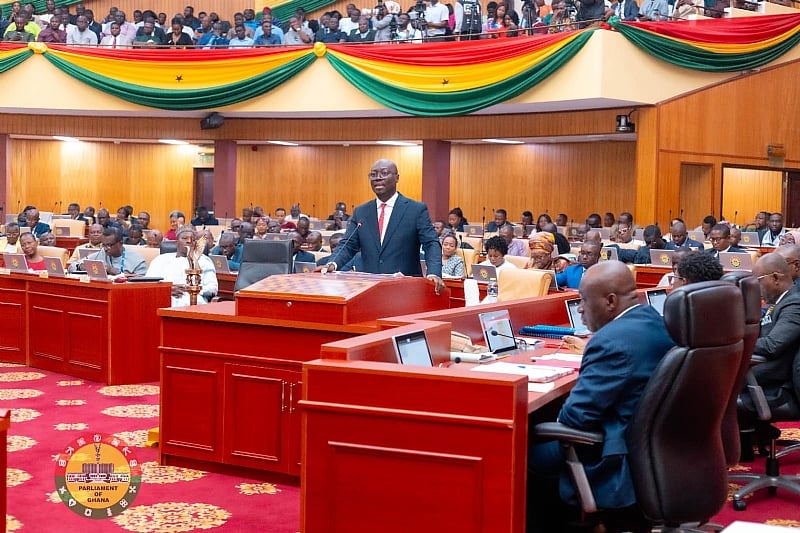
The 2025 Budget Statement presented by Ghana’s Finance Minister, Dr. Cassiel Ato Forson, outlines a comprehensive realignment of ten key laws to underpin the government’s economic stability and inclusive growth agenda. This legislative overhaul targets critical areas such as petroleum revenue management, infrastructure financing, mineral resource utilization, energy sector levies, cocoa industry governance, earmarked funds, public procurement, education funding, fiscal responsibility, and revenue administration. The proposed amendments aim to optimize resource allocation, enhance transparency, and strengthen fiscal discipline to promote sustainable economic development.
The reforms proposed for the Petroleum Revenue Management Act focus on channeling all Annual Budget Funding Amount (ABFA) resources towards infrastructure development, signaling a prioritization of capital investment to stimulate economic activity and improve public services. The Energy Sector Levies Act (ESLA) will be amended to consolidate certain levies, specifically the Energy Debt Recovery Levy, Energy Sector Recovery Levy (Delta Fund), and Sanitation & Pollution Levy, streamlining the levy structure while ensuring continued funding for addressing energy sector shortfalls and servicing inherited debt. Other energy sector levies will remain untouched to support their designated objectives, such as road development, energy fund contributions, price stabilization, public lighting, and national electrification.
Amendments to the Earmarked Funds Capping and Realignment Act are intended to restore full government transfers to the Ghana National Petroleum Commission (GNPC) and reduce the GNPC’s share of net Carried and Participating Interest (CAPI) from 30% to 15%. This adjustment seeks to balance the distribution of petroleum revenues, ensuring adequate funding for national development priorities while providing the GNPC with sufficient resources to fulfill its mandate. Crucially, the National Health Insurance Levy (NHIL), the Ghana Education Trust Fund (GETFund), and the Road Fund will have their caps removed, allowing them to receive their full allocated amounts, thus bolstering critical sectors like healthcare, education, and infrastructure.
To promote fiscal responsibility and transparency, the Public Procurement Act will be amended to establish an independent Value-for-Money Office tasked with scrutinizing government procurements exceeding a specified threshold. This measure aims to enhance accountability and ensure the prudent use of public funds by evaluating the cost-effectiveness of government contracts. Furthermore, commencement certificates and budgetary provisions will become mandatory prerequisites for all centrally funded procurements, adding another layer of control and oversight to the procurement process. These reforms are designed to curb wasteful spending and promote value for money in public procurement.
The Minerals Income Investment Fund Act will also be amended to redirect 80% of mineral royalties to the Consolidated Fund for infrastructure development. This change prioritizes the use of mineral revenues for broader national development, specifically infrastructure projects that can have a significant multiplier effect on the economy. Other fiscal reforms include reducing the tax refund ceiling from 6% to 4% of total revenue, progressively lowering the fiscal deficit, and ensuring full funding for the Free Senior High School policy through the GETFund. These measures reflect a commitment to fiscal consolidation and prioritizing key social programs.
In summary, the proposed legal reforms aim to strengthen Ghana’s fiscal framework, optimize resource allocation, and enhance transparency and accountability. By streamlining levies, realigning earmarked funds, strengthening public procurement processes, and prioritizing infrastructure development, the government aims to create a more stable and inclusive economic environment. These reforms, coupled with measures to reduce the fiscal deficit and prioritize key social programs, represent a comprehensive approach to achieving sustainable economic growth and development. The amendments to these ten laws, if implemented effectively, could significantly contribute to Ghana’s long-term economic prosperity.