





Paragraph 1: Introduction and Budget Overview
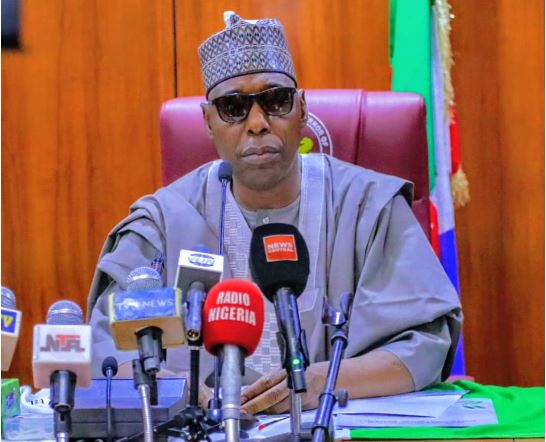
The Governor of Borno State, Babagana Zulum, has presented a substantial budget proposal of N584 billion for the 2025 fiscal year to the State House of Assembly. This budget, aptly themed "Budget of Recovery and Continuity," underscores the government’s unwavering commitment to rebuilding critical infrastructure and fostering sustainable development in the state. The budget prioritizes recovery from the devastating effects of insurgency and natural disasters while simultaneously laying the groundwork for long-term growth and prosperity. This dual focus is reflected in the allocation of N323.47 billion for capital expenditure, geared towards infrastructure development and other transformative projects, and N204.71 billion for recurrent expenditure, covering essential government services and operations.
Paragraph 2: Funding Sources and Fiscal Prudence
The funding for this ambitious budget is projected to come from a combination of recurrent revenue and capital receipts. Recurrent revenue, estimated at N279.51 billion, comprises N249.42 billion from the Federation Account Allocation Committee (FAAC) and N30.09 billion from Internally Generated Revenue (IGR). Capital receipts, including aid, grants, and development funds, are expected to contribute N152.69 billion. Governor Zulum emphasized the government’s commitment to fiscal responsibility, pledging to minimize waste and maximize revenue generation efforts to ensure the successful implementation of the budget. This commitment to prudent financial management underscores the government’s dedication to utilizing public funds effectively and transparently.
Paragraph 3: Prioritizing Education and Human Capital Development
A significant portion of the budget is dedicated to the education sector, reflecting the government’s recognition of its pivotal role in driving societal progress. The allocation will facilitate the construction of five new mega schools, the rehabilitation of 15 existing schools, and the recruitment and training of 2,500 teachers. These investments aim to improve access to quality education, particularly for internally displaced persons (IDPs), marginalized communities, and other vulnerable groups. The government has also allocated N6 billion to sustain its scholarship program, which currently supports 1,244 students pursuing higher education in local and foreign universities. This commitment to education underscores the government’s belief in empowering its youth and fostering human capital development as a cornerstone of long-term prosperity.
Paragraph 4: Investing in Agriculture and Food Security
Recognizing the importance of agriculture for economic growth and food security, the Borno State government has earmarked substantial funds for agricultural development. The budget includes provisions for irrigation systems, fertilizers, and the cultivation of over 100,000 hectares of farmland. The government will also rehabilitate the College of Agriculture, damaged by floods, and upgrade facilities at Ramat Polytechnic and the College of Education, Waka-Biu. These investments aim to empower farmers, enhance agricultural productivity, and ensure food sufficiency for the state. By prioritizing agriculture, the government seeks to create employment opportunities, boost rural incomes, and strengthen the overall resilience of the state’s economy.
Paragraph 5: Addressing Water Scarcity and Rural Development
Addressing the critical issue of water scarcity, the government has allocated N11.6 billion for water resources development. This funding will support the construction of seven new waterworks, 50 hybrid boreholes, 2,000 wells, and 1,789 solar-powered irrigation pumps. The government will also commence the second phase of the Bulabulin Water Treatment Plant and upgrade the Maiduguri water facility. These initiatives aim to provide access to clean water for communities across the state, particularly in rural areas, and support agricultural activities through improved irrigation. The budget also prioritizes broader rural development, with plans to construct roads, markets, and other essential facilities to stimulate local economies and improve livelihoods in rural communities.
Paragraph 6: Call for Collaboration and Long-Term Vision
Governor Zulum emphasized that the 2025 budget represents a crucial step in Borno State’s journey of recovery and rebuilding. He called on all stakeholders, including government agencies, community leaders, and development partners, to collaborate and support the government’s efforts in ensuring the successful implementation of the budget. This collaborative approach underscores the government’s recognition that achieving sustainable development requires a concerted effort from all segments of society. The "Budget of Recovery and Continuity" encapsulates the government’s long-term vision for Borno State: a future where its citizens have access to quality education, reliable infrastructure, and sustainable livelihoods, free from the shadows of insurgency and natural disasters. This budget serves as a roadmap towards a more prosperous and resilient Borno State.








