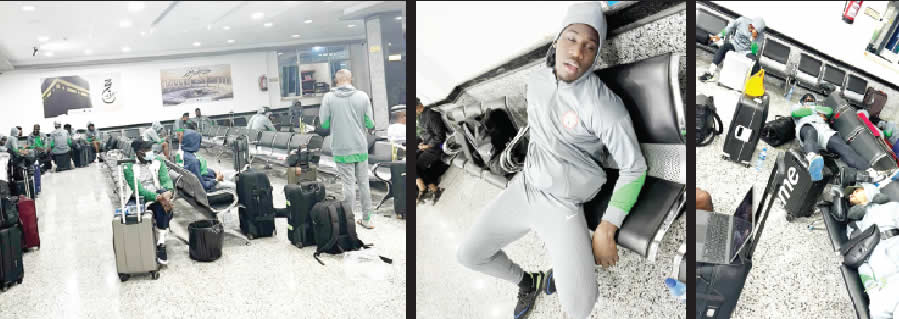
The recent ordeal of Nigeria’s senior men’s national football team, the Super Eagles, at Al Abraq Airport in Libya has drawn widespread condemnation and sparked international outrage. Following their arrival on Sunday for a crucial 2025 AFCON qualifying match, the Nigerian players and officials were effectively held hostage by Libyan authorities for over 20 hours. This incident began when Libyan officials abruptly refused to supply fuel to the chartered flight operated by ValueJet, forcing the team to divert to Al Abraq Airport, rather than the planned arrival at Benghazi Airport. Lacking basic necessities such as food, water, and adequate communication, the players were left stranded without proper care or oversight, deeply frustrating their team and supportive fans back home.
In a heart-wrenching portrayal, players began to share details of their experience through social media, documenting the dire conditions at the airport. Captured in various troubling images and videos, some players were seen attempting to sleep on uncomfortable iron chairs, illustrating their discomfort and exhaustion. As they tried to cope with the situation, players like William Troost-Ekong and Moses Simon expressed their outrage over the treatment they received, calling it “disgraceful” and poorly reflective of the spirit of international football. With no assistance from the Libyan Football Federation or airport officials, the Nigerian team was left to navigate an incredibly hostile environment, prompting calls for intervention from both the Nigerian government and international football organizations.
The Nigerian government responded swiftly, with Minister of Foreign Affairs Yusuf Tuggar confirming that Libyan officials had been summoned for clarification regarding the crisis. High-ranking officials, including the chairman of the Nigerians in Diaspora Commission, condemned the incident as ‘inhumane’ and characterized the treatment of the Super Eagles as unacceptable. Hon. Abike Dabiri-Erewa called attention to the dangers of road travel in Libya, further complicating the situation. Meanwhile, the Minister of Sports, John Enoh, escalated the issue to various government agencies, highlighting the need for unity in protecting the national team’s safety.
Amidst the escalating tension, a blame game ensued between the Nigerian Football Federation (NFF) and the Libyan Football Federation. The NFF described the diversion of the flight as dangerous and stressed that their players remained unattended for too long, raising concerns about their welfare. In contrast, the Libyan Football Association issued a statement downplaying the situation, attributing the team’s difficult circumstances to logistical challenges and standard airport protocols rather than any intentional malice. This response was met with skepticism by observers and experts, who questioned the integrity of the Libyan authorities given the circumstances surrounding the Nigerian team’s experience.
The Confederation of African Football (CAF) indicated that it was taking the complaints seriously. They announced that the issue had been referred to their Disciplinary Board for a thorough investigation. Officials emphasized the need for an in-depth inquiry into the circumstances surrounding the national team’s mistreatment, assuring both nations that relevant measures would follow upon review. Such steps are critical not only for holding parties accountable but also for ensuring that similar incidents do not reoccur in African football.
The ramifications of this incident reached beyond the immediate concerns of the Super Eagles, impacting international football as a whole. Many prominent figures in the football community expressed solidarity with the Nigerian squad, emphasizing that the treatment of athletes should reflect respect and sportsmanship. High-profile athletes and social commentators, including legends from various footballing backgrounds, denounced the behavior exhibited by the Libyan authorities, calling for their accountability. Human Rights Watch and other international organizations joined the outcry, urging a serious investigation into the treatment of the Super Eagles, thus reinforcing the need for humanity and dignity in sports. This incident serves as a critical reminder of the ongoing challenges in ensuring fair play and respect in international sporting events, particularly within the African continent.