









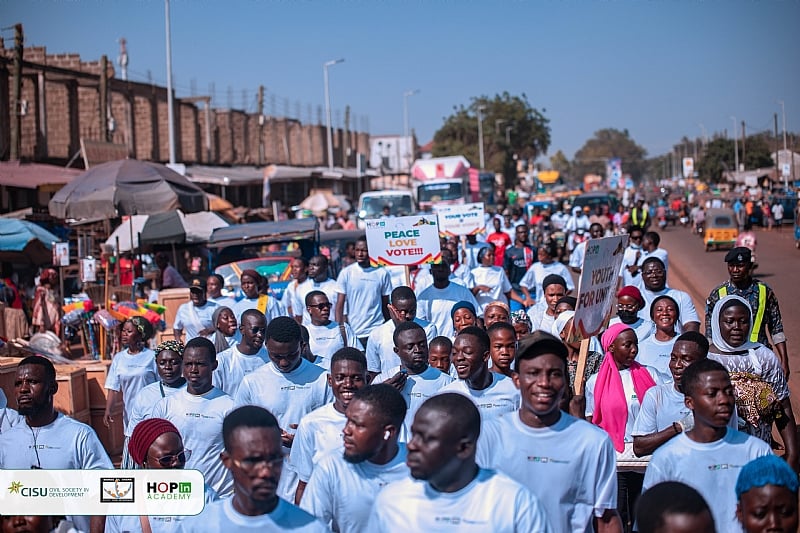
HOPin Academy’s “Youth Empowerment for Peaceful Elections” project, implemented in the Northern Region of Ghana during the 2024 electoral cycle, stands as a testament to the transformative power of youth engagement in fostering peaceful and democratic societies. Recognizing the pivotal role young people play in shaping the future, the organization embarked on a comprehensive initiative to equip them with the necessary tools and knowledge to become agents of peace and active participants in the electoral process. The project’s multi-faceted approach, combining awareness campaigns, stakeholder engagement, capacity-building workshops, and community mobilization, ensured its impactful reach across the region.
The project’s foundation was laid through a strategic two-pronged approach: a radio campaign designed to disseminate information about the project’s objectives and the importance of peaceful electoral participation, and a stakeholder engagement session that brought together a diverse array of community influencers. This inclusive forum, comprising civil society organizations, media houses, religious leaders, traditional authorities, youth groups, and government representatives, facilitated a crucial dialogue on the role of youth in fostering peace and ensuring a smooth electoral process. This collaborative approach fostered a sense of shared responsibility and ownership, ensuring the project’s resonance with the wider community.
At the heart of the project lay a series of intensive workshops designed to empower young people with the knowledge and skills necessary for effective civic engagement and peacebuilding. These workshops, reaching 350 young participants, including first-time voters, provided comprehensive training on a range of crucial topics. Participants gained valuable insights into voting procedures, democratic rights and responsibilities, the importance of peacebuilding and conflict resolution, leadership development, and effective advocacy techniques. The workshops proved transformative for many participants, instilling in them a deeper understanding of their civic roles and the importance of peaceful participation in the electoral process. These empowered young individuals emerged as champions of peace and democracy within their communities.
Recognizing the power of peer-to-peer influence, the project also invested in training a cadre of 50 youth volunteers as peace ambassadors. These ambassadors underwent specialized training, equipping them with an in-depth understanding of the electoral process, civic rights and responsibilities, advocacy strategies, and effective communication techniques. Empowered with these skills, they became potent messengers of peace, utilizing their platforms and networks to promote peaceful elections. They organized Peace Day events, facilitated community dialogues, and collaborated with local media outlets to disseminate crucial voter education messages, further amplifying the project’s reach and impact.
The project’s commitment to community engagement was further underscored by the active participation of key stakeholders in various community events. The presence of influential figures like the Gushe Naa of Sagnarigu, a respected traditional leader, the Second-in-Command of the Regional Police Headquarters, the Northern Regional Youth Parliament President, and the NCCE Metropolitan Director, lent considerable weight to the project’s message. Their involvement emphasized the collective responsibility of all community members in promoting peace and ensuring a peaceful electoral process. A peace rally and unity games, organized as part of the project’s community mobilization efforts, served as powerful platforms to reinforce messages of tolerance, peaceful coexistence, and collaboration among young people.
The project’s success can be attributed not only to its comprehensive design but also to its focus on empowering youth as agents of change. Josephine Awinpoka Akumbuno, Project Officer at HOPin Academy, aptly summarized this philosophy by stating, “Youth empowerment is imperative for promoting a culture of peace and democracy, particularly during the election period… Creating awareness of youth voices, acceptance, and responsible citizenship is crucial for our collective future.” Her reflection on the project’s impact further highlights its significance: “The Youth Empowerment for Peaceful Elections project was crucial for cultivating a culture of peace and active civic engagement among our youth. By empowering them with the necessary tools and knowledge, we paved the way for a more peaceful and democratic future.” The project’s long-term vision is to contribute significantly to the socio-political landscape of Northern Ghana, fostering stability, peace, and democratic participation. The resounding success of this initiative serves as a compelling model for youth-focused peacebuilding and civic engagement programs in other regions and across different electoral contexts. Seidu Jaminja, a participant, echoed the transformative impact of the project: “The workshops enlightened my understanding of my civic rights as enshrined in the 1992 Constitution, and I am now fully poised to exercise my franchise during the December 7th elections.” This exemplifies the project’s success in nurturing a generation of informed and engaged citizens committed to peaceful and democratic participation. HOPin Academy, through its proactive and impactful intervention, has left an indelible mark on the youth of Northern Ghana, fostering a generation of young leaders dedicated to peace, tolerance, and active civic engagement.









