





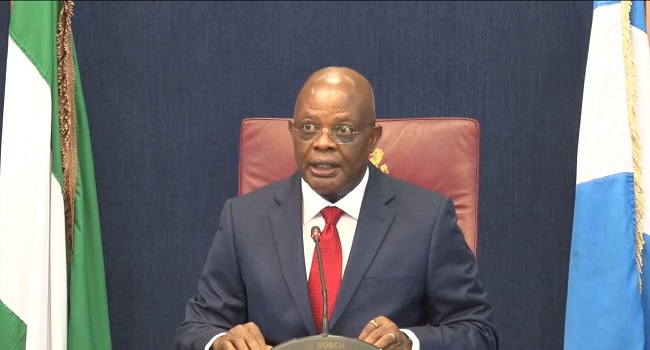
Rivers State, a region rich in resources and economic potential, found itself grappling with a deep political crisis that threatened to unravel its progress and plunge it into anarchy. In response to this escalating turmoil, President Bola Tinubu declared a state of emergency in March 2025, appointing Vice Admiral Ibok-Ete Ekwe Ibas (retd.) as Sole Administrator to steer the state back towards stability. During a Special Public Lecture commemorating Rivers State’s 58th anniversary, Ibas addressed the pressing issues facing the state, emphasizing the need for forgiveness, reconciliation, and a renewed commitment to building a peaceful and prosperous future. The lecture, themed “Rivers State, Yesterday, Today, and Tomorrow: Search for Sustainable Peace and Opportunities for Development,” provided a platform for stakeholders to reflect on the state’s journey and chart a course towards lasting peace and development.
Ibas’s address painted a stark picture of the challenges confronting Rivers State. He lamented the erosion of institutional trust and the breakdown of governance, consequences of the fierce political conflicts that had gripped the region. He warned that the hard-won progress achieved over decades was at risk of being undone if decisive action wasn’t taken to bridge the deep divisions within the state. He underscored the gravity of the situation, stating that the current state of affairs was not the Rivers State envisioned by its founders and that a change in course was imperative. The Sole Administrator traced the historical context of Rivers State’s struggle for identity and autonomy, highlighting its impressive economic achievements, including its status as Nigeria’s second-largest economy with a substantial GDP and control over a significant portion of the nation’s oil reserves. However, he stressed that political discord had severely hampered the state’s ability to fully realize its potential.
Ibas placed the blame for the ongoing crisis squarely on the shoulders of the political elite, religious leaders, and elders, accusing them of failing to provide unifying leadership and exacerbating tensions by taking sides in the political fray. He commended President Tinubu’s intervention, describing the imposition of emergency rule as a necessary measure to avert a complete collapse of law and order. He lauded the President’s decisive leadership, stating that it was taken in the best interest of all Rivers people. Ibas pledged to fulfill the mandate of the emergency administration, which he outlined as restoring justice, rebuilding institutions, and paving the way for a return to democratic governance.
While acknowledging the crucial role of the oil and gas sector in the state’s economy, Ibas emphasized the importance of diversification to secure a sustainable future for Rivers State. He highlighted opportunities in agriculture, tourism, and manufacturing, stressing that inclusive governance and peace were essential prerequisites for realizing the state’s full economic potential. He called for a collective effort to rebuild Rivers State on the foundations of peace, unity, and shared prosperity, emphasizing that the children of Rivers deserve a future free from conflict, with access to education, opportunities, and hope.
Ibas’s address served as a call to action, urging the people of Rivers State to embark on a path of reconciliation and rebuild the fractured trust within their communities. He underscored the importance of moving beyond the divisive politics that had plagued the state and embracing a shared vision for a brighter future. He appealed to the collective responsibility of all stakeholders, including political leaders, religious figures, and community elders, to work together towards healing the wounds of the past and fostering a more inclusive and harmonious society.
The Sole Administrator’s emphasis on economic diversification highlighted the need to move beyond dependence on oil and gas and explore other avenues for sustainable development. He envisioned a Rivers State where opportunities were accessible to all, regardless of political affiliation or background, and where the state’s vast resources were utilized for the benefit of all its citizens. His message of hope and reconciliation resonated with the audience, offering a roadmap for rebuilding a state torn apart by political strife and setting it on a course towards lasting peace and prosperity.








