









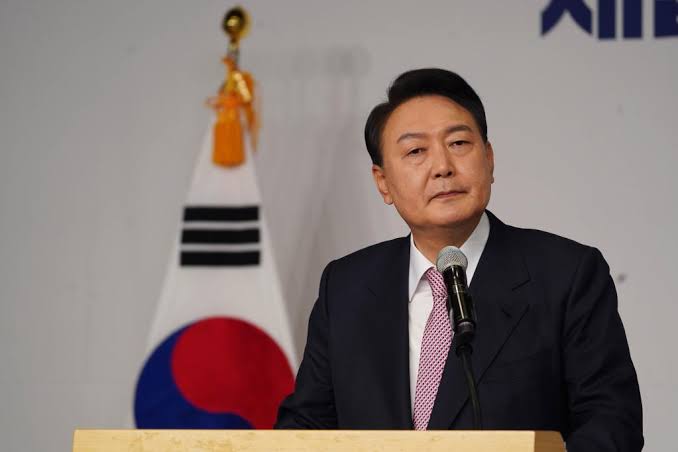
The political landscape of South Korea has been thrown into disarray by the impeachment and subsequent defiance of President Yoon Suk Yeol. Following a short-lived and ill-fated attempt to impose martial law, Yoon was impeached by the National Assembly and now faces potential arrest, imprisonment, or even the death penalty. He remains barricaded within his presidential residence, refusing to comply with arrest warrants and summonses for questioning related to his actions. This stand-off has created a tense atmosphere in the capital, with supporters and opponents of the embattled president clashing outside his residence while his security team resists attempts by law enforcement to enter.
Yoon’s justification for his declaration of martial law centered on the claim that South Korea was facing a grave threat from internal and external forces, including “anti-state elements.” He has doubled down on this rhetoric, issuing statements to his supporters reiterating these claims and vowing to fight alongside them to protect the nation. This defiant posture, viewed as inflammatory by opposition lawmakers, has further fueled the political crisis. They accuse him of delusion and inciting violence. Meanwhile, his legal team has mounted a legal challenge, seeking an injunction against the arrest warrant, arguing its illegality and invalidity.
The legal battle surrounding Yoon’s potential arrest is complex. The Corruption Investigation Office (CIO) has issued arrest and search warrants, but Yoon’s security detail has blocked access to his residence and office, citing legal provisions protecting locations where official secrets are stored. This standoff creates a legal and logistical challenge for authorities, mirroring previous instances where arrest warrants for lawmakers were thwarted by similar tactics. The CIO has warned of potential prosecution for anyone obstructing their efforts, raising the stakes in this high-stakes confrontation.
The backdrop to this political drama is Yoon’s failed attempt to impose martial law. His brief declaration saw armed troops storm the National Assembly, a move he claimed was necessary to eliminate “anti-state elements.” However, lawmakers swiftly convened and voted down the measure, leading to Yoon’s impeachment and the current legal predicament. His claims of an opposition conspiracy with communist enemies have added another layer of complexity to the situation, further polarizing public opinion.
Adding to the upheaval, Yoon’s replacement as acting president, Han Duck-soo, has also been impeached for failing to sign bills related to investigations into Yoon. This unprecedented series of impeachments has left Finance Minister Choi Sang-mok as acting president. He is now tasked with navigating this turbulent political landscape and restoring stability. While Choi has attempted to appease the opposition by appointing new judges to the constitutional court, this move has been criticized by Yoon’s staff as an overreach of his authority.
The ultimate resolution of this crisis hinges on several factors. The constitutional court will decide whether to uphold Yoon’s impeachment, which will determine his future political standing. The legal wrangling over the arrest warrant will determine whether he faces immediate legal consequences. Finally, the broader political climate and the actions of the acting president will play a crucial role in shaping the nation’s path forward. The current situation underscores the fragility of South Korea’s political system and the potential for rapid destabilization in the face of such a dramatic power struggle.









