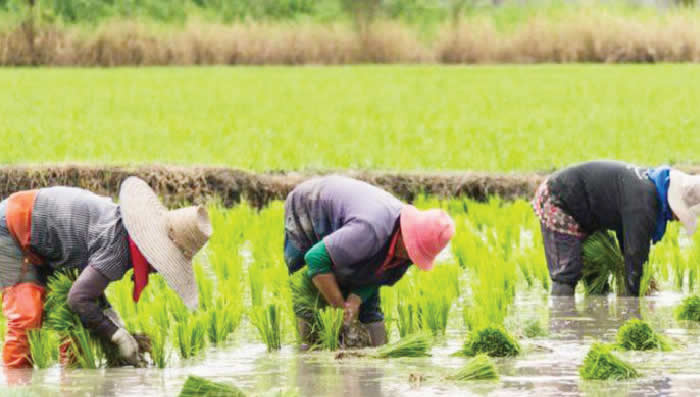
The Nigerian rice industry, once a beacon of agricultural progress, is now facing a devastating downturn, prompting alarm from farmers and industry leaders. The closure of local rice mills and subsequent job losses are attributed to a confluence of factors, primarily the influx of cheap imported rice, escalating insecurity in farming regions, and a perceived lack of consistent government support. This crisis threatens not only the livelihoods of countless farmers and mill workers but also the nation’s food security and socio-political stability. The chairman of the Competitive African Rice Forum Nigeria, Peter Dama, paints a grim picture of shuttered mills and unemployed workers, questioning the future of the industry within the country. He recalls a time when Nigeria achieved a remarkable production level of eight million metric tons of rice, largely satisfying domestic demand and demonstrating the potential for self-sufficiency.
The descent from this peak, according to Dama, is largely linked to the surge in banditry and kidnappings that have plagued rural areas, making farming a perilous endeavor. This insecurity has drastically disrupted agricultural activities, contributing to a sharp decline in rice production. Dama refutes allegations that the previously showcased rice pyramids, presented as symbols of agricultural success, were mere propaganda. He asserts that the pyramids were genuine displays of harvested rice and that the paddy rice was indeed produced, distributed, and milled, with farmers duly compensated for their efforts. He defends farmers who benefited from government support, emphasizing their legitimate use of resources for rice production.
While acknowledging the existence of “political rice farmers,” Dama insists that genuine farmers utilized government assistance effectively. He underlines that Nigeria was close to achieving self-sufficiency with the eight million metric ton production figure, needing only an additional three million metric tons to fully meet domestic demand. The crux of the problem lies in the discrepancy between production capacity and consumption levels. At its peak, Nigeria’s rice production capacity reached approximately 5.3 million metric tons, while consumption stood at 8.5 million metric tons. However, current production has fallen even further, exacerbating the deficit and increasing reliance on imports.
A major obstacle facing the Nigerian rice industry is the unfair competition posed by imported rice. Dama points out that importers often evade taxes and benefit from subsidies, enabling them to offer rice at significantly lower prices, sometimes as low as $10 to $20 per ton. This price advantage undercuts local producers who struggle to compete with such artificially deflated prices. This predicament not only discourages local production but also renders the industry unsustainable in the long run. The influx of cheap imports, coupled with insecurity and insufficient government support, creates a perfect storm that threatens to cripple the domestic rice sector.
With the 2027 general elections looming, industry leaders warn of dire consequences if the decline in the rice sector persists. The loss of jobs and income, particularly among rural youth, could fuel unrest in agricultural regions and exacerbate rural-urban migration, straining already overburdened cities. This scenario could lead to widespread disillusionment with government policies and potentially threaten national unity. The economic hardships faced by rice farmers and their families could have far-reaching social and political ramifications, destabilizing communities and creating fertile ground for discontent.
To avert this looming crisis, Dama urges the Federal Government to implement a series of decisive measures aimed at revitalizing the rice industry. Key among these recommendations is the elimination of all selective import waivers on rice and the reaffirmation of rice as a protected strategic crop. This would level the playing field for local producers and discourage the influx of cheap imports that undermine the domestic market. He also calls for stricter border enforcement to curb smuggling and ensure that imported rice adheres to established regulations. Furthermore, Dama emphasizes the need for a national rice buffer stock to stabilize prices during harvest seasons and mitigate the impact of price fluctuations.
Beyond these immediate measures, Dama advocates for increased government support in various areas crucial for the long-term sustainability of the rice industry. He calls for investments in irrigation infrastructure to enable double cropping cycles, ensuring a more consistent supply of rice throughout the year. He also stresses the importance of providing affordable inputs, such as fertilizers and seeds, and promoting the mechanization of farming practices to enhance efficiency and productivity. Finally, Dama underscores the need for accessible low-interest agricultural financing to empower farmers and enable them to invest in their operations. These measures, if implemented effectively, could pave the way for the resurgence of the Nigerian rice industry, ensuring food security, creating jobs, and contributing to national stability. The future of the industry, and indeed the well-being of numerous Nigerians, hinges on the government’s willingness to heed these urgent calls for action and implement policies that support and protect domestic rice production.