









A World at a Crossroads: Confronting the Challenges of 2024 and Embracing the Hope of 2025
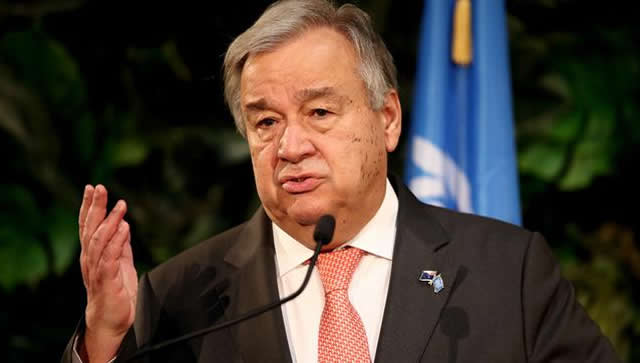
UN Secretary-General Antonio Guterres’s end-of-year message paints a stark picture of a world grappling with complex and interconnected crises. 2024, he notes, has been a year marked by escalating conflicts, deepening inequalities, and the ever-worsening reality of climate change. Wars continue to inflict immense suffering, displacing populations and fueling tensions across the globe. The gap between the rich and the poor widens, eroding trust and creating fertile ground for social unrest. Simultaneously, the climate crisis intensifies, with 2024 marking another year of record-breaking heat, solidifying the last decade as the hottest on record. This trifecta of conflict, inequality, and climate change presents a formidable challenge to global peace and stability, demanding immediate and concerted action from the international community.
Guterres’s message, however, is not solely one of despair. Amidst the challenges, he identifies glimmers of hope and progress. He acknowledges the unwavering dedication of activists, humanitarian workers, scientists, and innovators who strive to build a better future. He commends developing nations for their persistent advocacy for financial and climate justice, highlighting their crucial role in pushing for a more equitable global order. These individuals and nations represent the resilience of the human spirit and the potential for positive change even in the face of adversity. Their efforts, Guterres suggests, provide a foundation upon which to build a more sustainable and just world.
A significant milestone in 2024, Guterres points out, was the adoption of the Pact for the Future. This agreement, reached by world leaders in September, offers a roadmap for addressing some of the most pressing global challenges. It emphasizes the importance of disarmament in achieving peace, calls for reforms to the global financial system to ensure fairer representation for all countries, promotes opportunities for women and young people, and advocates for the ethical development and deployment of technology. The Pact for the Future, while not a panacea, represents a collective commitment to multilateralism and a shared vision for a more peaceful, just, and prosperous world.
The Pact for the Future, Guterres explains, is structured around four key pillars. The first pillar focuses on peace and disarmament, recognizing the devastating impact of conflict and the urgent need to prioritize peaceful resolution mechanisms. The second pillar addresses global financial architecture, aiming to create a more equitable system that supports the development needs of all countries, particularly those most vulnerable. The third pillar emphasizes the empowerment of women and young people, recognizing their essential role in shaping a sustainable future. Finally, the fourth pillar focuses on ensuring that technology serves humanity and promotes the common good, rather than exacerbating existing inequalities or creating new risks.
Guterres acknowledges that the road ahead is fraught with uncertainty. The challenges are immense, and the complexities of global politics often impede progress. However, he expresses unwavering optimism and pledges to stand in solidarity with all those working towards a better future. He calls on nations to unite in 2025, to move beyond the divisions and conflicts that have plagued the world, and to embrace a shared vision of peace, equality, and stability. He envisions 2025 as a new beginning, a year of renewed commitment to multilateralism and collective action.
Guterres’s message serves as a powerful call to action. It is a plea to global leaders, organizations, and individuals to recognize the interconnectedness of global challenges and to work together to find sustainable solutions. He urges the international community to uphold the principles of human rights, international law, and the values enshrined in the United Nations Charter. The path to a better future, he argues, requires shared responsibility, global cooperation, and a resolute commitment to building a more just, peaceful, and sustainable world for all. His message underscores the urgency of the moment and the critical need for collective action to address the defining challenges of our time. Ultimately, it is a message of hope, a reminder that even in the face of daunting obstacles, the pursuit of a better future remains within our grasp.









