









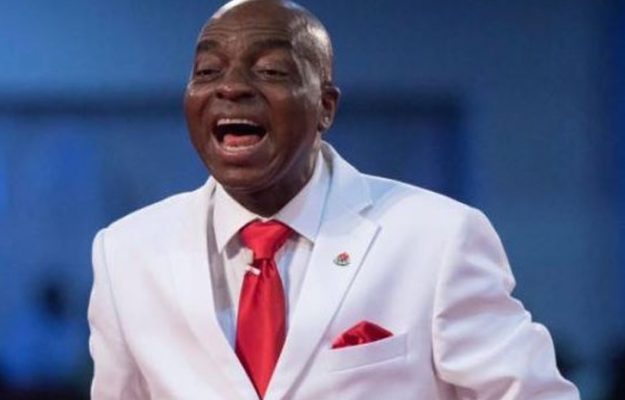
Bishop David Oyedepo, founder and leader of the Living Faith Church, commonly known as Winners Chapel, has recently addressed criticism regarding the church’s retirement policies for its pastors, particularly in response to the planned retirements of Bishops Thomas Aremu and David Abioye. These bishops are set to retire after decades of dedicated service, with Aremu having served for over 30 years and Abioye for nearly 40. Critics on social media have questioned the motivations behind this decision, but Oyedepo has made it clear that such retirements are in accordance with the church’s operational guidelines, referred to as The Mandate, which functions as a governing constitution for the organization. During a sermon at Aremu’s valedictory service, Oyedepo urged critics to focus on their own lives and affairs rather than meddle in the church’s decisions, emphasizing the importance of understanding and adhering to divine order within the ministry.
In his sermon, Oyedepo detailed how the church’s Administrative Policy was initially established in 1998 and later revised in 2001, with the most recent guidelines established in 2024. These revisions have notably adjusted the retirement age for church leaders from 60 to 55, while allowing Oyedepo himself the privilege to remain in leadership indefinitely. Future leaders of the church will, however, be subject to a maximum of one or two seven-year terms, contingent on approval from the church’s Board of Trustees. Oyedepo’s attempts to establish the framework reflect a strategic approach to leadership succession, which he believes strengthens the church’s mission. Addressing critics, he advised that wishing for the ministry’s failure was an unproductive endeavor, insisting that it is wiser to “study to be quiet and mind” one’s own business.
In the context of his remarks on pastor retirement, Oyedepo provided personal guidance to Bishop Aremu, encouraging him to root his post-retirement life in spiritual pursuits and faithfulness. He stressed the importance of maintaining a connection with God, warning that taking a spiritual break could be a perilous decision. Citing the Bible’s teachings and reflecting on the importance of personal growth, Oyedepo urged Aremu to focus on continuous development rather than seeking to achieve the title of “the best.” He asserted that remaining in alignment with God’s purpose would enable Aremu to continue receiving divine grace, undistracted by the criticisms from observers who may not fully grasp the church’s vision.
During the same address, Bishop Aremu spoke candidly about his future plans, emphatically stating that he has no intention of starting his own church after retirement. He reaffirmed his commitment to Winners Chapel, declaring it to be his sole involvement in ministry. Aremu, who transitioned from a successful career as an accountant to full-time ministry, highlighted his dedication to the church and expressed gratitude for the opportunities he had received during his time there. His comments not only cement his loyalty but also serve to quell potential speculation from critics about splits or schisms within the church after his retirement.
As part of the ongoing transition in leadership, Bishop Abioye will also be honored at a farewell event scheduled for October 18, 2024, in Durumi, Abuja. This ceremony marks another significant moment in the church’s evolving leadership landscape, as the organization prepares for a generational shift that aligns with Oyedepo’s defined operational policies. Both Bishop Aremu and Bishop Abioye are recognized for their long-standing commitment and contributions to the church’s growth, and Oyedepo’s efforts to bolster the integrity of the church’s governance structure reinforces the notion of stability that he seems to be cultivating during this leadership transition.
In essence, Oyedepo’s comments on the church’s retirement policies can be seen as both a defense of its systematic approach to leadership and an admonition to critics who may misunderstand the church’s governance framework. His insistence on focusing on individual responsibilities encourages a sense of community and discourages division among followers. With the recently revised terms of service and retirement policies, the Living Faith Church aims to implement a succession plan that not only honors the contributions of outgoing leaders like Aremu and Abioye but also establishes a foundation for future growth and spiritual attainment, reflecting Oyedepo’s vision for the church.









