









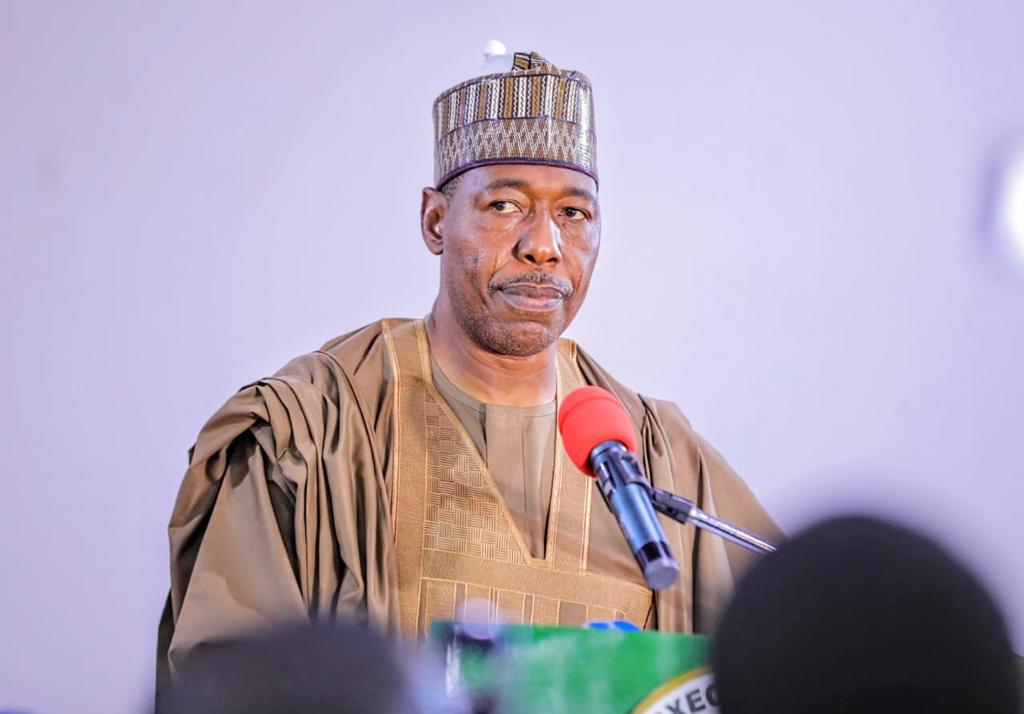
Borno State Governor Babagana Zulum has publicly addressed his stance on the contentious tax reform bills currently under review in Nigeria, asserting that his position should not be viewed as adversarial to President Bola Tinubu’s administration. During an appearance on Channels Television’s Politics Today, Zulum clarified that his concerns about the proposed legislation stem from a deep-rooted commitment to fair governance rather than any opposition to the president. He is a staunch member of the All Progressives Congress (APC) and highlighted his support for Tinubu during his time in office, as well as his advocacy for the rotation of power to the southern regions of Nigeria.
Zulum underscored the importance of consultative governance, arguing that the federal government’s approach has lacked sufficient stakeholder engagement. The governor emphasized that as democratically elected officials, they deserve to be consulted before significant policy reforms are enacted. He noted that subsequent interpretations of their calls for consultation have been distorted, with misconceptions spreading about their motives. Zulum firmly believes that the issues surrounding the tax bills require careful consideration and dialogue rather than hasty legislative action, which could undermine the collective democratic process.
In recent weeks, the controversial tax reform bills have increasingly polarized discussions among Nigeria’s governors, leading to calls for their withdrawal until more stakeholder engagement can occur. Zulum has joined other governors in expressing concerns about how the bills might disproportionately affect the economy, particularly in northern Nigeria, where their implementation could have far-reaching consequences. He actively urged his colleagues and other regional stakeholders to reject the bills, insisting that they pose a direct threat to the economic stability and growth of the region.
Both Zulum and former Vice President Atiku Abubakar have echoed sentiments calling for transparency in the ongoing review of the tax reforms, highlighting a shared concern among leaders regarding the need for fairness in the tax system. Zulum’s analysis indicates that the potential benefits of the bills primarily favor Lagos State, Nigeria’s former capital, while leaving other states—particularly in the north—vulnerable to economic setbacks. His assertion raises critical questions about the equitable distribution of resources in a federal system where various states have diverse economic landscapes and needs.
Moreover, Zulum indicated that the urgency surrounding the tax reform legislation could be misguided. He recounted discussions with the Federal Inland Revenue Service (FIRS) and representatives from Lagos State who reportedly acknowledged potential losses tied to the implementation of these tax changes. The Lagos authorities conceded that they, too, might face adverse impacts under the proposed reforms, which further complicates the narrative of unequivocal benefits. According to Zulum, this scenario underscores the importance of taking a step back to assess the full implications of the bills before rushing to finalize them.
In conclusion, Governor Zulum’s stance on the tax reform bills reflects a broader call for dialogue and consultation in governing, particularly when it comes to economic reforms that affect multiple regions differently. His insistence on delaying the bills until a more in-depth deliberation can occur highlights the need for collaborative governance in Nigeria, where various stakeholders—ranging from state leaders to the broader public—should have a voice in determining legislation that could profoundly impact their lives and communities. Zulum’s perspective encapsulates the complexities of Nigeria’s federal structure, particularly regarding the need for a balanced approach to governance that safeguards the interests of all states rather than favoring a particular region.









