





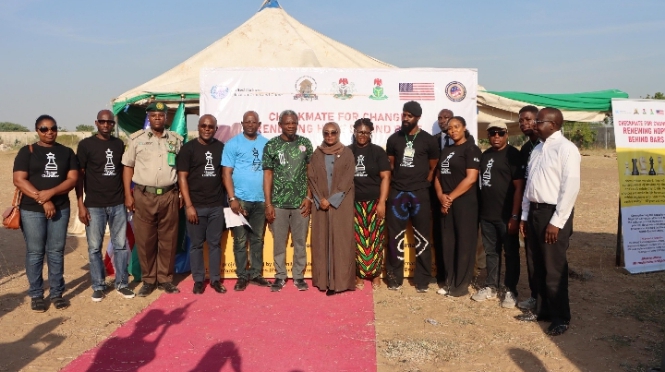
The Maiduguri Maximum Custodial Centre witnessed a unique and inspiring event on Tuesday: the inaugural Chess in Prison Championship. Organized by the United Nations Office on Drugs and Crime (UNODC), the competition brought together 42 inmates from the state’s medium and maximum security facilities, engaging them in a battle of wits and strategy on the chessboard. This maiden tournament marked a significant step towards providing inmates with opportunities for personal growth, rehabilitation, and successful reintegration into society. The championship showcased not only the inmates’ intellectual prowess but also the power of rehabilitation programs to transform lives within the confines of prison walls.
The event was graced by the presence of distinguished guests, including representatives from the Ministry of Interior, members of the House of Representatives, and the driving force behind Chess in Slums Africa. Olubunmi Tunji-Ojo, the Minister of Interior, lauded the initiative as groundbreaking, emphasizing the importance of rehabilitation and the transformative potential of activities like chess. Represented by his Senior Special Adviser, Babatunde Ogundare, the Minister encouraged inmates to utilize the lessons learned from chess to reflect on their lives, discover their hidden potential, and prepare for a brighter future upon release. He underscored the government’s commitment to transforming correctional facilities into true centers of rehabilitation, mirroring the standard set by the Kuje Correctional Centre in Abuja.
Further demonstrating support for the initiative and recognizing the potential impact on the inmates’ lives, Chinedu Ogah, Chairman of the House Committee on Reformation, announced a substantial cash prize of N1 million for the champion. This reward, however, comes with a condition – the inmate must complete his remaining six-month sentence. This stipulation highlights the importance of continued good behavior and commitment to rehabilitation. Ogah also addressed practical concerns faced by the inmates, promising to resolve the persistent issue of water scarcity within the facility. This commitment to addressing basic needs underscores the importance of creating a humane and conducive environment for rehabilitation.
Tunde Onakoya, a Guinness World Record holder and the convener of Chess in Slums Africa, also pledged his support, offering N100,000 in cash prizes to be distributed among the top three contestants. Onakoya’s presence and contribution underscored the growing recognition of chess as a powerful tool for social development and personal transformation. His work with Chess in Slums Africa demonstrates the potential of the game to empower marginalized communities and offer individuals a path towards a better future. His involvement brought a sense of hope and opportunity to the inmates of Maiduguri Maximum Custodial Centre.
The UNODC’s initiative to introduce chess into the prison environment goes beyond simply providing a recreational activity. The program is strategically designed to equip inmates with crucial life skills that can aid in their rehabilitation and successful reintegration into society. Chess, with its inherent demands for strategic thinking, planning, patience, and problem-solving, offers a unique platform for cognitive development. These skills, honed through the game, can translate into real-world applications, empowering inmates to make informed decisions, manage challenges, and navigate complex social situations.
The benefits of the chess program extend beyond cognitive development to encompass improvements in mental well-being. Engaging in chess provides a healthy outlet for stress and anxiety, allowing inmates to focus their minds and develop a sense of control in an environment often characterized by powerlessness. The social interaction inherent in the game also fosters a sense of community and camaraderie, counteracting the isolating effects of incarceration. Moreover, the program encourages positive interactions between inmates and correctional officers, fostering a more respectful and conducive environment within the facility. This shift in dynamics can contribute to a more positive and productive atmosphere within the correctional center, benefiting both inmates and staff.








