









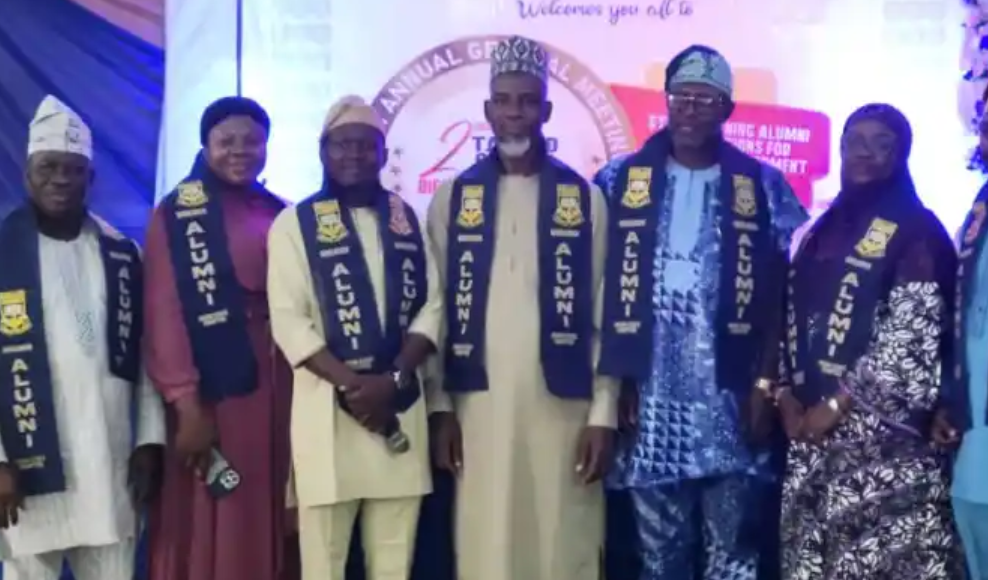
Professor Abdulrasaq Kilani, the National President of the University of Ilorin Alumni Association, issued a stern warning to youths against the dismissive notion that education is a scam. He emphasized the transformative power of education, highlighting its role in liberating individuals from poverty and ignorance, and empowering them to achieve their full potential. Kilani argued that those who propagate the idea of education being a scam are essentially condemning themselves to a life of limited opportunities and societal stagnation. He underscored the importance of education in personal and societal development, asserting that it provides the necessary tools for individuals to thrive and contribute meaningfully to their communities. He urged the youth to embrace education as a pathway to a brighter future, rejecting the misguided notion that it is a futile pursuit.
Addressing the growing concern of grade inflation, Kilani also called upon the National Universities Commission (NUC) to investigate the proliferation of first-class graduates from private universities. While acknowledging the improved access to information and enhanced teaching methodologies that may contribute to higher academic achievement, he expressed skepticism about the sheer volume of first-class degrees being awarded by some private institutions. He suggested that this trend might be driven, in part, by marketing strategies aimed at attracting students. He emphasized the need for the NUC to ensure rigorous quality control measures are in place to maintain the integrity and credibility of academic standards. Kilani’s concern stemmed from the apparent disparity between the number of first-class graduates from private universities compared to their public counterparts, raising questions about the consistency of grading practices across different institutions.
Kilani contrasted the current situation with his own experience as a student, where access to resources was limited, and first-class honors were a rare achievement. He acknowledged that increased access to information through the internet and improved primary and secondary education could contribute to higher academic performance. However, he questioned whether these factors alone could account for the substantial increase in first-class degrees, particularly in private universities. He emphasized the importance of ensuring that these high honors are truly reflective of exceptional academic merit, urging the NUC to implement robust quality assurance mechanisms to maintain the value and credibility of these distinctions. He proposed that the NUC’s intervention is necessary to ensure that the standards for awarding first-class honors are consistently applied across all universities.
The professor’s call for scrutiny of first-class awards wasn’t a dismissal of the capabilities of students in private universities. Instead, he highlighted a critical need for transparency and accountability in the higher education sector. His concern was rooted in the potential for the devaluation of first-class honors if they are perceived as being awarded too readily. This devaluation, he argued, could undermine the hard work and genuine achievements of deserving students. He proposed that a thorough review by the NUC is essential to maintain the prestige associated with a first-class degree and to assure the public of the quality and rigor of Nigerian universities.
Beyond the issue of academic standards, Kilani also urged alumni associations to play a more active role in the development of their alma maters. He emphasized the importance of leveraging alumni networks to contribute to the growth and progress of their former institutions. He suggested that alumni associations could provide valuable support through mentorship programs, fundraising initiatives, and advocacy efforts. Kilani believed that a strong alumni network can be a powerful asset for universities, providing valuable resources and expertise to enhance academic programs, research initiatives, and overall institutional development. He encouraged alumni to embrace their role as stakeholders in the future success of their universities.
Echoing Kilani’s call for community engagement, Ayobamigbe Faloye, the Chairman of the Ogun State chapter of the University of Ilorin Alumni Association, urged members to actively participate in nation-building. He emphasized the importance of looking beyond individual interests and working collectively for the betterment of society. Faloye challenged alumni to contribute their skills, knowledge, and resources to address societal challenges and promote national development. He emphasized the crucial role of alumni in shaping a better future for their communities and the nation as a whole, advocating for a proactive approach to societal improvement. He underscored the idea that societal transformation relies on the active participation of its citizens, including alumni who have benefitted from the educational system.









