









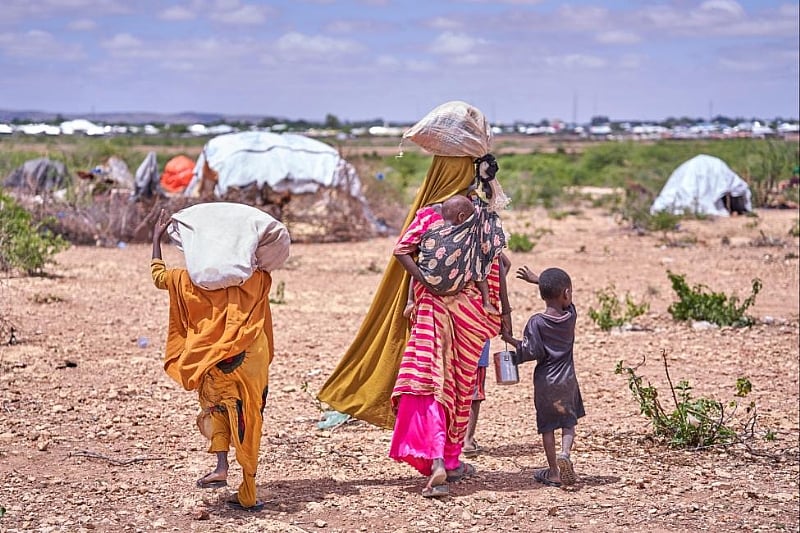
The International Organization for Migration (IOM) and Microsoft have forged a strategic partnership to address the escalating challenge of climate-induced displacement. This collaboration leverages the power of artificial intelligence and data insights to anticipate and mitigate the impacts of climate change on vulnerable communities, fostering resilience and informing data-driven interventions. Pilot projects in the Maldives, Ethiopia, and Libya showcase the potential of this partnership to transform humanitarian responses and empower policymakers. The underlying premise of this alliance is the acknowledgement that climate change is no longer a distant threat but a present-day reality driving displacement on an unprecedented scale.
The partnership’s core strategy revolves around harnessing Microsoft’s AI for Good Lab expertise to analyze complex data sets and generate actionable insights. This approach moves beyond reactive measures towards a proactive model of anticipatory humanitarianism. By combining advanced AI tools with IOM’s deep understanding of migration patterns and local expertise on the ground, the partnership aims to identify vulnerable populations, predict displacement hotspots, and equip decision-makers with the tools they need to mitigate risks and support at-risk communities. This proactive approach allows for more targeted interventions, optimizing resource allocation and maximizing impact.
In Ethiopia, the collaborative effort has yielded crucial data revealing the vulnerability of 700,000 people and 1.5% of the nation’s croplands to flooding. This information empowers IOM to develop and implement more effective interventions, providing timely support to potentially displaced populations and implementing measures to reduce the likelihood of future displacement. These measures may include infrastructure development, early warning systems, and community-based disaster preparedness programs. Similarly, in Libya, research has focused on the impact of extreme heat on migration pathways. Projections indicate that under a 2°C global warming scenario, a significant portion of the country’s migration routes could experience dangerously high heat levels, posing substantial health risks to migrants. This knowledge allows for the development of strategies to mitigate these risks, such as providing access to water and shade along migration routes, and educating migrants about heat safety.
In the Maldives, where rising sea levels pose an existential threat, the partnership has generated projections indicating potential displacement of approximately 9,000 people by 2050. This analysis reveals the stark reality that some islands may see over 70% of their populations at risk, while identifying five islands likely to remain safe. These findings are invaluable for guiding migration and adaptation policies in collaboration with the Maldivian government, enabling them to develop long-term strategies for relocation, infrastructure development, and coastal protection measures. This proactive approach aims to minimize the human cost of climate change and ensure the long-term viability of Maldivian communities.
To disseminate the insights generated through these pilot projects and facilitate broader access to crucial information, IOM and Microsoft have developed the Climate Action Portal. This interactive platform serves as a central repository for key insights on climate change and migration, presenting pilot results through interactive maps and dynamic data visualizations. The portal empowers policymakers, humanitarian actors, researchers, and the public with actionable insights, fostering collaboration and informing evidence-based decision-making. By making this information readily accessible, the partnership aims to catalyze global action and promote more effective responses to the climate migration crisis.
This collaborative initiative between IOM and Microsoft represents a significant step forward in addressing the complexities of climate-induced displacement. By harnessing the power of AI and data analytics, the partnership is pioneering a proactive approach to humanitarianism, empowering communities to build resilience and adapt to the challenges of a changing climate. The Climate Action Portal further amplifies the impact of this work by making crucial data and insights accessible to a wider audience, fostering greater understanding and promoting collaborative action to address this global crisis. The partnership’s work in Ethiopia, Libya, and the Maldives demonstrates the tangible benefits of this approach, providing a model for future initiatives and highlighting the potential of technology to drive positive change in the face of climate change.









