





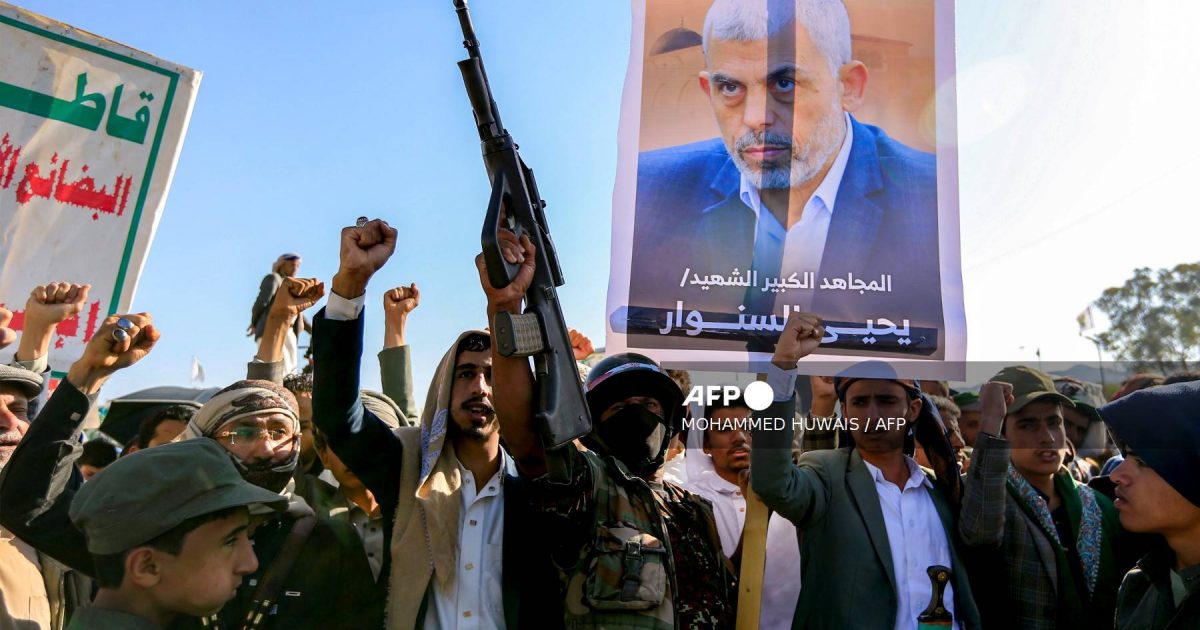
On Saturday, Iran’s supreme leader Ayatollah Ali Khamenei addressed the death of Hamas leader Yahya Sinwar, stating that the organization will continue to thrive despite this significant loss. Khamenei expressed that Sinwar’s departure is indeed a painful blow for the anti-Israel resistance movement; however, he asserted that it would not diminish Hamas’ resolve or existence. Khamenei emphasized the enduring strength of Hamas, reinforcing the idea that it would continue its struggle against Israel and maintain its place as a pivotal player in the ongoing conflict. This statement came in the context of heightened tensions and the backdrop of the recent Gaza war, initiated by the October 7, 2023 attacks, which Sinwar was notably credited with orchestrating.
Khamenei referred to Sinwar as a “shining figure of resistance,” praising his steadfast determination and bravery in the face of what he described as a “cruel and aggressive enemy.” In his remarks, Khamenei noted that Sinwar’s legacy would be remembered for the significant impact of the attacks on October 7, framing them as an “irreparable blow” to Israel. The leader’s commentary suggests a sense of pride in Sinwar’s role and a desire to galvanize Hamas supporters during a tumultuous period. His death is perceived as a martyrdom, fitting into a larger narrative of sacrifice in the fight against Israel, which Iran does not recognize and considers one of its principal adversaries.
Iran’s commitment to supporting the Palestinian cause has been a cornerstone of its foreign policy since the Islamic Revolution of 1979. The Iranian regime, led by Khamenei, has consistently positioned itself as a champion of Palestinian rights and has actively provided backing to groups like Hamas and Hezbollah. Sinwar’s leadership was emblematic of this resistance, especially following the killing of previous Hamas leader Ismail Haniyeh in Tehran in July, a death widely attributed to Israel. Khamenei’s remarks reinforce Iran’s narrative against Israel, viewing the conflict as existential and portraying attacks on Palestinian leaders as martyrdom that fuels further resistance.
The political landscape surrounding Hamas and Iran is complex, especially given the dynamics of the broader Arab-Israeli conflict and the sociopolitical factors at play within Palestinian territories. Sinwar, having operated in what could be described as the shadows for much of his early career, had risen to prominence as a key strategist and leader within Hamas. His leadership style and strategic decisions have been scrutinized, particularly in the context of violent confrontations with Israeli forces. The aftermath of his death prompts questions about the future direction of Hamas and the potential impact on resistance movements across the region.
Khamenei’s strong endorsement of Sinwar’s legacy posthumously serves as a rallying cry not just for Hamas, but for all factions aligned against Israel. His rhetoric is aimed at solidifying support among various Palestinian groups and their allies in Iran and beyond. The sentiments expressed are likely intended to instill a sense of unity and purpose within these factions, encouraging them to continue their fight against perceived injustices. The ongoing geopolitical tensions in the region underscore the fragility of peace and the potential for further escalation as factions grapple with leadership changes and strategic recalibrations.
In conclusion, Khamenei’s comments on the death of Yahya Sinwar encapsulate a broader narrative of resilience among the Palestinian resistance movements in the face of adversity. His assertion that Hamas will continue to thrive is a testament to the organization’s deep-rooted ideology of resistance against Israel. The implications of Sinwar’s death are significant, hinting at potential shifts within Hamas’ leadership and strategy, while also reflecting the interconnectedness of regional politics and the enduring support for the Palestinian cause from Iran. As the situation evolves, both Hamas and Iran will likely navigate the challenges ahead, rooted in a historic commitment to what they define as a struggle for justice and sovereignty against Israeli actions.








