









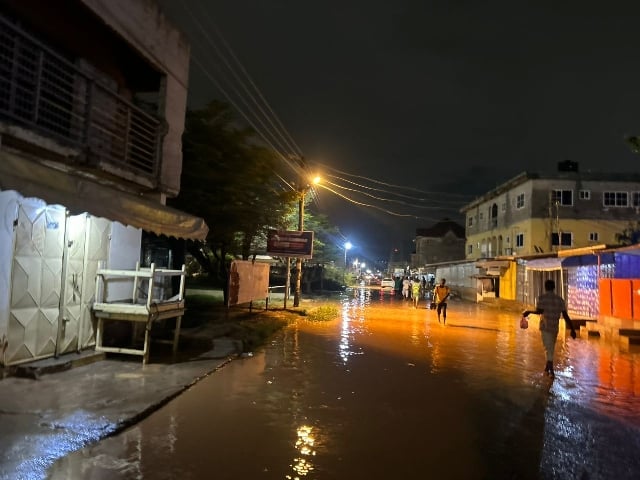
The Weija-Gbawe constituency in Ghana experienced severe flooding following torrential rains, prompting the Member of Parliament, Mr. Jerry Ahmed Shaib, to conduct a late-night inspection of the affected communities. His unannounced visit sought to assess the damage firsthand, listen to the concerns of residents, and formulate immediate strategies to mitigate their suffering. The flooding, a recurring issue in the constituency, left homes and businesses submerged, displacing residents and disrupting their livelihoods. The MP’s visit underscored the urgent need for intervention and highlighted the human cost of the persistent flooding problem.
The residents of the flood-hit communities expressed their deep-seated frustration with the recurring nature of the disaster, emphasizing the years of unfulfilled promises from authorities and the lack of sustainable drainage systems. Their homes, businesses, and livelihoods are repeatedly damaged every rainy season, leaving them in a cycle of despair and vulnerability. The lack of adequate infrastructure to manage rainwater runoff exacerbates the problem, turning even moderate rainfall into a destructive force. The residents’ accounts painted a picture of a community struggling to cope with the continuous threat of flooding and the disruption it brings to their lives.
Visibly affected by the devastation he witnessed, Mr. Shaib characterized the situation as “deeply concerning,” and issued a direct appeal to the Minister for Works and Housing. He urged the Minister to expedite the construction of a crucial storm drain along the Accra-Kasoa Highway, a project long promised but yet to materialize. This critical piece of infrastructure is seen by residents as essential to mitigating the flooding problem, and its delayed implementation has compounded their frustration and vulnerability. The MP emphasized the urgency of the situation, stressing that these interventions are not merely infrastructural improvements, but lifesaving measures that are crucial to protecting the community.
Beyond the immediate need for the storm drain, Mr. Shaib also addressed the issue of road safety, particularly along the Accra-Kasoa stretch. He called upon the Ministry of Roads and Highways to prioritize the installation of streetlights along this vital artery, highlighting the dangerous conditions created by poor visibility during storms and at night. The lack of adequate lighting contributes to traffic accidents and poses a significant risk to pedestrians, further compounding the challenges faced by the community during periods of heavy rainfall. The MP’s call for improved lighting underscores the need for a comprehensive approach to addressing the safety and well-being of residents.
Mr. Shaib reiterated his unwavering commitment to advocating for increased government support to address the persistent flooding issue. He warned that without immediate and decisive action, the problem will continue to wreak havoc on the constituency, posing a deadly and costly threat to lives and livelihoods. His pledge to hold the relevant authorities accountable underscores his determination to secure long-term solutions for the community. He emphasized that the issue requires urgent attention and a concerted effort to ensure the safety and well-being of his constituents.
The MP’s visit and subsequent appeals highlight the crucial need for a comprehensive and sustainable approach to addressing the flooding problem in Weija-Gbawe. The residents’ testimonies underscore the human cost of inaction, while the MP’s calls for infrastructure development and improved road safety emphasize the need for both short-term mitigation measures and long-term solutions. The situation demands a concerted effort from government authorities to address the root causes of the flooding, provide necessary infrastructure, and ensure the safety and well-being of the affected communities. The MP’s commitment to holding authorities accountable signifies a determined effort to bring about lasting change and prevent future devastation.









