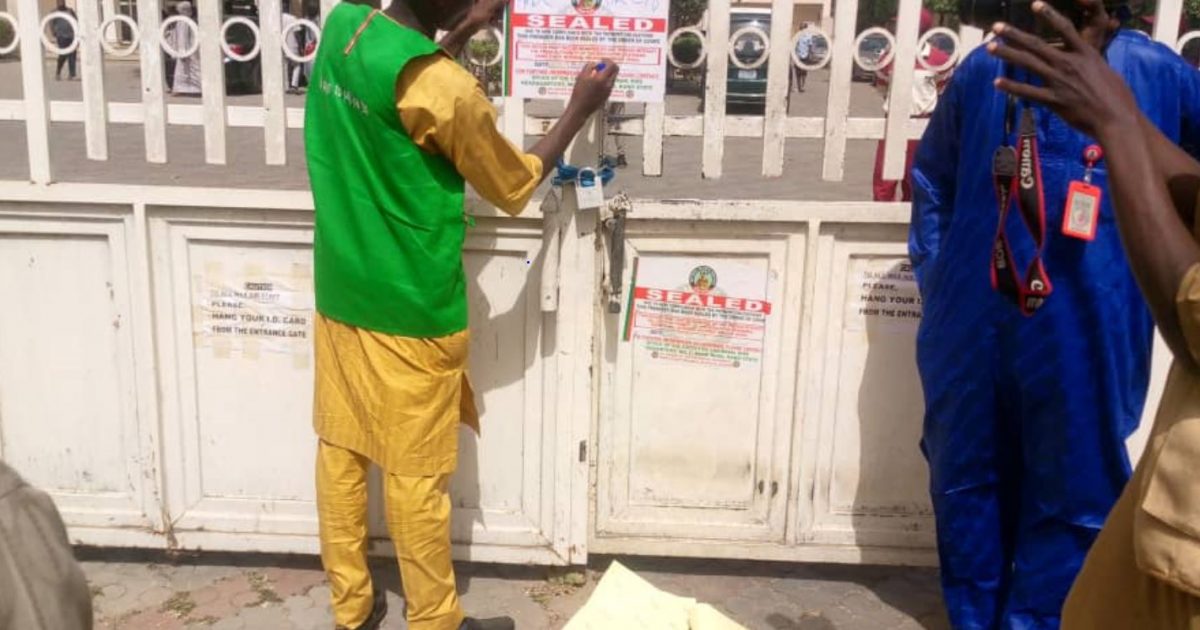
On Monday, the Kano State Internal Revenue Service took significant action by sealing the headquarters of three companies, including the prominent Max Air Limited, which is situated on Ashton Road in Kano State. This drastic measure stems from the companies’ failure to settle their liability taxes incurred over a five-year period from 2012 to 2017. Max Air Limited is owned by Alhaji Dahiru Mangal, a notable businessman from Katsina and an in-law to Rabi’u Kwankwaso, a prominent political figure and national leader of the Kwankwasiyya Movement. This connection raises eyebrows regarding the implications of such tax enforcement, especially considering the political ties at play.
In addition to Max Air Limited, the Kano State Internal Revenue Service specifically targeted Dantata and Sawoe Construction Company, located along the Kano-Zaria road, for neglecting to pay a substantial amount of N241.2 million in Pay As You Earn (PAYE) and withholding taxes for the years 2021 and 2022. The enforcement actions taken by the agency also encompassed Northern Rice and Oil Milling Nigeria Ltd, situated in the Gunduwawa Industrial Estate off Hadejia road. Each company’s sealing underscores a broader initiative to address tax compliance in the region, emphasizing the considerable financial obligations that businesses have towards the state’s revenue collection efforts.
Following the enforcement actions, Ibrahim Abdullahi, the Director of Debt Management and Enforcement at the Kano State Internal Revenue Service, provided clarity on the rationale behind the closures. He highlighted that the actions were executed under a court order obtained by the agency, reflecting an adherence to legal protocols in enforcing tax payment obligations. Abdullahi emphasized the imperative of maintaining tax compliance, stating that discrepancies had been discovered in tax payments made by these companies. The sealing was not merely punitive but also served as a reminder of the companies’ obligations to the state.
The closure of Max Air Limited and the other companies was deemed necessary after the agency exhausted multiple avenues for communication and negotiation without any positive outcomes. The intent is to compel these businesses to address their outstanding tax liabilities, reinforcing the message that tax compliance is not optional but a mandatory responsibility of all corporations operating within the state. The government’s proactive stance in tackling tax evasion signifies a determined effort to enhance the fiscal health of Kano State, ensuring that businesses contribute fairly to the state’s revenue.
Moreover, Abdullahi reiterated the government’s commitment to sustaining such enforcement exercises as part of their broader strategy to ensure that all tax defaulters are held accountable for their financial responsibilities. The tax collection framework is perceived as crucial for improving the overall revenue base of the state, which can, in turn, facilitate the provision of public services and infrastructure improvements. This proactive enforcement approach aims to foster a culture of compliance among businesses, thereby enhancing the financial sustainability of the state.
In closing, the actions taken by the Kano State Internal Revenue Service represent a significant step toward enforcing tax compliance among major corporations in the region. The sealing of Max Air Limited, Dantata and Sawoe Construction Company, and Northern Rice and Oil Milling Nigeria Ltd reflects the agency’s commitment to collecting owed taxes and holding companies accountable. As Abdullahi indicated, the agency’s continued efforts to address tax defaulter issues will be vital to bolstering the state’s financial standing and ensuring compliance among businesses, ultimately contributing to the welfare and development of Kano State.