





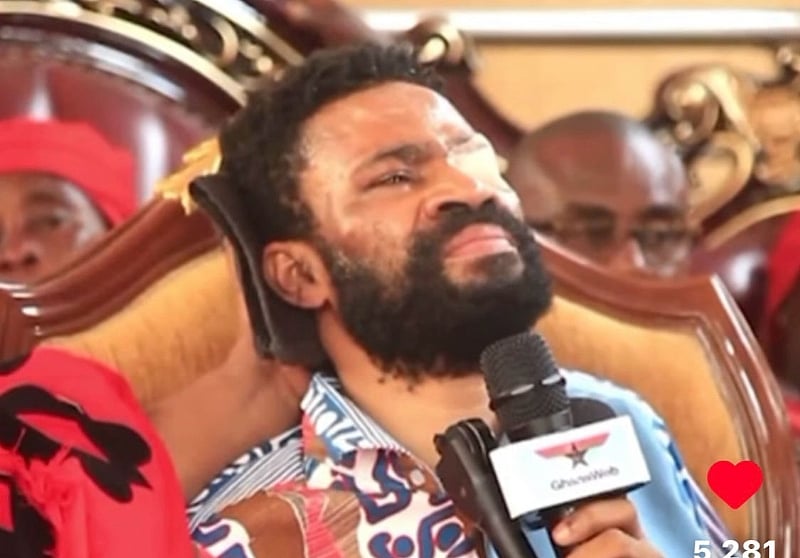
Kofi Adoma Nwanwani, a prominent Ghanaian broadcast journalist, has broken his silence about the harrowing experience of being shot in the eye during the Kwafie Festival in Dormaa Ahenkro in December 2024. In a deeply emotional video statement, Adoma, who is also the CEO of Kofi TV, detailed the physical suffering he has endured since the incident, including chronic pain and persistent bleeding, particularly when he sneezes. He appeared on camera with a bandage covering one eye, a stark visual reminder of the gravity of the attack. Adoma recounted his initial determination to support the festival despite the shooting, a testament to his dedication to his profession. However, his resilience has been met with perceived indifference from key figures, leaving him grappling with feelings of disappointment and betrayal.
Adoma expressed profound disillusionment with the Dormaahene, the traditional ruler of Dormaa. While emphasizing that he didn’t expect any material support from the chief, Adoma hinted at a lack of emotional support or acknowledgement of his plight. This perceived neglect from a figure of authority within his own community has clearly added another layer of pain to Adoma’s experience. This sense of abandonment is compounded by the alleged response from Vincent Opare, CEO of Angel Broadcasting Network (ABN), Adoma’s employer. Adoma claims that Opare prioritized the company’s interests over his well-being, a statement that speaks volumes about Adoma’s feeling of being undervalued within the organization.
The journalist’s disappointment stems not only from the physical trauma of the attack but also from the perceived lack of empathy and support he has received in its aftermath. He directly addressed those who downplayed the severity of his injury, dismissing their claims that it was merely a superficial wound caused by powder. He vehemently refuted these assertions, emphasizing the excruciating pain and ongoing medical issues he faces. His words convey a sense of deep hurt and frustration at having his suffering minimized or disbelieved by members of his own community. This experience has forced Adoma to confront a harsh reality about human nature, leading him to question the sincerity of those around him.
Adoma publicly shared his ordeal in a video published by blogger ZionFelix, indicating a desire to document his experience and hold those he feels have wronged him accountable. He prefaced his account with a poignant statement expressing his desire to reveal the full truth “before whatever will happen to me happens.” This phrase carries a heavy weight, suggesting a fear for his own safety and a sense of urgency to tell his story. His decision to go public underscores his determination to have his voice heard and to shed light on the perceived injustices he has suffered.
The incident at the Kwafie Festival and its aftermath have become a turning point in Kofi Adoma Nwanwani’s life, forcing him to confront not only physical pain and recovery but also the complexities of human relationships and the often-disappointing realities of institutional support. His public statement is a raw and emotional testament to the psychological toll of trauma, exacerbated by perceived betrayal and indifference. It serves as a poignant reminder of the importance of empathy, support, and genuine concern in the face of adversity.
This incident and Adoma’s subsequent revelations have sparked significant public discussion regarding the safety of journalists, duty of care from employers, and the role of community leaders in providing support during times of crisis. Adoma’s experience has also ignited a broader conversation about the ethical responsibilities of media organizations towards their employees, particularly when those employees face life-threatening situations in the line of duty. The long-term impact of this incident remains to be seen, but it has undoubtedly left a mark on both Adoma’s personal life and the Ghanaian media landscape.








