The Islamic Nursing Training Institute at Kokrobite, Ghana, has made a compelling case for extending government allowances to students in private nursing schools. This appeal, voiced by the institution’s Acting Principal, Madam Patricia Bainson, underscores the critical role financial assistance plays in alleviating the economic strain on aspiring nurses and fostering educational equity. Beyond the immediate financial relief, such a policy would have profound societal implications, contributing to poverty reduction and challenging entrenched social inequalities. Education, particularly in a vital field like nursing, empowers individuals to break free from the cycle of poverty and become agents of positive change in their communities. The argument for inclusivity in government support resonates strongly with the institute’s own philosophy, which emphasizes diversity and welcomes students from all backgrounds, regardless of their religious affiliation.
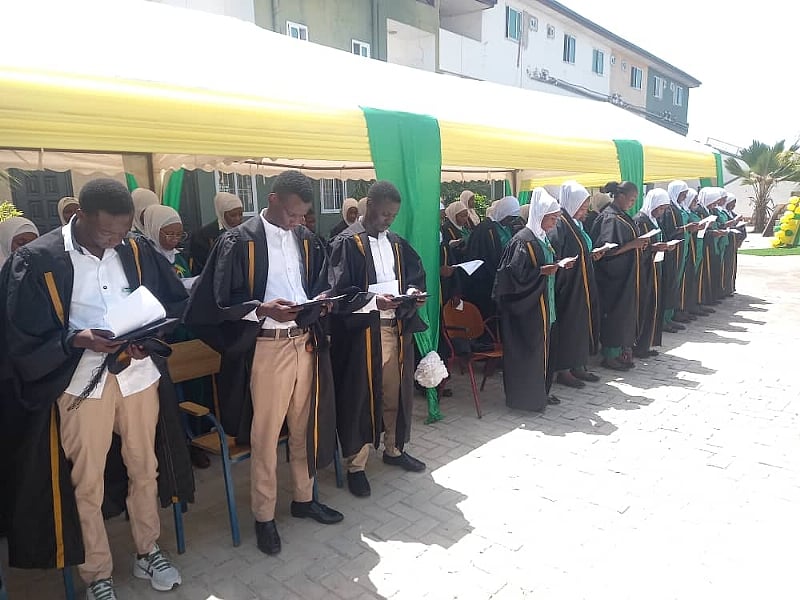
The institution’s inaugural matriculation ceremony for 815 students provided a platform to articulate its core mission and values. Madam Bainson highlighted the school’s commitment to cultivating socially conscious, community-oriented, and patient-centered nurses. This emphasis on holistic training underscores the institute’s belief in developing healthcare professionals who are not only technically proficient but also deeply attuned to the social and emotional needs of their patients and communities. The curriculum integrates exceptional teaching, clinical leadership, and evidence-based practice to equip students with the necessary skills and knowledge to excel in their chosen profession. This approach ensures that graduates are well-prepared to meet the evolving demands of the healthcare landscape and contribute meaningfully to the well-being of society.
The Islamic Nursing Training Institute, officially inaugurated in 2022 by Vice President Dr. Mahamudu Bawumia, proudly offers diploma programs in registered nursing and registered public health nursing in affiliation with Cape Coast University. This partnership with a reputable institution underscores the institute’s dedication to providing high-quality education and ensuring that its graduates meet recognized academic standards. The availability of both registered nursing and registered public health nursing programs further demonstrates the institution’s commitment to catering to diverse career aspirations within the nursing field. This comprehensive approach allows students to specialize in areas that align with their interests and career goals, contributing to a more versatile and well-rounded healthcare workforce.
Sheikh Hassan Hamza Mussh, the Founder of the Institute, expressed his profound gratitude for the progress achieved thus far. He urged the matriculating students to embody Islamic teachings and values, emphasizing the importance of respect for authority, unwavering discipline, and a relentless pursuit of excellence. These principles, rooted in the institution’s Islamic foundation, serve as guiding tenets for both personal and professional development. They underscore the importance of ethical conduct, diligence, and a commitment to continuous improvement, qualities that are essential for success in the demanding field of nursing.
Mr. Eugene Appiah, Deputy Director of the Weija-Gbawe Municipal Education Directorate, delivered a powerful address emphasizing the transformative power of education. He highlighted its role in empowering individuals to acquire knowledge, cultivate critical thinking skills, and foster empathy and cultural competence. These attributes are crucial for nurses who interact with diverse patient populations and must navigate complex medical and social situations. Mr. Appiah encouraged the students to embrace challenges with courage and remain steadfast in their mission to serve and heal. He emphasized that their education is a tool not only for personal advancement but also for uplifting their communities and advocating for quality healthcare for all.
Mr. Appiah’s address went beyond the traditional academic focus, encompassing the broader aspects of education. He reminded the students that learning extends beyond textbooks and classrooms, encompassing life experiences, interpersonal relationships, and the challenges they encounter along their journey. He stressed the importance of using their acquired knowledge and skills to uplift those around them, defining this act of service as a true measure of success. This holistic perspective on education underscores the institute’s commitment to developing well-rounded individuals who are not only competent professionals but also compassionate and engaged members of their communities. The call to uplift others serves as a powerful reminder of the social responsibility that comes with education and the profound impact nurses can have on improving lives.