









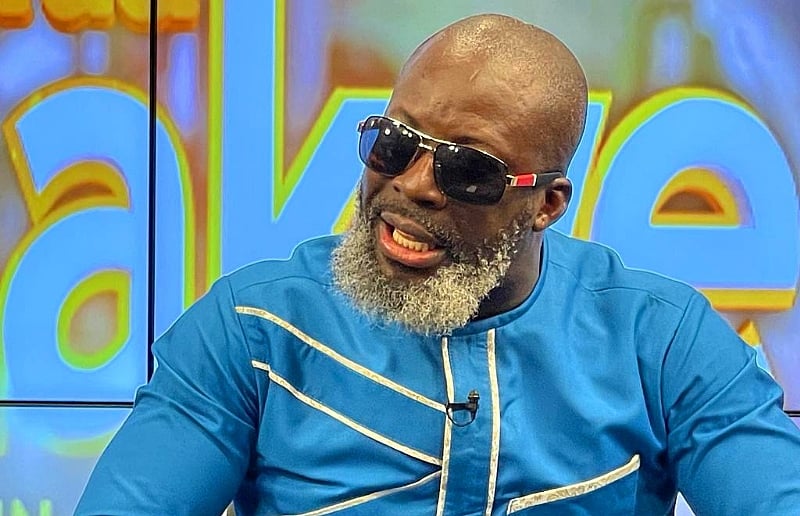
Prophet Nicholas Osei, widely recognized as Prophet Kumchacha, has asserted his involvement in the perceived missteps and controversial pronouncements made by prominent figures of the New Patriotic Party (NPP) – Dr. Matthew Opoku Prempeh (NAPO), Dr. Mahamudu Bawumia, and Nana Addo Dankwa Akufo-Addo – during the 2024 election campaign. In a televised interview, Kumchacha claimed to have orchestrated spiritual interventions that influenced the campaign performances of these NPP leaders, specifically causing them to repeatedly invoke the name of their then-opponent, John Dramani Mahama. He attributed various gaffes and controversial statements to his spiritual machinations, portraying himself as the unseen hand guiding the narrative of the NPP’s campaign rhetoric.
Kumchacha’s assertions, delivered with an air of confidence, detailed his alleged behind-the-scenes spiritual work, which he claimed directly impacted the conduct and utterances of the NPP leadership. He specifically cited Dr. Matthew Opoku Prempeh (NAPO), who served as the NPP’s vice-presidential candidate, as a prime example of his influence. NAPO’s campaign was marked by several controversial statements, including a widely criticized remark about God sleeping at night, made in response to the National Democratic Congress (NDC)’s promise of a 24-hour economy. Kumchacha directly linked this statement, and other perceived blunders by NAPO, to his own spiritual interventions. He presented his actions as deliberately designed to disrupt the NPP’s campaign messaging and steer the narrative towards a more Mahama-centric discourse.
The self-proclaimed prophet’s claims offer a unique, albeit controversial, perspective on the dynamics of the 2024 election campaign. He portrays himself as a significant, albeit hidden, player in the political landscape, wielding spiritual influence to shape the narrative and impact the performance of key political figures. While the veracity of his claims remains unverifiable, they provide a fascinating glimpse into the intersection of spirituality and politics, and the belief in the power of spiritual forces to influence worldly events. Kumchacha’s narrative highlights the often-blurred lines between religious practices and political maneuvering, particularly within the context of Ghanaian society.
Kumchacha’s assertions raise several important questions about the role of spiritual beliefs in political campaigns, and the potential for manipulation and influence through such means. His claims, if taken at face value, suggest a deliberate attempt to manipulate the political discourse through spiritual interventions. This raises ethical concerns about the use of such practices in a democratic process, and the potential for undue influence on voter perceptions and choices. While the impact of Kumchacha’s alleged interventions is difficult to quantify, his claims underscore the complex interplay of faith, politics, and public perception.
Beyond the immediate implications for the 2024 election campaign, Kumchacha’s pronouncements shed light on the broader cultural context in which such claims are made and received. In many societies, spiritual beliefs hold considerable sway over individuals’ worldviews and decision-making processes. This makes the potential for manipulation through spiritual practices a significant concern. The public response to Kumchacha’s claims, and the extent to which they are believed or dismissed, will reflect the prevailing attitudes towards the intersection of spirituality and politics within Ghanaian society.
Furthermore, Kumchacha’s self-professed influence on the NPP’s campaign rhetoric raises questions about the party’s own internal dynamics and decision-making processes. If indeed his spiritual interventions played a role in shaping the campaign message, it suggests a potential vulnerability within the NPP to external influences, whether real or perceived. This vulnerability could have significant implications for the party’s future strategies and its ability to control its own narrative. The willingness of some to accept Kumchacha’s claims also highlights the presence of a receptive audience for such narratives, suggesting a broader cultural acceptance of the potential for spiritual influence in the political realm. This acceptance, in turn, creates a space for individuals like Kumchacha to exert influence and shape public discourse through their claims of spiritual power.









