





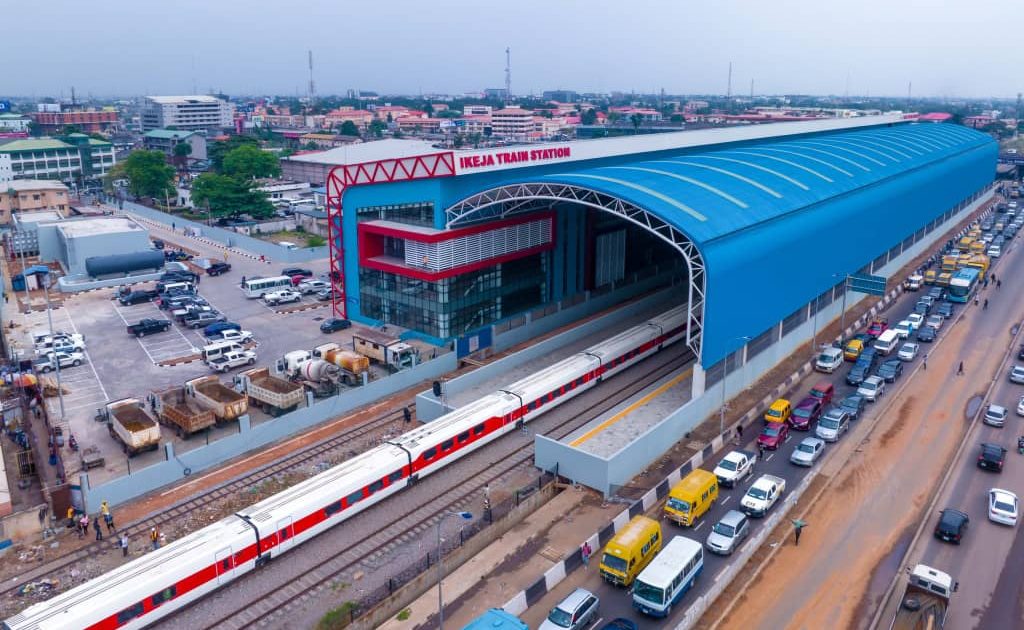
The Lagos State Government has responded to the mixed reactions surrounding the recent fare structure for the newly launched Red Line rail service, which commenced full commercial operations on a Tuesday, inaugurated by Governor Babajide Sanwo-Olu amidst notable guests and dignitaries. This event included a ceremonial ride showcasing the first fare-paying journey from Oyingbo to Agbado, symbolizing the beginning of regular services for this transportation initiative. While the government hailed the launch as a significant advancement in improving public transportation in Lagos, residents and commuters expressed a range of opinions, particularly regarding the pricing of fares that were released by the Lagos Metropolitan Area Transport Authority (LAMATA).
The fare specifics indicate various routes with set prices, ranging from N500 from Agege to Ikeja, to N1,500 for the longer route from Agbado to Oyingbo. Despite the promise of a reliable rail system that could ease traffic congestion and transport woes in one of Africa’s largest cities, many commuters voiced their perplexity over the fares, questioning why they were so comparable to existing bus fares. A commuter, Babajide Aliu, highlighted the dilemma, suggesting that the pricing does not provide a compelling advantage over bus travel. Another passenger humorously remarked that while trains typically offer cheaper alternatives globally, that was not the case in Lagos, which frustrated them further during their journey from Oyingbo.
In stark contrast, some individuals found the pricing acceptable when considering factors such as travel times and comfort. Adewale, a commuter traveling from Agbado, pointed out the cumulative costs he typically incurs taking several bus rides versus the direct fare of N1,500 on the train. He emphasized that given the current economic climate and rising fuel costs, the train fare represented a reasonable trade-off for the enhanced travel experience. His perspective highlights a significant divide among commuters; while some see value in the train’s speed and comfort, others are deterred by the lack of competitive pricing with buses.
The online discourse following the fare announcement revealed a chorus of dissatisfaction, with commentators calling the train services “very much too expensive” and urging LAMATA to reconsider its pricing strategy to make the service more beneficial for the public. Discussions on social media platforms, specifically X.com, were filled with users sharing their concerns, emphasizing that the intention behind public transit—specifically rail transport—should be affordability and accessibility and arguing that the current fares did not align with these principles. Insights from these discussions reflect a broader sentiment that residents expect transit fares that genuinely relieve the financial burden of commuting.
In response to the mounting concerns, the Lagos State Commissioner for Information and Strategy, Gbenga Omotoso, explained that the fare structure was developed through research aimed at balancing costs with the need for quality service delivery in public transportation. Omotoso expressed that the train fares were set after considerable study and analysis, combatting perceptions that they were arbitrarily chosen. He also emphasized that the government did not aim to profiteer from the initiative and acknowledged the extensive subsidies offered previously to ease transportation costs. Omotoso acknowledged the frustrations voiced by the commuters while assuring them that the government is open to reevaluating fares based on future assessments of commuter needs and experiences.
While the government stands firm on the current pricing structure’s justification, it is clear that they are aware of public sentiment and the necessity to ensure affordability is prioritized in the transit equation. Omotoso’s remarks included a comparison to train fares in other international cities, drawing attention to the inherent costs associated with running a rail system, such as imported materials and services, which are dollar-denominated and affect overall pricing. Understanding the economic landscape, he believes that while the present fares may seem high, they reflect broader market conditions and aim to ensure high-quality service for passengers in air-conditioned environments.
In conclusion, while the launch of the Red Line rail service is celebrated as a significant stride towards modern public transit in Lagos, the controversy surrounding the fare structure underscores the complexities of urban transportation management. Stakeholders—including commuters, government officials, and transport authorities—must navigate the fine line between operational viability and public expectations. Going forward, it will be crucial for the Lagos State Government to engage with the community and reassess fares if necessary, ensuring that the new rail service does offer a genuinely affordable and attractive alternative to existing forms of transport. By remaining responsive to public feedback, the government can foster a trust-based relationship that will encourage the uptake of the rail line and ultimately enhance the overall transportation infrastructure in Lagos.








