





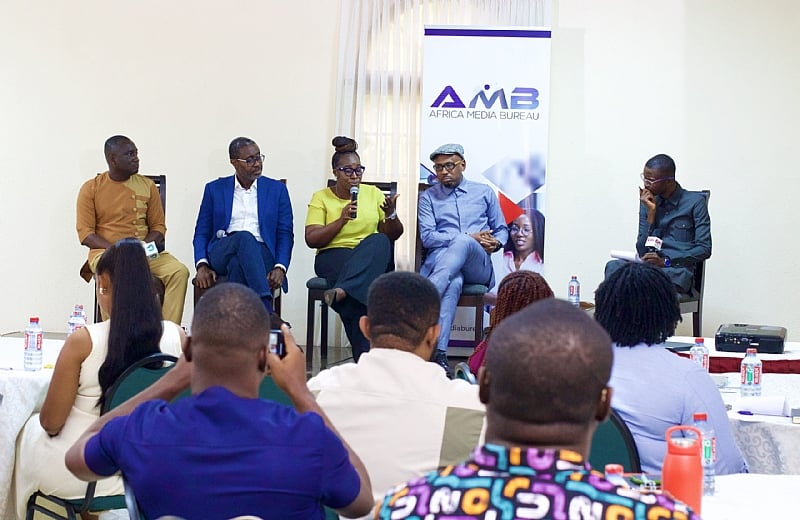
Ace Anan Ankomah, a private legal practitioner and Senior Partner at Bentsi-Enchill, Letsa & Ankomah, has recently emphasized the significant risks associated with sharing unverified information on social media, particularly during election periods. Speaking at a Media Executive Breakfast organized by the Africa Media Bureau (AMB) under the theme “Ethical Consideration and Risks in Programming for Social Media: Responsible Election Reporting,” Ankomah highlighted the legal implications that arise when individuals and media practitioners rush to publish content without thorough verification. He cautioned that the potential for defamation and other legal repercussions has been amplified in the age of digital communication, especially when misleading posts can go viral within seconds.
Drawing attention to the nature of online communication, Ankomah explained that the rapid spread of information on social media can lead to serious harm, noting instances where seemingly innocuous posts were interpreted maliciously due to misleading captions. He shared a personal anecdote about a video of him playing the piano at an airport that was misrepresented online, underscoring the damage that can arise from miscommunication. He pointed out that, in the current environment, the damage from libel claims is often presumed due to the extensive reach of social media platforms, compelling courts to impose heavier damages in such cases. This illustrates the pressing need for content verification before publication.
Moreover, Ankomah urged media houses to develop and adhere to stringent social media policies that guide content sharing and ensure compliance with legal standards. He recommended regular monitoring of posted content, advising that if anything appears inappropriate, it should be deleted. The legal expert particularly stressed the importance of obtaining explicit consent before using copyrighted material and refraining from posting any unverified or potentially damaging information. He reminded all stakeholders, including political parties, of the collective responsibility to engage with the public accurately, especially in the lead-up to Ghana’s upcoming elections.
Dr. Aurelia Ayisi, a lecturer at the University of Ghana, also contributed to the discourse by addressing the challenges posed by digital technology to journalism integrity. She emphasized the necessity for a multi-stakeholder approach to counter misinformation and restore trust in the media. While acknowledging the transformative impact of digital spaces that democratize information dissemination, she noted how this has blurred professional boundaries, complicating the ability of audiences to distinguish between credible journalism and citizen-generated content. Dr. Ayisi asserted that despite the existence of truths, they often become obscured by a “post-truth” environment rife with misinformation and disinformation.
In her analysis, Dr. Ayisi elaborated on the concept of malinformation, where accurate information is manipulated or presented within a misleading context, representing one of the most pressing threats to journalistic credibility. She underscored the imperative of enhancing information, digital, and media literacy among content consumers, pointing out that many social media users lack the necessary skills to assess the reliability of the information they encounter. Consequently, this deficiency exacerbates the challenges faced by journalists, who grapple with a demand for rapid reporting that often conflicts with the need for accuracy and thorough fact-checking.
Dr. Ayisi concluded by acknowledging that while comprehensive solutions may seem idealistic, progressive efforts are essential to address the ongoing misinformation crisis. Both speakers highlighted that the evolution of the media landscape through digital transformation necessitates heightened responsibility and proactive measures from practitioners, stakeholders, and consumers alike. The Africa Media Bureau (AMB), dedicated to enhancing the media landscape in Africa, resonates with their views, advocating for a robust and ethical media industry as paramount for the continent’s development and engagement in the global space. Through these discussions, it becomes clear that the integrity of information and adherence to ethical reporting practices are vital in navigating the complexities of modern media, particularly during critical electoral processes.








