









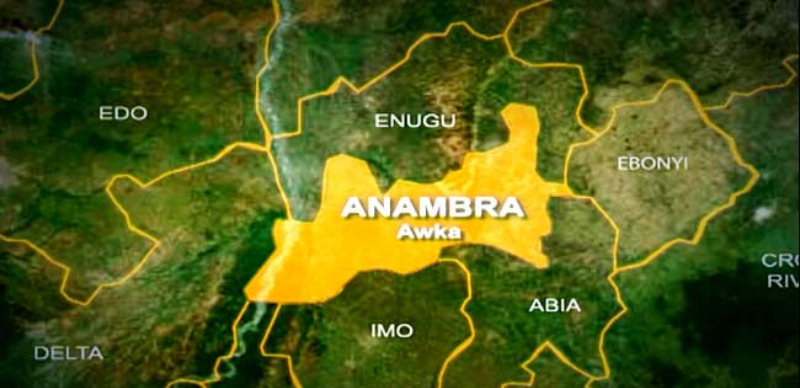
The leadership crisis within the Anambra State Markets Amalgamated Traders Association (ASMATA) escalated dramatically with the suspension of Chief Emmanuel Obiagwu, the Chairman of the Idemili zone. The suspension, which Chief Obiagwu alleges was executed by the ASMATA President-General, Chief Humphrey Anuna, has highlighted deeper issues of financial mismanagement and power struggle within the association. Central to the conflict is the handling of the three percent internally generated revenue (IGR) from markets, which is crucial for the association’s operational budget. Reports indicate that rather than being deposited into the association’s official accounts, this revenue has been directed into accounts allegedly controlled by the President-General, leading to accusations of corruption and a lack of transparency.
The tumultuous environment within ASMATA became more apparent during a recent meeting in Onitsha, where Chief Obiagwu was forcibly removed by thugs reportedly acting on Chief Anuna’s orders. His account reveals that he was violently assaulted after questioning the legality of his suspension and the opacity surrounding ASMATA’s financial dealings. Obiagwu claims he was treated like a criminal for advocating for the proper allocation of funds intended for members’ welfare. This incident has not only raised concerns about physical safety within the association but also about the governance style of the current leadership, which he describes as increasingly authoritarian and dismissive of collaborative governance.
Obiagwu’s scathing critique pointed to the concentration of power in the hands of Chief Anuna, who has allegedly sidelined other key officers within ASMATA to operate with impunity. This disregard for collective responsibility has contributed to a culture of secrecy, with essential financial information withheld from other executive members. Obiagwu has called for intervention from the state governor, Prof. Chukwuma Soludo, warning that without external oversight, the situation could lead to greater conflict and potential violence among traders who rely on ASMATA for representation and support.
In reaction to these claims, Chief Anuna vehemently denied any wrongdoing, characterizing Obiagwu’s accusations as frivolous and born out of personal vendetta. He suggested that Obiagwu was facing the consequences of his own unethical actions and dismissed the allegations of financial mismanagement as unfounded. Anuna emphasized that his administration has been focused on eradicating corruption and ensuring that government revenues from the markets are adequately collected and remitted. He defended his leadership by stating that his administration has made notable progress in terms of increasing government revenue collections, thereby framing the conflict as a struggle against vested interests that have historically undermined ASMATA’s objectives.
The divergent narratives between the two leaders underscore the broader turmoil within the market leadership structure in Anambra State. While Obiagwu’s stance reflects a growing frustration among market leaders who feel disenfranchised and manipulated, Anuna’s response emphasizes accountability in resource management and an intention to continue driving reforms. The accusations and denials indicate a severe rift within the ranks, one that threatens to destabilize the operations of ASMATA and, by extension, the livelihoods of numerous traders reliant on the association for advocacy and basic services.
As the crisis unfolds, market traders are left in a precarious position, caught in the crossfire of a power struggle that could have lasting implications for ASMATA’s operations. The call for government intervention by Obiagwu highlights the urgent need for regulatory frameworks and oversight mechanisms to prevent further erosion of trust within the association. Without decisive action, the current leadership conflict risks not only the integrity of ASMATA but also the economic wellbeing of the traders who depend on it for support and governance in the market sector.









