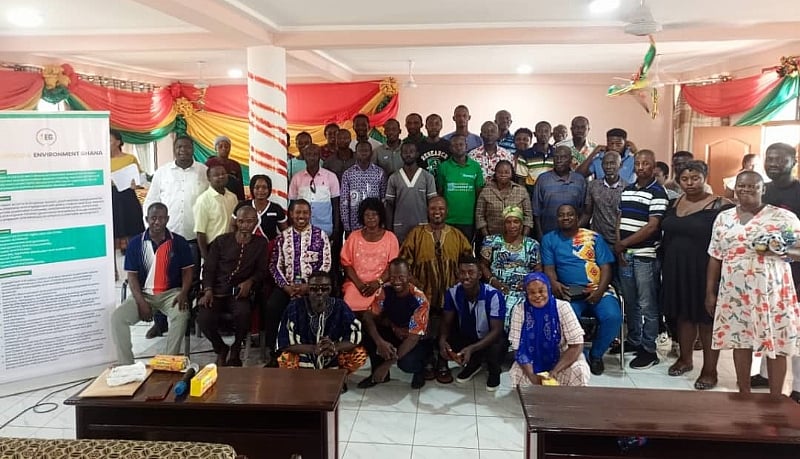
Livelihood and Environment Ghana (LEG), a Sunyani-based non-governmental organization focused on human rights and environmental issues, is advocating for revisions to the Minerals and Mining (Compensation and Resettlement) Regulations, 2012 (L.I. 2175) in Ghana. These proposed amendments aim to better address the needs of communities affected by mining operations, particularly regarding compensation for displacement and resettlement. With support from the Third World Network-Africa, LEG is actively engaging with political stakeholders to gather input and build consensus around these crucial changes. The organization believes that revised regulations will benefit all parties involved, including the government, mining companies, and, most importantly, the communities impacted by mining activities. The ultimate goal is to foster a more equitable and sustainable mining sector that minimizes conflict and promotes shared prosperity.
LEG’s primary concern revolves around the current practice of one-time compensation payments to farmers and landowners displaced by mining projects. The organization argues that this system inadequately addresses the long-term impacts of displacement, often leaving affected individuals in a worse economic position than before. Citing examples from communities impacted by companies like Newmont, LEG’s Executive Director, Mr. Richard Adjei-Poku, highlights the deteriorating living conditions of many who received lump-sum payments. He advocates for a shift towards lifetime compensation, distributed throughout the operational life of the mine, as a more sustainable and just approach. This approach would provide a continuous stream of income to displaced communities, mitigating the long-term economic hardships often associated with resettlement.
The inadequacy of one-time payments stems from several factors. First, the initial sum, even if seemingly substantial, often fails to account for the long-term loss of livelihood and the escalating costs of living. Second, individuals may lack the financial literacy to manage a large lump sum effectively, leading to rapid depletion of funds. Third, the disruption to traditional livelihoods, such as farming, can have profound social and cultural consequences that are not adequately addressed by a single payment. A lifetime compensation model, on the other hand, would provide a more stable income stream, allowing families to adapt to their new circumstances and rebuild their lives. This approach aligns with the principle of sustainable development, ensuring that mining activities benefit both the companies and the communities they impact.
Beyond advocating for lifetime compensation, LEG emphasizes the need for fair and transparent negotiation processes. Mr. Adjei-Poku cautions farmers against hastily accepting compensation offers from mining companies, urging them to seek expert advice to ensure they receive adequate and equitable compensation. This highlights the power imbalance often present in negotiations between multinational corporations and local communities. LEG’s call for expert involvement aims to level the playing field, ensuring that communities have the knowledge and resources to effectively represent their interests. This also underscores the importance of capacity building within affected communities, empowering them to navigate the complexities of land acquisition and compensation negotiations.
LEG’s broader mission extends beyond compensation, encompassing a comprehensive approach to sustainable development within mining-affected regions. The organization works to promote environmental sustainability, community rights, sustainable livelihoods, active citizenship, and good mineral governance. Their engagement with policymakers, duty bearers, and corporate organizations aims to influence policy and practice, fostering a more responsible and equitable mining sector. This holistic approach recognizes that mining impacts extend far beyond immediate displacement, affecting the environment, local economies, and the social fabric of communities.
Operating in 46 communities across seven regions of Ghana, LEG plays a vital role in bridging the gap between communities, government, and the mining industry. Their advocacy for amended compensation regulations is a crucial step towards ensuring that mining activities contribute to sustainable development and improve the lives of those affected. By pushing for lifetime compensation, transparent negotiations, and equitable development, LEG is working to create a mining sector that benefits all stakeholders, fostering shared prosperity and minimizing the negative impacts of resource extraction. Their focus on community empowerment and engagement is essential for building a more sustainable and just future for mining communities in Ghana.