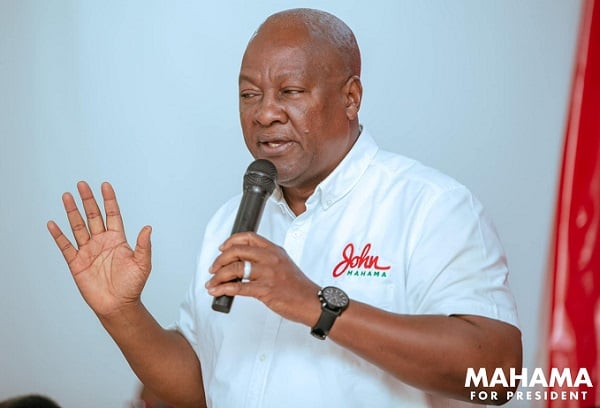
The former President of Ghana, John Dramani Mahama, has leveled serious accusations against the Electoral Commission (EC) of Ghana, alleging a conspiracy with the ruling New Patriotic Party (NPP) to manipulate the impending 2024 general elections. Mahama’s claims, articulated in a public Facebook post, paint a picture of deliberate and orchestrated efforts by the EC to compromise the integrity of the electoral process, potentially jeopardizing the democratic fabric of the nation. He underscores a sense of urgency, highlighting the rapidly approaching election date and the perceived determination of the EC to facilitate an unfair advantage for the incumbent NPP.
Central to Mahama’s accusations are revelations surrounding the premature exposure of validating stamps, crucial tools in the electoral process used to authenticate ballots. He contends that the NDC has repeatedly alerted the EC to instances where these stamps have been revealed prior to election day, raising concerns about the potential for their misuse in creating counterfeit ballots. The former president asserts that the EC has disregarded these warnings and has failed to issue clear directives to its staff to prevent further disclosure of the validating stamps’ details, including their serial numbers. This inaction, according to Mahama, contributes to a climate of suspicion and fuels concerns about potential ballot stuffing.
Mahama’s argument goes beyond mere negligence on the part of the EC. He alleges the existence of a premeditated scheme within the Commission to facilitate ballot manipulation through the strategic exposure of the validating stamps. Citing an internal EC memo dated October 10, 2024, he argues that this document reveals a calculated plan to enable ballot stuffing before the official voting day. By making the validating stamp details accessible prematurely, the opportunity arises for illicit actors to create and stamp fraudulent ballots, potentially influencing the election outcome. This alleged strategy, Mahama contends, demonstrates a deliberate attempt to subvert the democratic process.
The gravity of these accusations, made by a prominent political figure and former head of state, necessitates a thorough and impartial investigation. The integrity of the electoral process is paramount to a functioning democracy, and any credible allegations of manipulation should be treated with utmost seriousness. The potential consequences of compromised elections can be severe, eroding public trust in democratic institutions and potentially leading to social unrest. Mahama’s call for intervention from various stakeholders underscores the urgency and importance of addressing these concerns.
In his appeal, Mahama specifically calls upon key national and international bodies to intervene and hold the EC accountable. He urges the National Peace Council, a body dedicated to conflict resolution and peacebuilding, to address the potential for electoral disputes arising from these allegations. He also calls upon religious and traditional leaders, often holding significant influence within Ghanaian society, to use their moral authority to advocate for electoral transparency and fairness. Furthermore, he requests the engagement of civil society organizations, which play a crucial role in monitoring and advocating for good governance, to scrutinize the EC’s actions and demand accountability.
Finally, Mahama extends his call for intervention to the international community and election observer missions. Their involvement can bring external scrutiny and pressure to bear on the situation, promoting transparency and ensuring that the electoral process adheres to international standards. The presence of international observers can also deter potential manipulation and contribute to building confidence in the election’s legitimacy. Mahama’s plea for collective action highlights the perceived severity of the threat to Ghana’s democratic process and the need for a concerted effort to safeguard the integrity of the 2024 elections. The accusations require a thorough and impartial investigation to ascertain their validity and, if substantiated, to hold those responsible accountable and ensure a free and fair election.