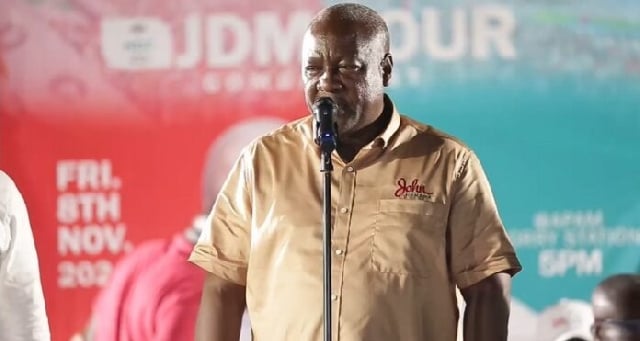
John Dramani Mahama, the National Democratic Congress (NDC) flagbearer, is set to embark on an important campaign tour of the Western Region beginning on November 25, a strategic move as the December 7 general election approaches. With merely 12 days remaining until voters head to the polls, this three-day tour is critical for Mahama, serving as a final push to secure the necessary support for his candidacy. The tour is scheduled to conclude on November 27, 2024, indicating the urgency as the election date looms.
The campaign tour will commence with a visit to the Western Regional House of Chiefs, where Mahama aims to obtain the support and blessings of local traditional leaders. Engaging with these influential figures is vital, reflecting the importance of traditional authority in Ghana’s political landscape. Following this initial engagement, Mahama plans to meet with religious leaders across the region, underlining his strategy to foster collaboration and goodwill among various community pillars and enhance his appeal to voters.
Throughout the tour, Mahama will visit numerous significant constituencies including Wassa East, Shama, Essikado-Ketan, Sekondi, Effia, Kwesimintsim, and Takoradi. These areas are integral to his campaign strategy as they are populated with diverse voter bases. By connecting directly with constituents in these key locations, Mahama aims to articulate his vision for the country and address any concerns the electorate may have. This direct voter engagement is crucial as it allows Mahama to personalize his campaign message, making it resonate more with the residents of the Western Region.
This forthcoming tour follows Mahama’s recent five-day campaign effort in the Eastern Region, where he actively sought the support of party loyalists and voters. During that campaign, he focused on energizing the NDC base and articulating the party’s policies and vision. The feedback from the Eastern Region likely informed some aspects of his strategy for the Western Region, as campaigns often adapt based on voter sentiments and reactions observed during earlier efforts.
Mahama’s campaign strategy appears to be centered on building a coalition of supporters through personal outreach. By visiting various constituencies and engaging with community leaders, he is establishing a narrative of unity and collaboration, key tenets of his political persona. This approach not only strengthens his party’s grassroots support but also positions him as a candidate attuned to the needs and aspirations of his electorate.
As the countdown to the election continues, Mahama’s efforts in the Western Region reflect his commitment to securing every possible vote. His approach combines traditional and religious outreach with direct voter engagement, suggesting an inclusive political strategy aimed at consolidating support across various segments of the population. This comprehensive campaign itinerary underscores the intensity of the election cycle and the lengths to which candidates must go to gain and retain voter support in a competitive political environment.